Category: Residential Driveways Asphalt Paving Blog

  • How to Find a Reputable Asphalt Paving Contractor

    How to Find a Reputable Asphalt Paving Contractor

    Key Takeaways
    • A reputable asphalt paving contractor should have a strong local reputation, clear communication, written estimates, and proof of insurance.
    • Online reviews are helpful when you look beyond the star rating and evaluate repeated patterns in workmanship, professionalism, and problem resolution. This is an inference based on the review guidance in the current article.
    • Detailed estimates matter because two paving proposals with similar prices may include very different levels of preparation, drainage work, and repair scope. This expands on the article’s emphasis on comprehensive quotes.
    • Large upfront deposits, rushed decisions, and vague explanations are common warning signs when hiring a paving contractor.
    • The best contractor for the job is not always the cheapest one. Experience, preparation, and honesty about the condition of the pavement often matter more than the lowest number.

    Hiring the right Connecticut asphalt paving contractor can make the difference between a driveway or parking lot that performs for years and one that starts failing far too soon. A good contractor does more than provide a low number on paper. They help you understand the scope of the work, prepare the site correctly, install the pavement properly, and stand behind the finished product.

    Unfortunately, not every paving contractor operates the same way. Some companies offer quality workmanship, clear communication, and honest recommendations. Others rely on vague estimates, rushed installations, poor materials, or high-pressure sales tactics. That is why it is so important to know what to look for before signing anything.

    If you are planning a new driveway, resurfacing an older surface, repairing problem areas, or exploring full paving services, this guide will help you evaluate contractors with more confidence and avoid common mistakes.

    Start With Local Reputation

    One of the best ways to begin your search is by looking for contractors with a proven local presence. A company that has been serving the same region for years usually has more at stake than a fly-by-night operator passing through town.

    Ask neighbors, family members, local business owners, or property managers who they have used and whether they would hire that contractor again.

    Check Reviews, But Read Them Carefully

    Online reviews can be helpful, but they need to be read with context.

    • Do customers mention professionalism and communication?
    • Do they describe long-lasting work?
    • Are there repeated complaints about cracking or drainage?
    • Does the contractor respond professionally to feedback?

    Verify Licensing and Insurance

    A reputable contractor should be able to provide proof of licensing (if required), general liability insurance, and workers’ compensation coverage.

    If a company cannot provide documentation, that is a major red flag.

    Look for Experience With Your Type of Project

    Not all contractors specialize in the same type of work. Some focus on residential driveways, while others handle commercial lots or municipal projects.

    Make sure the contractor has experience with projects similar to yours.

    Ask About the Full Scope of Work

    A reputable contractor should clearly explain the job from start to finish.

    • Will the old pavement be removed or resurfaced?
    • Is the base stable or does it need repair?
    • How will drainage be handled?
    • What thickness of asphalt is being installed?

    If they can’t explain it clearly, that’s a warning sign.

    [elementor-template id=”4630″]

    Get Detailed Written Estimates

    Always get everything in writing. This helps you compare contractors fairly.

    It’s also smart to get multiple estimates so you can evaluate pricing, scope, and professionalism side by side.

    A strong estimate should include:

    • Scope of work
    • Preparation details
    • Materials and application
    • Cleanup and finishing
    • Payment terms

    The lowest price is not always the best value. Missing steps like base prep or drainage can lead to expensive problems later.

    Be Wary of High-Pressure Sales Tactics

    Be cautious of contractors who push you to sign immediately or claim they have “extra asphalt” available at a discount.

    Reputable contractors give you time to make an informed decision.

    Watch the Payment Terms

    Payment structure matters. Avoid large upfront payments before work begins.

    A professional contractor typically uses a clear schedule tied to project progress.

    Evaluate Communication and Professionalism

    Pay attention to how the contractor communicates from the beginning.

    • Do they show up on time?
    • Do they answer questions clearly?
    • Do they follow through?

    Good communication early usually leads to a smoother project.

    Ask to See Previous Work

    A reputable contractor should provide examples of past projects or references.

    Seeing completed work helps you evaluate quality, finish, and durability.

    Understand Surface vs Structural Repairs

    Not all problems are surface-level. Some require deeper repairs or full replacement.

    A trustworthy contractor will explain whether your project needs maintenance, resurfacing, or reconstruction.

    Red Flags to Watch For

    • No written estimate
    • No proof of insurance
    • Unusually low pricing
    • Pressure to sign immediately
    • No references or past work

    Questions to Ask Before You Hire

    • How long have you been in business?
    • Are you licensed and insured?
    • What preparation work is included?
    • How will drainage be handled?
    • What happens if base issues are found?
    • What does your estimate include?

    Final Thoughts

    Finding a reputable asphalt paving contractor is about more than price. It’s about choosing a company that communicates clearly, prepares properly, and stands behind their work.

    Taking the time to evaluate contractors carefully helps you avoid costly mistakes and ensures long-term performance.

    Looking for a contractor you can trust? Maisano Brothers has served Connecticut homeowners since 1967 with fully licensed, insured paving services. Request your free estimate and see why our reputation speaks for itself.

    Frequently Asked Questions

    How do I know if an asphalt paving contractor is reputable?

    Look for a strong local reputation, verifiable insurance, clear written estimates, experience with projects like yours, and professional communication from the first interaction onward.

    Should an asphalt contractor be licensed and insured?

    Yes. The current article specifically recommends confirming licensing where required and verifying liability and workers’ compensation coverage.

    Why should I get more than one estimate?

    Comparing multiple written estimates helps you understand the scope of work, identify missing items, and avoid choosing a low number that leaves out critical preparation or repairs. This expands on the article’s guidance to obtain detailed written estimates from several contractors.

    Is the cheapest paving estimate usually the best option?

    Not necessarily. A much lower estimate can signal thinner asphalt, poor base work, limited drainage planning, or other shortcuts that may lead to early failure.

    What are red flags when hiring a paving contractor?

    Major red flags include vague quotes, no written proposal, no proof of insurance, pressure to sign immediately, and large upfront payment demands.

    Should I trust a contractor who says they have extra asphalt left over?

    That kind of pitch should be treated cautiously. While not every last-minute offer is illegitimate, rushed “extra material” deals are often associated with pressure tactics and lower-quality work. This is a practical warning based on the broader red-flag guidance in the article.

    What should be included in a paving estimate?

    A good estimate should clearly describe the project scope, materials, labor, and any additional charges so you can compare contractors fairly.
  • What Causes Asphalt Driveways And Parking Lots To Deteriorate and How To Save Them?

    What Causes Asphalt Driveways And Parking Lots To Deteriorate and How To Save Them?

    Key Takeaways
    • Oxidation from sunlight and air makes asphalt more brittle over time, which increases the risk of cracking and raveling.
    • Water infiltration is one of the most damaging forces in asphalt pavement because it weakens the pavement structure and reduces support in the underlying layers.
    • Freeze-thaw cycles, repeated traffic loading, and poor drainage can accelerate potholes, rutting, and structural failure.
    • Some pavement problems are surface-level, but recurring potholes, alligator cracking, and settlement often point to deeper base issues.
    • Early maintenance such as inspections, crack sealing, drainage correction, and sealcoating can extend service life and delay more expensive repairs.

    Asphalt driveways and parking lots are built to handle daily use, but they are not maintenance-free. Over time, even a well-installed asphalt surface will begin to show signs of wear. The key is understanding what causes deterioration, what warning signs to watch for, and what steps can help you protect the pavement before minor issues become major repairs.

    For homeowners and property managers, understanding parking lot deterioration and driveway wear is critical. Asphalt distress usually does not begin with a dramatic failure—it often starts with oxidation, small cracks, drainage issues, or repeated stress from traffic.

    If you want to save your driveway and extend its lifespan, the best approach is early maintenance, not reactive repairs.

    Why Asphalt Deteriorates Over Time

    Asphalt pavement is designed to be flexible, but that flexibility decreases over time. Exposure to sunlight, oxygen, water, traffic loads, and chemicals all contribute to deterioration. When these elements combine, the pavement begins to weaken both at the surface and below.

    In many cases, deterioration starts slowly but accelerates once structural integrity is compromised. That’s why early detection and maintenance are critical.

    UV Damage and Oxidation

    One of the most common causes of asphalt deterioration is UV damage and oxidation. Over time, sunlight and air break down the asphalt binder, causing the pavement to lose flexibility.

    This process leads to fading, brittleness, and surface cracking. Once the surface becomes dry and rigid, it is far more vulnerable to damage from traffic and weather.

    Water Infiltration: The Leading Cause of Failure

    Water is the number one enemy of asphalt pavement. It enters through cracks and surface voids, eventually reaching the base and subgrade layers.

    Once water infiltrates these layers, it weakens the structural support of the pavement. This can lead to potholes, soft spots, and widespread cracking.

    In colder climates, freeze-thaw cycles make this problem worse. Water expands when frozen, creating pressure within the pavement and accelerating deterioration.

    Drainage and Grading Issues

    Standing water is never a good sign. Poor drainage is one of the fastest ways to shorten the life of asphalt.

    Ensuring proper drainage and grading allows water to flow away from the surface instead of pooling and seeping into the pavement structure.

    Without proper drainage, even a newly paved driveway or parking lot can begin to fail prematurely.

    Traffic Load and Repeated Stress

    Every asphalt surface is designed for a specific load capacity. Repeated stress from heavy vehicles or consistent traffic patterns can cause the pavement to break down over time.

    This is especially common in drive lanes, parking areas, and locations where vehicles frequently stop or turn. Over time, this stress can lead to rutting, depressions, and cracking.

    Chemical Damage and Surface Breakdown

    Oil, gasoline, and other chemicals can weaken asphalt by breaking down the binder. What starts as a stain can eventually become a soft spot that fails under pressure.

    This type of damage is often seen in parking areas and driveways where vehicles regularly leak fluids.

    [elementor-template id=”4630″]

    Poor Installation or Weak Base

    Sometimes deterioration begins below the surface due to improper installation. A poorly prepared base, inadequate compaction, or insufficient thickness can lead to early failure.

    Even if the surface looks good initially, underlying issues can cause the pavement to deteriorate much faster than expected.

    Warning Signs of Asphalt Deterioration

    Recognizing early warning signs can help prevent costly repairs.

    • Fading and discoloration
    • Surface cracks
    • Raveling or loose aggregate
    • Potholes or recurring patches
    • Standing water
    • Soft spots or sinking areas
    • Alligator cracking

    Addressing these issues early can significantly extend the life of your asphalt surface.

    How to Prevent Asphalt Deterioration

    Preventive maintenance is the most effective way to protect asphalt.

    Sealcoating

    Sealcoating protects against UV exposure, water, and chemicals. It helps preserve flexibility and extends pavement life.

    Crack Filling

    Sealing cracks early prevents water from entering the base layers.

    Drainage Maintenance

    Ensuring proper grading and water flow reduces the risk of structural damage.

    Routine Inspections

    Regular inspections help catch problems early before they escalate.

    Conclusion

    Asphalt deterioration is a natural process, but it can be slowed significantly with the right maintenance strategy. Understanding the causes—UV exposure, water infiltration, drainage issues, traffic stress, and base failure—allows property owners to take proactive steps.

    By addressing small issues early and maintaining your pavement properly, you can extend its lifespan and avoid costly repairs.

    Don’t wait until small cracks become costly repairs. Maisano Brothers Inc. offers professional sealcoating and maintenance services throughout Connecticut. Schedule your free estimate and protect your investment.

    Frequently Asked Questions

    What is the main cause of asphalt deterioration?

    There is not just one cause, but water infiltration is one of the most damaging because it weakens the pavement structure below the surface. Oxidation, UV exposure, traffic loading, and freeze-thaw cycles also play major roles.

    Does sunlight really damage asphalt?

    Yes. UV exposure and oxidation gradually dry out the asphalt binder, making the pavement less flexible and more likely to crack.

    Why is standing water bad for asphalt?

    Standing water increases moisture exposure and makes it easier for water to enter cracks and weak spots. Over time, that can contribute to potholes, base weakening, and premature failure.

    Can oil or gasoline damage a driveway?

    Yes. Petroleum products can soften asphalt in localized areas, which can lead to soft spots and surface breakdown under traffic.

    What is alligator cracking?

    Alligator cracking is a network of interconnected cracks that usually signals structural failure in the pavement system rather than a simple surface problem.

    How do I know if my asphalt needs repair or replacement?

    Surface aging, small cracks, and oxidation may be handled with maintenance or resurfacing, but recurring potholes, rutting, soft areas, drainage issues, and widespread cracking often require more substantial repair or replacement.

    Does sealcoating fix damaged asphalt?

    No. Sealcoating is a preventive treatment, not a structural repair. It helps protect sound or moderately aged pavement from oxidation, moisture, and chemical exposure.

    How often should asphalt be inspected?

    A yearly review is a smart baseline, and inspections are especially helpful after winter, after long periods of heavy rain, or when new cracking, ponding, or soft spots appear. This recommendation is a practical maintenance inference based on preservation guidance and the deterioration mechanisms above.

  • Pothole Repair for Residential Driveways: A Complete Guide to Patching Asphalt the Right Way

    Pothole Repair for Residential Driveways: A Complete Guide to Patching Asphalt the Right Way

    Key Takeaways
    • Potholes are caused by water infiltration, freeze-thaw cycles, and base failure beneath the asphalt
    • Cold patch repairs are temporary, while hot mix and full-depth patching provide longer-lasting solutions
    • Proper preparation and compaction are critical to prevent early failure
    • Recurring potholes often indicate deeper structural or drainage issues
    • Preventive maintenance like sealcoating and crack filling significantly extends driveway lifespan

    Potholes don’t appear overnight. What starts as a small crack or weak spot in your asphalt can quickly develop into a larger structural issue if left untreated. For homeowners, potholes in a driveway are more than just an eyesore—they can create safety hazards, damage vehicles, and lead to costly repairs if ignored.

    If you’re dealing with surface damage, learning how to properly driveway repair issues early can save you time and money. This guide explains what causes potholes, how to fix them correctly, and when it’s time to call in a professional.

    What Causes Potholes in Asphalt Driveways?

    Potholes are typically the result of water infiltration combined with structural failure beneath the asphalt surface. While they may look like surface-level damage, the real problem often starts below.

    Water Infiltration

    Water enters through small cracks in the asphalt surface. Once it penetrates the pavement, it weakens the underlying base layers.

    Freeze-Thaw Cycles

    In climates like Connecticut, water freezes and expands during colder months. This expansion creates pressure within the pavement, leading to cracks and voids beneath the surface.

    Traffic Stress

    As vehicles drive over weakened areas, the asphalt begins to break apart. Over time, this repeated stress causes the surface to collapse.

    Base Failure

    When the subgrade or base layer becomes unstable, the asphalt above it can no longer support weight. This is one of the most common reasons potholes continue to return after being patched.

    Why Prompt Pothole Repair Matters

    Delaying pothole repairs can lead to more serious and expensive issues. What may start as a small patch job can quickly turn into a full driveway replacement if ignored.

    Improved Safety

    Potholes create uneven surfaces that increase the risk of trips and falls, especially for children and older adults.

    Vehicle Protection

    Driving over potholes can damage tires, wheels, suspension systems, and vehicle alignment.

    Preventing Further Damage

    Once water enters the pavement, deterioration accelerates. Addressing potholes early stops the damage from spreading.

    Lower Long-Term Costs

    Understanding the cost of pothole repair helps homeowners see why early maintenance is significantly more affordable than major reconstruction.

    Types of Pothole Repairs

    Choosing the right repair method depends on the size, depth, and severity of the pothole.

    Cold Patch Asphalt

    This is a quick and convenient option for small potholes. Cold patch can be applied without specialized equipment and works well for temporary fixes, especially in colder weather.

    Hot Mix Asphalt

    Hot mix asphalt provides a stronger, longer-lasting repair. It requires proper installation and compaction but delivers better durability and performance.

    Full-Depth Patching

    This method involves removing both the damaged asphalt and the compromised base beneath it. The area is rebuilt from the ground up, making it the most effective solution for recurring potholes.

    Step-by-Step Guide to Repairing a Pothole

    1. Assess the Damage

    Determine the size and depth of the pothole. Look for loose edges, cracks, and signs of base failure.

    2. Prepare the Area

    Remove loose asphalt, debris, and dirt. For longer-lasting repairs, square off the edges of the pothole to create a clean working area.

    3. Clean Thoroughly

    A clean surface is critical for proper adhesion. Remove dust, moisture, and any remaining debris.

    4. Apply Patch Material

    Fill the pothole with cold patch or hot mix asphalt, depending on the repair type. Slightly overfill the area to allow for compaction.

    5. Compact the Material

    Use a tamper, plate compactor, or heavy object to compress the material. Proper compaction ensures a strong bond and prevents premature failure.

    6. Seal the Surface

    Applying a sealcoat over the repair helps protect against water infiltration and extends the life of the patch.

    When a Patch Isn’t Enough

    Not all potholes can be fixed with a simple patch. In some cases, the issue runs deeper than the surface.

    • Potholes that repeatedly return
    • Soft or sinking areas in the driveway
    • Multiple damaged sections
    • Poor drainage or standing water

    In these situations, it’s best to get a free estimate and have the driveway evaluated for more permanent solutions like resurfacing or full-depth repair.

    Preventing Future Potholes

    Maintaining your residential driveway paving is the best way to prevent potholes from forming in the first place.

    Sealcoating

    Sealcoating every 2–3 years helps protect asphalt from water, UV rays, and chemical damage.

    Crack Filling

    Addressing cracks early prevents water from penetrating into the base layers.

    Proper Drainage

    Ensuring water flows away from your driveway reduces the risk of subbase erosion.

    Even Load Distribution

    Avoid parking in the same exact spot repeatedly, which can weaken asphalt over time.

    DIY vs Professional Pothole Repair

    When DIY Makes Sense

    Small potholes with stable bases can often be repaired using cold patch materials as a temporary solution.

    When to Hire a Professional

    Larger potholes, recurring damage, or signs of base failure require professional equipment and expertise to ensure a long-lasting repair.

    Conclusion

    Pothole repair is an essential part of maintaining a safe, durable, and visually appealing driveway. Addressing issues early helps prevent more extensive damage and costly repairs down the line. Whether you handle minor repairs yourself or bring in a professional for more complex work, taking action now will extend the life of your asphalt surface.

    If potholes keep coming back or the damage runs deeper than the surface, it may be time for a professional assessment. Request a free estimate from Maisano Brothers — Connecticut’s trusted driveway repair experts since 1967.

    What is the best method for pothole repair?

    Hot mix asphalt provides the most durable repair, while full-depth patching is best for structural failures.

    How long does pothole repair last?

    Cold patch may last a few months to a year, while properly installed hot mix repairs can last several years.

    Can I repair a pothole myself?

    Yes, small potholes can be repaired using cold patch, but larger or recurring issues require professional repair.

    Why do potholes keep coming back?

    Recurring potholes are usually caused by base failure or poor drainage beneath the surface.

    Does sealcoating fix potholes?

    No, sealcoating protects the surface but does not repair structural damage.

    When is the best time to repair potholes?

    Spring through fall is ideal for permanent repairs using hot mix asphalt.

    What causes potholes in driveways?

    Water infiltration, freeze-thaw cycles, traffic stress, and weak base layers are the primary causes.

    How can I prevent potholes from forming?

    Regular maintenance, crack sealing, proper drainage, and sealcoating help prevent potholes.

  • The Asphalt Paving Process: 9 Steps to Proper Asphalt Installation

    The Asphalt Paving Process: 9 Steps to Proper Asphalt Installation

    Key Takeaways
    • The asphalt paving process includes 9 critical steps from evaluation to final inspection
    • Proper grading, base preparation, and compaction are essential for long-term durability
    • The base and subgrade determine how well the pavement performs over time
    • Skipping steps or cutting corners leads to early failure and costly repairs
    • Regular maintenance after installation extends the life of asphalt significantly

    Installing asphalt is more than just laying down blacktop. A properly paved driveway or parking lot depends on preparation, grading, base construction, and precise installation techniques. When done correctly, asphalt pavement can last 20 years or more. When shortcuts are taken, problems like cracking, potholes, and drainage issues can appear much sooner.

    Whether you’re planning a new asphalt driveway or a commercial paving project, understanding the process helps you recognize quality workmanship and make informed decisions.

    Why the Asphalt Paving Process Matters

    Every step in the paving process plays a role in the long-term performance of your pavement. The surface layer may look smooth and finished, but what’s underneath determines how well it holds up over time.

    Proper asphalt installation ensures strength, drainage, durability, and resistance to wear from traffic and weather conditions.

    Step 1: Site Evaluation and Planning

    Before any work begins, the area is evaluated to determine soil conditions, drainage needs, and the scope of the project. This step identifies potential issues such as poor drainage, unstable subgrade, or grading challenges.

    Step 2: Demolition and Removal

    If replacing an existing driveway or parking lot, the old asphalt is removed. This may involve milling or full excavation depending on the condition of the pavement and base.

    Step 3: Grading and Slope Preparation

    Proper grading and slope preparation is critical to ensure water drains away from the surface. Without correct elevation and pitch, water can pool and lead to premature deterioration.

    This step sets the foundation for long-term performance and prevents future structural issues.

    Step 4: Subgrade Preparation

    The subgrade is the native soil beneath the pavement. It must be properly compacted and stabilized to support the layers above. Weak or soft subgrade conditions can lead to failure regardless of how well the asphalt is installed.

    Step 5: Installing the Base Course

    The base layer provides structural support for the asphalt surface. Typically made of crushed stone or aggregate, it is spread and compacted to create a stable foundation.

    A properly installed base ensures load distribution and prevents shifting or settling over time.

    Step 6: Binder Layer Installation

    The binder layer is a strong asphalt layer that adds structural integrity. It contains larger aggregate and acts as a bridge between the base and the surface layer.

    This layer is especially important in areas with heavier traffic loads.

    Step 7: Surface Course Installation

    The surface course is the top layer of asphalt. It provides a smooth, finished appearance and protects the underlying structure from water and environmental exposure.

    This layer is designed for durability, flexibility, and long-term performance.

    Step 8: Compaction

    Compaction is one of the most critical steps in the entire process. Rollers are used to compress the asphalt, eliminate air voids, and ensure proper density.

    Without proper compaction, the pavement may fail prematurely, leading to cracking and deformation.

    Step 9: Final Inspection and Finishing

    After installation, the surface is inspected to ensure proper grading, smoothness, and compaction. Edges are finished, transitions are cleaned up, and the pavement is prepared for use.

    Once cooled and cured, the asphalt is ready for traffic.

    How Long Does Asphalt Installation Take?

    Most residential driveways can be completed within one to two days, depending on size and site conditions. Larger commercial paving projects may take longer due to additional preparation and structural requirements.

    Common Mistakes That Lead to Early Failure

    • Poor base preparation
    • Improper grading or drainage
    • Insufficient compaction
    • Thin asphalt layers
    • Skipping critical steps in the process

    These issues can lead to cracking, potholes, rutting, and costly repairs.

    How to Extend the Life of Your Asphalt

    After installation, proper maintenance is essential to maximize lifespan.

    • Sealcoat every 2–3 years
    • Fill cracks early
    • Keep water draining away from the surface
    • Avoid heavy loads during early curing

    Routine maintenance protects your investment and delays the need for repairs or replacement.

    Conclusion

    The asphalt paving process is a step-by-step system designed to create a durable, long-lasting surface. Each phase—from site preparation to final compaction—plays a critical role in performance.

    Understanding these steps helps ensure your driveway or parking lot is built to last and performs well for years to come.

    Ready to see these steps in action on your own property? Maisano Brothers Inc. has been installing asphalt driveways across Connecticut since 1967. Request a free estimate for your new driveway installation.

    Frequently Asked Questions

    How many steps are in the asphalt paving process?

    There are typically 9 main steps, including site prep, grading, base installation, paving, and compaction.

    What is the most important step in asphalt paving?

    Base preparation and compaction are the most critical for long-term performance.

    How long does asphalt take to cure?

    Asphalt can be driven on within 24–72 hours but continues curing for several months.

    What is the binder layer in asphalt?

    It’s the structural layer between the base and surface course that adds strength.

    Why is grading important before paving?

    Proper grading ensures water drains correctly and prevents premature damage.

    How thick should asphalt be for a driveway?

    Typically 2–3 inches for residential use, depending on base conditions.

    Can asphalt be installed over old pavement?

    Yes, in some cases resurfacing is possible if the base is still stable.

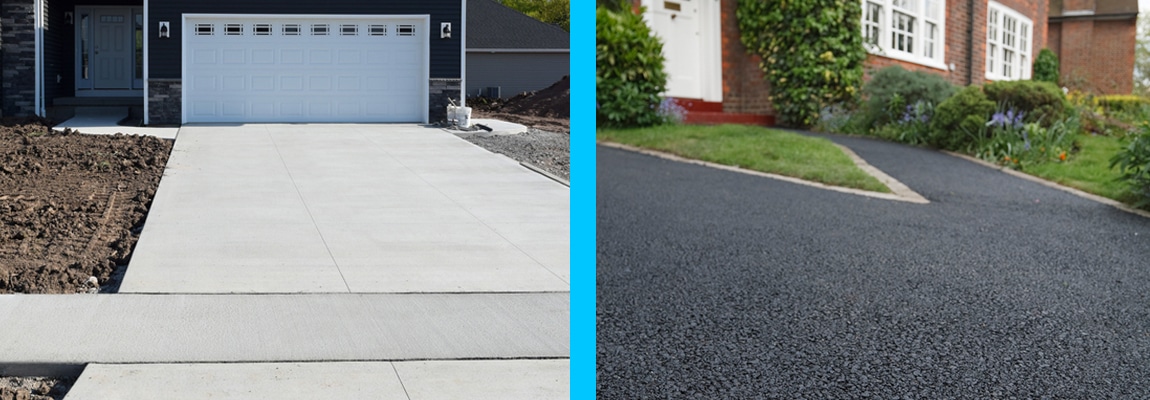
  • Asphalt vs Concrete Driveways: What’s the Difference and Which One Is Right for You?

    Asphalt vs Concrete Driveways: What’s the Difference and Which One Is Right for You?

    Key Takeaways
    • Asphalt usually costs less up front than concrete, while concrete often costs more initially but may last longer.
    • Asphalt typically lasts about 15 to 20 years with maintenance, while concrete can last 30 years or more with proper care.
    • Asphalt is generally better suited to colder freeze-thaw climates because it is more flexible, while concrete is more rigid and more sensitive to movement and cracking.
    • Asphalt needs more routine maintenance such as sealcoating and crack repair, but repairs are usually easier and less expensive than concrete repairs.
    • Concrete offers more color, texture, and pattern options, making it a stronger choice for homeowners who want a more customized look.

    Choosing between an asphalt driveway and a concrete driveway is one of the biggest decisions homeowners make when planning a new installation. Both materials can create a durable, attractive surface, but they perform differently when it comes to cost, maintenance, appearance, climate resistance, and long-term repair needs.

    If you are trying to decide between the two, the right answer usually comes down to your budget, your property, your local conditions, and how you plan to use the driveway.

    What Is the Main Difference Between Asphalt and Concrete?

    The biggest difference is how the material behaves over time. Asphalt is more flexible, which helps it handle freeze-thaw conditions and minor movement in the base. Concrete is more rigid, which can make it very durable in the right conditions but also more prone to cracking when movement occurs.

    Asphalt is made with aggregates and asphalt binder, while concrete is made with cement, sand, stone, and water. Because of these differences, the two materials cure, age, and perform differently over time.

    Cost Comparison: Asphalt vs Concrete

    For many homeowners, budget is where the decision starts. In general, asphalt tends to have a lower upfront cost than concrete.

    Understanding the true cost of an asphalt driveway helps put this into perspective. While asphalt is typically more affordable initially, long-term costs depend on maintenance, repairs, and lifespan.

    Concrete usually costs more upfront but may last longer under the right conditions. The better value depends on how long you plan to stay in your home and how you maintain the surface.

    Lifespan and Durability

    Asphalt Driveway Lifespan

    Asphalt driveways typically last 15–20 years with proper maintenance. Their flexibility makes them well-suited for areas with temperature fluctuations and seasonal movement.

    Over time, asphalt can oxidize, fade, and develop cracks if not maintained properly, but it can often be repaired or resurfaced effectively.

    Concrete Driveway Lifespan

    Concrete driveway installations can last 30 years or more when properly installed and maintained. However, because concrete is rigid, it can crack when the base shifts or when exposed to harsh freeze-thaw conditions.

    Repairs to concrete are often more visible and more difficult to blend compared to asphalt.

    [elementor-template id=”4630″]

    Maintenance Differences

    Asphalt Maintenance

    Asphalt requires more routine maintenance, including sealcoating and crack filling. The benefit is that repairs are typically easier, faster, and more affordable.

    • Sealcoating every 2–3 years
    • Crack filling to prevent water intrusion
    • Patching and resurfacing options

    Concrete Maintenance

    Concrete requires less frequent maintenance but can be more difficult to repair when issues occur.

    • Occasional sealing
    • Joint maintenance
    • More complex repairs if cracking occurs

    Appearance and Design Options

    Concrete offers more customization options, including stamped patterns, colors, and decorative finishes. This makes it a popular choice for homeowners focused on design and aesthetics.

    Asphalt provides a clean, smooth, and uniform appearance that works well for most residential properties. It is more limited in design but offers a classic and practical look.

    Climate Considerations

    Your location plays a major role in choosing the right material. In regions like the Connecticut climate, asphalt often performs better due to its flexibility and ability to handle freeze-thaw cycles.

    Concrete can still perform well but requires proper installation techniques to minimize cracking caused by temperature changes.

    Installation Time and Usability

    Asphalt can typically be installed faster and used sooner than concrete. In many cases, an asphalt driveway can be completed in one to two days.

    Concrete requires a longer curing time, which means you may need to wait several days before using the surface.

    Repair and Long-Term Flexibility

    Asphalt offers more flexibility when it comes to repairs. It can often be patched, resurfaced, or restored without replacing the entire driveway.

    Concrete repairs, while possible, are often more noticeable and may require more extensive work.

    Which Is the Better Choice?

    Choose Asphalt If You Want:

    • Lower upfront cost
    • Better performance in colder climates
    • Faster installation
    • Easier repairs and maintenance

    Choose Concrete If You Want:

    • Longer potential lifespan
    • More decorative options
    • Less frequent maintenance

    Final Thoughts

    Choosing between asphalt and concrete comes down to your priorities. Asphalt is often the best choice for homeowners looking for a cost-effective, durable solution that performs well in colder climates. Concrete is a strong option for those prioritizing aesthetics and long-term durability.

    The right decision depends on your budget, maintenance expectations, and how your driveway will be used over time.

    Whether you choose asphalt or concrete, Maisano Brothers Inc. delivers expert installation built for Connecticut weather. Get a free estimate and let us help you pick the right material for your residential driveway.

    [elementor-template id=”4630″]

    Frequently Asked Questions

    Is asphalt cheaper than concrete for a driveway?

    Usually yes. Asphalt at roughly $3 to $7 per square foot and concrete at roughly $4 to $10 per square foot, though actual pricing varies by site and project scope.

    Does asphalt last as long as concrete?

    Usually no. The current article says asphalt typically lasts 15 to 20 years with maintenance, while concrete can last 30 years or more with proper care.

    Which driveway is better in cold weather?

    Asphalt is often the better choice in cold climates because its flexibility helps it handle freeze-thaw movement better than concrete.

    Which driveway needs more maintenance?

    Asphalt typically needs more routine maintenance, including periodic sealcoating and crack repair, while concrete usually needs less frequent maintenance but can be harder to repair when problems develop.

    Can oil stains damage an asphalt driveway?

    Yes. Petroleum products can soften asphalt and contribute to surface deterioration over time. If you’re dealing with stubborn stains, explore the best commercial degreasers for removing oil stains from asphalt to properly clean and protect your surface.

    Is concrete more decorative than asphalt?

    Yes. Concrete offers more options for color, texture, pattern, and stamped finishes, while asphalt is more limited aesthetically.

    Which driveway can be used sooner after installation?

    Asphalt is typically installed faster and can often be used sooner, while concrete takes longer to cure and requires more patience before regular use.

  • Best Practices for Snow Removal on Asphalt Driveways and Parking Lots

    Best Practices for Snow Removal on Asphalt Driveways and Parking Lots

    Key Takeaways
    • Improper snow removal can damage asphalt through scraping, pressure, and freeze-thaw cycles
    • Rubber-edged plows are safer than metal blades
    • Removing snow early prevents compaction and bonding
    • Deicing materials should be used carefully to avoid long-term damage
    • Preventative maintenance before winter significantly reduces damage

    Snow and ice are part of Connecticut winters, but improper snow removal can cause serious damage to asphalt driveways and parking lots. What seems like routine maintenance can lead to scraping, cracking, and long-term deterioration if done incorrectly.

    Understanding how to safely remove snow while you protect your asphalt is essential for maintaining the life of your pavement.

    Why Snow Removal Can Damage Asphalt

    Asphalt is a flexible material, but during colder temperatures it becomes more brittle. This makes it more vulnerable to damage from heavy equipment, sharp plow blades, and improper techniques.

    In addition, freeze-thaw cycles allow water to enter cracks and expand, weakening the structure beneath the surface.

    Use the Right Snow Removal Equipment

    Avoid Metal Blades on Asphalt

    Metal plow blades can scrape and gouge asphalt surfaces, especially if the driveway is already worn or cracked.

    Instead, use plows with rubber or polyurethane edges to reduce the risk of surface damage.

    Adjust Plow Height Properly

    Setting the plow blade slightly above the surface helps prevent direct contact with the asphalt, minimizing wear and tear.

    Don’t Wait Too Long to Remove Snow

    Allowing snow to compact and freeze makes removal more difficult and increases the likelihood of damage. Packed snow can bond to the surface, requiring more aggressive removal methods.

    Clearing snow early and consistently is the safest approach.

    Be Careful with Deicing Materials

    Deicing products can help improve safety, but some materials can impact asphalt over time. If you’re unsure what to use or how much to apply, check out our complete guide to salting asphalt driveways for safe and effective winter maintenance strategies.

    Safer Options

    • Calcium chloride
    • Magnesium chloride

    These are generally less aggressive than traditional rock salt and work effectively at lower temperatures.

    Use Salt in Moderation

    While salt does not directly destroy asphalt, excessive use can contribute to moisture penetration and accelerate deterioration when combined with freeze-thaw cycles.

    Protect Edges and Weak Areas

    The edges of asphalt driveways and parking lots are especially vulnerable during winter. Plows can catch edges and cause cracking or breakage.

    Take extra care around:

    • Driveway edges
    • Transitions to sidewalks or aprons
    • Areas with existing damage
    [elementor-template id=”4630″]

    Avoid Heavy Equipment on Residential Driveways

    Residential asphalt is typically not designed for heavy commercial plows or equipment. Using oversized machinery can cause stress, especially when the ground is frozen and less flexible.

    Use appropriately sized equipment for the surface you’re clearing.

    Watch for Freeze-Thaw Damage

    Winter conditions create constant expansion and contraction within asphalt. Water enters small cracks, freezes, expands, and then melts, repeating the cycle and weakening the pavement.

    This is one of the main causes of cracks and potholes in the spring.

    Schedule Repairs After Winter

    Winter often reveals existing weaknesses in asphalt. Once the weather warms up, it’s important to inspect your surface for damage.

    Look for:

    • New cracks
    • Potholes
    • Surface raveling
    • Drainage issues

    Addressing these problems early prevents further deterioration.

    Preventative Maintenance Before Winter

    The best way to protect asphalt during winter is to prepare it ahead of time.

    Sealcoating

    Sealcoating helps protect asphalt from water infiltration, chemicals, and oxidation.

    Crack Filling

    Sealing cracks before winter prevents water from entering and freezing beneath the surface.

    Drainage Improvements

    Ensuring proper drainage reduces standing water and limits freeze-thaw damage.

    Conclusion

    Snow removal is necessary, but it should be done carefully to avoid damaging your asphalt. Using the right equipment, removing snow early, and maintaining your pavement properly can significantly extend its lifespan.

    Winter conditions are tough on asphalt, but with the right approach, you can protect your driveway or parking lot and avoid costly repairs in the spring.

    Connecticut winters are tough on asphalt. If your driveway has taken a beating this season, request a free spring inspection from Maisano Brothers. A timely sealcoating application can prevent costly repairs down the road.

    Can snow plowing damage asphalt?

    Yes. Improper plowing, especially with metal blades, can scrape and damage the surface.

    What is the safest way to remove snow from asphalt?

    Use rubber-edged plows, remove snow early, and avoid aggressive scraping.

    Does salt damage asphalt driveways?

    Salt does not directly damage asphalt, but it can contribute to moisture-related deterioration over time.

    Should you shovel or plow an asphalt driveway?

    Both are fine when done carefully, but avoid sharp tools that can gouge the surface.

    When should I repair asphalt after winter?

    Repairs should be done in spring once temperatures rise and damage is visible.

    How do I protect my driveway before winter?

    Sealcoating, crack filling, and proper drainage are the best preventative steps.

  • The History and Pronunciation of the Word “Asphalt”

    The History and Pronunciation of the Word “Asphalt”

    The word “asphalt” is instantly recognizable to anyone who’s driven a car, walked down a city street, or had a driveway paved. Its roots stretch back thousands of years—and even its pronunciation varies by region. This article explores the origins of the name, how its meaning evolved, and why people say it differently around the world.

    Ancient Origins of the Word “Asphalt”

    The term traces to ancient Greek, where ἄσφαλτος (ásphaltos) meant “secure” or “immovable” (Oxford English Dictionary). Greeks used the word for a naturally occurring, tar‑like substance that waterproofed and bonded materials. Archaeological evidence shows intensive use across Mesopotamia more than 5,000 years ago to seal boats, construct ziggurats, and even in Egyptian mummification. Through trade and translation, the term entered Latin as asphaltus, then Old French as asphalte, and eventually Middle and Modern English, carrying forward its association with a durable, binding material.

    The Evolution of Its Meaning

    In antiquity, “asphalt” referred to natural deposits—petroleum‑based bitumen seeping from the earth (the famous La Brea “Tar” Pits are actually asphalt seeps). During the 19th‑century Industrial Revolution, the meaning broadened to include refined products from crude oil. Engineers discovered that blending asphalt binder with mineral aggregate produced a strong, durable surface—what we now call asphalt concrete—and it became foundational to modern road building. This shift mirrors humanity’s move from found materials to engineered, performance‑optimized construction products.

    Regional Differences in Pronunciation

    Pronunciation varies widely across English‑speaking regions. In the United States, the most common form is AS‑falt, simplifying the “ph” sound. In the United Kingdom, ASH‑falt is common, retaining a softer middle consonant. Other local variants—such as az‑FALT or as‑PHALT—reflect regional phonetics and the path by which the word entered local usage. These differences underscore the word’s long linguistic journey.

    Misconceptions and Clarifications

    Asphalt is often confused with tar, but the two are chemically distinct: asphalt is petroleum‑derived, while tar is typically coal‑derived (Asphalt Institute). In the U.S., “blacktop” is a casual synonym for asphalt pavement, though it can refer to certain mix types. In the UK, “asphalt” may also mean mastic asphalt, a dense, waterproof surfacing that differs from the flexible asphalt concrete common in the U.S. Understanding these naming differences helps avoid confusion in international contexts.

    Historical Name Variations of Asphalt

    Language / Region Historical Term Approximate Period Notes on Usage
    Ancient Greek ἄσφαλτος (ásphaltos) ~5th century BCE “Secure; immovable”; used for natural bitumen.
    Latin Asphaltus Roman Empire Appears in engineering and waterproofing texts.
    Old French Asphalte Middle Ages Entered via Latin through trade and scholarship.
    Medieval English Asphalte / Aspalt 13th–15th c. Used in early English trade and building records.
    Modern English Asphalt 17th c.–present Global use; regional pronunciation differences.

    Fun Facts About the Name “Asphalt”

    Classical sources reference asphalt in early construction and seafaring; the Dead Sea was once called the “Lake of Asphalt” for its floating chunks of bitumen. Modern scientific sites like the La Brea pits—despite the name—are asphalt, not tar, and have preserved prehistoric fauna for millennia. These examples highlight how the material (and the word) spans culture, science, and time.

    Final Thoughts

    From the ancient Greek ásphaltos to today’s engineered pavements, the word “asphalt” reflects a durable idea: strong, reliable, and built to last. However you pronounce it—AS‑falt, ASH‑falt, or otherwise—the history behind the name mirrors the resilience of the material itself.

    Ready to speak with seasoned asphalt experts? Contact Maisano Bros. Inc. for professional paving, sealcoating, and repair.

    Glossary Keyword: Binder — the asphalt component that binds aggregate to form asphalt concrete.

  • How Long Is The Curing Time for Freshly Laid Asphalt?

    How Long Is The Curing Time for Freshly Laid Asphalt?

    Key Takeaways
    • Initial Set Time: Fresh asphalt can typically support light foot traffic within 24–48 hours after paving.
    • Curing Period: Full curing can take 3 to 6 months, depending on weather, thickness, and asphalt mix type.
    • Factors That Affect Curing Time:
      • Weather: Hot, dry conditions speed up curing; cold, damp weather slows it down.
      • Traffic Load: Heavier vehicles require a longer wait before use.
      • Thickness of the Pavement: Thicker layers cure more slowly.
      • Asphalt Mix Design: Different mixes have varying cure profiles.
    • What You Can Do During Curing:
      • Avoid parking in the same spot repeatedly.
      • Limit turning the steering wheel when the vehicle is not in motion.
      • Refrain from placing heavy items (e.g., dumpsters) on the surface.
    • Why Curing Matters: Proper curing ensures the asphalt reaches full strength, resists rutting and surface damage, and increases long-term durability.

    When laying fresh asphalt, curing time is crucial for achieving a durable and long-lasting pavement. Here’s an in-depth look at the curing process, including answers to frequently asked questions.

    What is Asphalt Curing?

    Curing refers to the period required for freshly laid asphalt to harden and reach its full structural integrity. This process involves the evaporation of moisture and the bonding of asphalt binders with aggregates.

    How Long Does Asphalt Take to Cure?

    While asphalt can support foot traffic within 24 hours and vehicle traffic within 48 to 72 hours, it typically takes 6 to 12 months to fully cure. During this time, the asphalt will continue to harden and become more resilient.

    Frequently Asked Questions

    1. How Long After Paving Can You Walk on It?

    You can generally walk on freshly laid asphalt within 24 hours of installation. During this initial period, the asphalt begins to set and harden, making it safe for light foot traffic. However, it’s crucial to avoid heavy or sharp objects that could damage the surface. Allowing this brief curing time ensures the asphalt maintains its integrity and provides a durable walking surface.

    2. Can I Drive on Fresh Asphalt Right Away?

    It’s recommended to wait at least 24 to 48 hours before driving on fresh asphalt to allow it to set properly. Premature driving can cause indentations and damage.

    3. How Can Weather Affect Curing Time?

    Warm weather speeds up curing, while cold or wet conditions can slow it down. Ideal temperatures for laying and curing asphalt are between 50°F and 90°F.

    4. What Are the Signs that Asphalt is Fully Cured?

    Fully cured asphalt appears harder and less oily. It no longer feels soft to the touch and is resistant to indentations from heavy objects or vehicles.

    5. Can Sealing Help the Curing Process?

    Sealcoating can protect asphalt and extend its lifespan, but it should be applied only after the asphalt is fully cured, usually after 6 to 12 months.

    6. How Can I Maintain Asphalt During the Curing Period?

    Avoid parking in the same spot repeatedly, do not use sharp objects that can gouge the surface, and keep heavy trucks off the pavement until it’s fully cured.

    7. What If It Rains After Laying Asphalt?

    Light rain won’t significantly affect the curing process, but heavy rain can disrupt it, especially in the first few hours. Proper drainage and protective measures are essential during this time.

    8. Are There Any Precautions for High-Traffic Areas?

    For high-traffic areas, consider keeping the area closed off for a longer period to ensure proper curing. Applying a temporary surface covering can also help protect the asphalt during the initial curing phase.

    Detailed Steps in the Asphalt Curing Process

    Initial Setting Period

    Within the first 24 hours, the asphalt sets and begins to harden. This period is critical as the surface is most vulnerable to damage from foot or vehicle traffic. It’s important to keep all traffic off the asphalt during this time.

    Early Curing Phase

    Over the next few days, the asphalt continues to harden. During this phase, light foot traffic may be allowed after 24 hours, but vehicle traffic should wait at least 48 to 72 hours. Avoid parking heavy vehicles or machinery on the asphalt.

    Ongoing Curing

    For the first few months, the asphalt will continue to cure and harden. During this time, it’s essential to avoid practices that could damage the surface, such as turning vehicle wheels sharply when stationary or placing heavy objects on the driveway.

    Full Curing

    Asphalt reaches its full strength and hardness after about 6 to 12 months. Once fully cured, the asphalt is less susceptible to damage and can support regular use without significant issues.

    Maintenance Tips During the Curing Period

    Regular Cleaning: Keep the surface free from debris, dirt, and leaves to prevent staining and damage. Use a soft broom or blower for cleaning.

    Avoid Chemical Spills: Substances like oil, gasoline, or antifreeze can damage the asphalt. Clean spills immediately using appropriate cleaning methods.

    Limit Heavy Loads: Try to avoid parking heavy vehicles on the asphalt until it has fully cured. If necessary, distribute the weight by using boards or plywood under the tires.

    Mind the Edges: The edges of the asphalt are more prone to damage. Avoid driving over the edges and consider installing curbs or landscaping to protect them.

    Conclusion

    Understanding and respecting the curing time for freshly laid asphalt is essential for ensuring a durable and long-lasting pavement. Proper care and maintenance during the curing period can prevent premature damage and extend the life of your asphalt surface. Always consult with professional paving contractors to get specific advice tailored to your project and local conditions. By following these guidelines, you can enjoy a smooth, strong, and resilient asphalt surface for many years.

  • Asphalt vs. Concrete Paving: Pros, Cons, and Which Option Is Right for You

    Asphalt vs. Concrete Paving: Pros, Cons, and Which Option Is Right for You

    When it comes to choosing between asphalt and concrete for your driveway or parking lot, the decision goes beyond surface appearance. Both materials have distinct advantages and disadvantages that can impact your project’s cost, durability, installation time, and long-term maintenance needs. Whether you’re a homeowner replacing a driveway or a property manager planning a large commercial lot, understanding the difference between these two popular paving options is essential.

    Let’s break down the key differences between asphalt paving and concrete paving to help you make an informed choice.

    Key Differences at a Glance

    Feature Asphalt Paving Concrete Paving
    Cost Lower upfront cost Higher initial cost
    Installation Time Quick (1–2 days + curing) Slower (up to a week curing)
    Durability Flexible and weather-resistant Hard, rigid surface
    Maintenance Requires sealcoating every few years Prone to cracks, harder to repair
    Aesthetics Traditional black finish Variety of color and finish options
    Winter Performance Retains heat, melts snow faster Can become slick and freeze faster
    Best Use Roads, driveways, commercial lots Decorative patios, walkways, lighter-use areas

    Cost Comparison: Asphalt Is More Affordable Upfront

    If budget is your top concern, asphalt is typically the more affordable paving solution. On average, asphalt installation ranges from $3 to $5 per square foot, while concrete often costs between $5 and $10 per square foot, depending on finishes and reinforcements.

    Asphalt’s lower price point makes it ideal for larger projects like parking lots, roadways, or multi-family driveways, where keeping costs down is important. Concrete can become more expensive when decorative finishes, color additives, or custom scoring are added.

    Installation Time: Asphalt Wins for Speed

    Asphalt can usually be installed and ready for light traffic within 48–72 hours, while concrete requires up to 7 days to cure and gain strength. For commercial projects, this reduced downtime means fewer operational disruptions and faster returns to normal business.

    Durability and Performance: It Depends on the Environment

    • Asphalt is flexible and better suited for areas with heavy freeze-thaw cycles. Its ability to expand and contract helps prevent cracking during extreme weather.
    • Concrete, while more rigid, can last longer in stable climates but is more likely to crack in colder regions.

    In general, asphalt is better at handling heavy vehicle traffic due to its ability to flex under pressure, while concrete works well for areas that prioritize visual appeal over load tolerance.

    Maintenance Requirements

    Both materials require maintenance, but the type and frequency differ:

    Asphalt Maintenance:

    • Needs sealcoating every 2–4 years to protect against UV rays, moisture, and oil spills.
    • Crack filling and patching are relatively easy and inexpensive.

    Concrete Maintenance:

    • Less frequent upkeep, but more costly to repair when cracks appear.
    • Repairs are often visible and may require full slab replacement to match aesthetics.

    Cold Weather Performance

    Asphalt’s dark color helps it absorb heat and melt snow and ice faster in the winter months. It also resists damage from road salt better than concrete.

    Concrete, on the other hand, can become brittle in cold temperatures and may suffer from salt damage and surface flaking, especially if not properly sealed.

    Aesthetics and Customization

    Concrete offers more flexibility for decorative applications. Stamped patterns, custom colors, and exposed aggregate finishes are all options with concrete, but they come at a price.

    Asphalt is limited in terms of aesthetics (generally just a sleek, black finish), though it can be enhanced with decorative stamped asphalt or special coatings.

    The Final Verdict: Which Is Better?

    There’s no one-size-fits-all answer. The right choice depends on your budget, climate, maintenance expectations, and how the surface will be used.

    Choose Asphalt if you:

    • Need a cost-effective solution
    • Want faster installation
    • Live in a cold or wet climate
    • Expect heavy traffic

    Choose Concrete if you:

    • Prefer a decorative finish
    • Don’t mind a longer installation process
    • Live in a mild climate
    • Have lighter foot or vehicle traffic

    Need Help Deciding?

    At Maisano Bros. Inc., we’ve been paving Connecticut and beyond for over 60 years. Whether you’re considering asphalt or concrete, our team can assess your needs and recommend the best option for long-term performance and value.

    Contact us today for a free site assessment or to learn more about our full-service paving solutions.

  • The 5 Best Asphalt Paving Boots for 2025: Built for Heat, Grip, and Tough Jobs

    The 5 Best Asphalt Paving Boots for 2025: Built for Heat, Grip, and Tough Jobs

    Working with asphalt means dealing with extreme temperatures, rugged terrain, and the constant threat of burns and blisters. That’s why choosing the right boots isn’t just about comfort—it’s about safety and performance. We’ve compared five of the top-rated asphalt paving boots on the market today so you can find a pair that holds up to the demands of the jobsite.

    What to Look for in Asphalt Paving Boots

    Before diving into the top picks, here are the key features to look for in boots designed for asphalt work:

    • Heat-resistant soles
    • Flat wedge soles
    • Slip and oil resistance
    • Steel or composite toe protection
    • Comfort and breathability

    Top 5 Asphalt Paving Boots Compared

    Brand & Model Sole Type Heat Resistance Safety Toe Weight Price Range
    Timberland PRO 6" Wedge Wedge Up to 248°F Soft Toe Light $120–$140
    Thorogood American Heritage 804-4200 MAXWear Wedge Up to 300°F Steel Toe Medium $220–$250
    Red Wing 10875 Classic Moc Traction Tred Wedge High No Safety Toe Medium $310–$340
    KEEN Utility Cincinnati 6" Air-infused Wedge 572°F (heat-tested) Carbon-Fiber Toe Medium $190–$210
    Iron Age Ground Breaker IA5016 Heat-Resistant Rubber 500°F Steel Toe Heavy $110–$130

    1. Timberland PRO 6" Wedge Sole Boot

    Best for: Lightweight comfort on moderately hot jobsites

    • Pros: Great break-in time, slip-resistant, affordable
    • Cons: Not ideal for sustained exposure to very high asphalt temps
    • Notable Feature: Anti-fatigue footbed for all-day wear

    Verdict: A budget-friendly option with comfort prioritized over extreme heat performance

    2. Thorogood American Heritage 804-4200

    Best for: Professional crews working on hot surfaces

    • Pros: Goodyear welt construction, steel toe, high heat resistance
    • Cons: Slightly heavier than some competitors
    • Notable Feature: MAXWear Wedge sole designed specifically for roofers and pavers

    Verdict: A union favorite for a reason—durable, reliable, and made in the USA

    3. Red Wing 10875 Classic Moc Toe

    Best for: Long-term investment in style + function

    • Pros: Premium leather, resoleable, comfortable fit over time
    • Cons: No safety toe, premium pricing
    • Notable Feature: Iconic moc toe design with top-tier heat resistance

    Verdict: Best if you want a resoleable boot that balances heat resistance with timeless style

    4. KEEN Utility Cincinnati 6” Carbon-Fiber Toe

    Best for: Maximum protection with modern materials

    • Pros: Lightweight carbon-fiber toe, very high heat resistance
    • Cons: Newer product with evolving reputation
    • Notable Feature: Heat-tested to 572°F; ideal for summer paving

    Verdict: A high-performance boot that blends new technology with jobsite durability

    5. Iron Age Ground Breaker IA5016

    Best for: Budget-conscious crews needing rugged protection

    • Pros: Very affordable, steel toe, slip-resistant
    • Cons: Bulkier, heavier build
    • Notable Feature: Tested against high heat and oil exposure

    Verdict: Great entry-level boot for paving apprentices or part-time use

    Final Verdict: Which Boot Should You Choose?

    • Best Overall: Thorogood American Heritage 804-4200
    • Best Budget Option: Iron Age Ground Breaker
    • Most Comfortable: Timberland PRO Wedge
    • Best for High Heat Jobs: KEEN Cincinnati
    • Best Long-Term Investment: Red Wing Classic Moc

    Bonus Tip: Don’t Forget the Insole

    Consider adding a heat-reflective or gel-cushioned insole to reduce fatigue and protect from radiant heat during peak paving season.

    Need Help Choosing? We’re Here to Help

    Contact Maisano Bros. Inc. for equipment recommendations or to learn more about our commercial asphalt services.