
Tag: asphalt curing time

  • Heated Driveway: Is It Worth It for CT Homeowners?

    Heated Driveway: Is It Worth It for CT Homeowners?

    If a Connecticut driveway turns slick after every storm, a heated driveway can sound like the perfect fix. It can be a serious upgrade, especially for steep, shaded, or high-use driveways where snow and ice create real access problems. But it is not a simple add-on, and it is rarely the cheapest path.

    The better question is whether the system solves a problem that matters enough to justify the added cost. If you are already planning a full replacement through asphalt paving services or comparing options for residential paving services, that is usually the right time to discuss heating. For a broader comparison, Maisano Brothers also has a related guide on heated asphalt and concrete driveways.

    Key Takeaways

    A heated driveway is usually worth considering when safety, access, and winter convenience matter more than upfront cost.

    Quick answer

    • Heated driveways are most useful on long, steep, shaded, or high-use driveways.
    • They can reduce shoveling, salting, and ice buildup.
    • They cost more than standard asphalt because the system must be built into the driveway.
    • Base prep, grading, and drainage matter even more than they do on a normal paving job.
    • New installations are usually better candidates than retrofits.

    What a heated driveway actually does

    A heated driveway uses electric cables or hydronic tubing below the pavement to warm the surface from underneath. When the system runs, it helps melt snow before it bonds to the asphalt and limits the ice that forms after storms.

    Electric systems are often simpler for smaller residential areas. Hydronic systems are more complex, but they may make sense for larger driveways or properties where operating efficiency matters over time.

    When it makes sense for Connecticut homeowners

    The strongest candidates are driveways where winter creates more than a mild inconvenience. A short, flat driveway may not justify the cost. A steep driveway that refreezes every night is a different conversation.

    Good candidates include

    • Steep residential driveways
    • Long or wide paved approaches
    • Homes with mobility concerns
    • Driveways with heavy shade and frequent refreeze
    • Properties where snow removal is a recurring problem

    What changes in the paving process

    A heated driveway is not a normal overlay. The heating layout has to be planned before the asphalt goes down, and the base has to be stable enough to protect both the pavement and the system underneath it.

    Heated driveway installation layers
    The base, drainage, and heating layout need to work together before the asphalt is installed.

    Base prep matters more than ever

    Soft areas, poor compaction, and weak subbase material can cause movement under the heating system. That is why asphalt grading should be part of the planning before the system is installed.

    Drainage has to be deliberate

    Melting snow creates water. If that water pools in low spots or refreezes along the edges, the system loses much of its value. Drainage should be designed as part of the driveway, not treated as an afterthought.

    Retrofits are harder

    Adding heat to an existing driveway usually means major reconstruction. For most homeowners, it makes more sense to consider the upgrade during a full replacement or new asphalt driveway installation.

    Is it worth the money?

    It depends on the problem you are trying to solve. If you are looking for the lowest-cost driveway, heating is not the right answer. If winter access is a constant frustration, the convenience and safety may be worth the premium.

    Operating cost depends on the system type, the driveway size, and how often it runs. Installation cost depends on the heating system, base condition, drainage work, and paving scope. The asphalt cost calculator can help frame the standard paving side before you compare the added heating cost.

    When a standard driveway is still the better move

    A standard asphalt driveway is still the smarter choice for many homes. It costs less, is simpler to maintain, and avoids the complexity of a heating system. If the driveway is flat, easy to clear, and not prone to ice, the extra investment may not return enough value.

    The right decision should fit how the driveway is used. A premium system only makes sense when the site and winter conditions call for it.

    Questions to ask before you commit

    • Is my driveway a strong candidate for a heated system?
    • Would this be part of a replacement or a retrofit?
    • Which system type fits the driveway size and layout?
    • How will drainage be handled after snow melts?
    • What operating cost should I expect?
    • What happens if the heating system needs repair later?

    FAQs

    Can a heated driveway be added to any driveway?

    Not always. Some properties are much better candidates than others, and retrofits can be expensive.

    Is a heated driveway better for new construction?

    Usually yes. It is easier to build the heating system into a new driveway than to cut into an existing one.

    Does it eliminate all snow removal?

    It can reduce snow and ice significantly, but performance depends on the system, storm conditions, and how the driveway drains.

    Is it a luxury upgrade?

    Yes, but that does not make it unreasonable. For the right property, it can be a practical safety and access improvement.

    Should I talk to a paving contractor first?

    Yes. The heating system, base, drainage, and asphalt all need to be planned together.

    Bottom line for CT homeowners

    A heated driveway can be worth it in Connecticut when winter access is a real problem and the driveway is being rebuilt correctly from the base up. If you want to compare a heated option with a standard asphalt driveway, contact Maisano Brothers Inc. or request an estimate.
  • How Long Does Driveway Paving Take?

    How Long Does Driveway Paving Take?

    Most homeowners want a simple answer to this question: how long will driveway paving actually take? The honest answer is that the paving itself may only take a day or two, but the full process can take longer once scheduling, prep work, weather, and curing are included.

    If you are planning around vehicles, deliveries, or a busy household, it helps to know where the time really goes. For a full replacement, the new asphalt driveway installation process is the best comparison point.

    Key Takeaways

    Driveway paving is usually fast on installation day, but the full project timeline includes more than the asphalt placement itself.

    Quick answer

    • Most residential driveway paving jobs take 1 to 3 days on site.
    • Prep work and weather can extend the schedule.
    • You may need to wait before driving on new asphalt.
    • Peak season scheduling can add lead time before work begins.
    • A good contractor should explain the full timeline before the job starts.

    What usually happens before paving

    Before the crew lays asphalt, the site has to be measured, prepared, and checked for access. That can mean removing old material, repairing the base, grading the surface, and making sure the slope will shed water properly.

    1. Estimate and scheduling

    The estimate visit may be quick, but the job still has to fit the contractor’s calendar. During busy months, scheduling can take longer than the work itself.

    2. Prep work

    Prep can add a day or more if the driveway needs excavation, base repair, drainage correction, or asphalt grading.

    3. Weather window

    Rain, cold, or poor ground conditions can delay the start date and may pause work once it begins.

    Many driveway guides note that the paving phase can be quick, but the whole project timeline depends on scheduling and site conditions: CMI Paving driveway guide.

    What happens on paving day

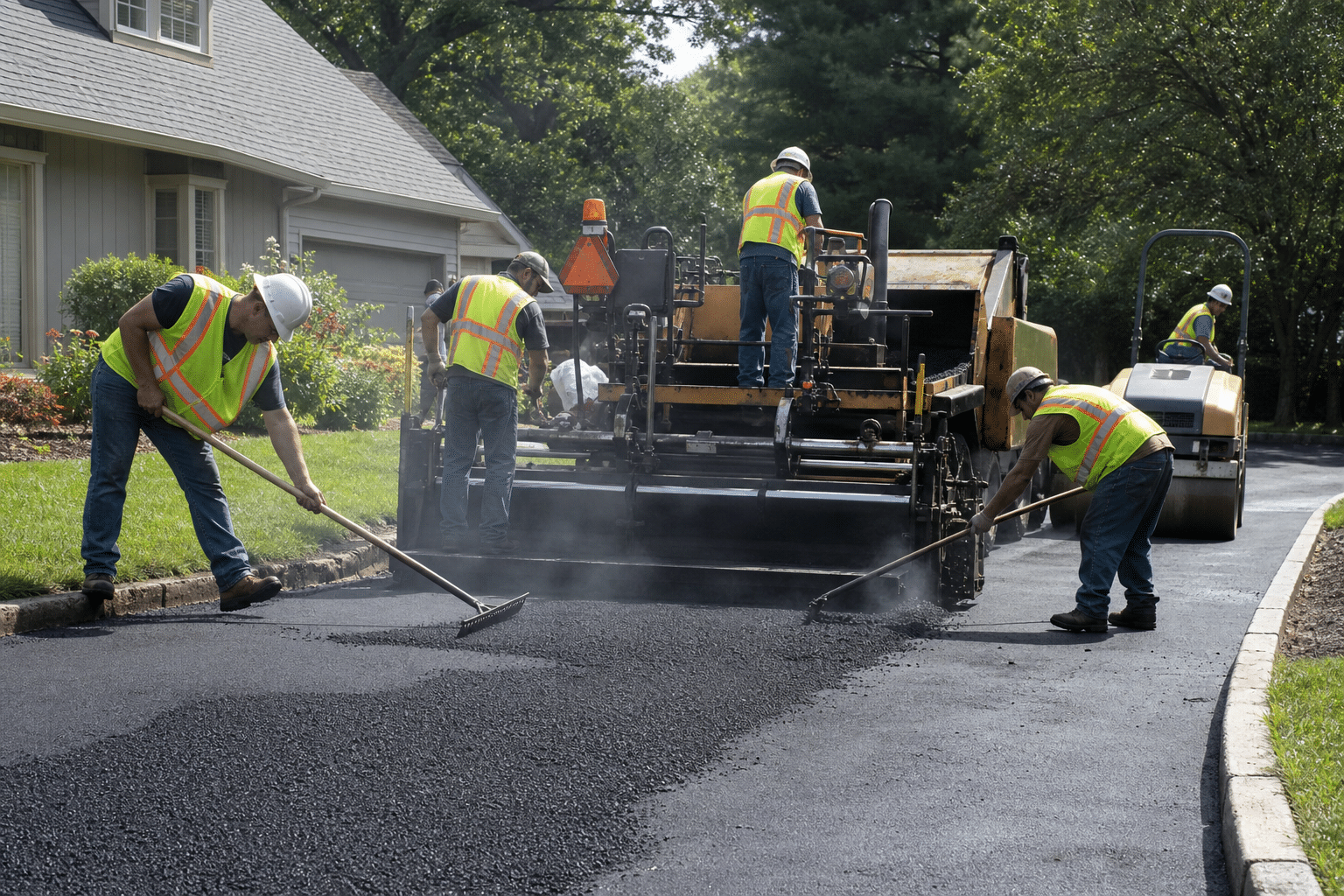
    On a simple residential job, the crew may arrive, finish final prep, place the asphalt, compact it, and clean up the site the same day. Larger driveways or jobs with extra base work can take longer. Paving day is usually the most visible part of the process, but it is not the whole project.

    Typical same-day tasks

    • Final site preparation
    • Asphalt delivery
    • Placement and shaping
    • Compaction
    • Cleanup

    How long before you can use the driveway?

    That depends on temperature, asphalt mix, driveway thickness, and the contractor’s instructions. In many cases, light use may return relatively soon, but heavy use should wait longer.

    Do not assume that “done” means “ready for anything.” Fresh asphalt can look finished before it is ready for full traffic.

    What slows a job down

    • Rain or low temperatures
    • Hidden base problems
    • Hard-to-access driveways
    • Extra excavation or grading
    • Material or crew scheduling delays
    • Large driveway size or unusual layout

    A good contractor should warn you when one of these factors might stretch the timeline. If they do not mention any of them, ask before the work begins.

    Questions to ask before the job starts

    • How long will the project take on site?
    • How much prep is included?
    • What happens if weather delays the work?
    • When can I walk on the surface?
    • When can I drive or park on the surface?
    • What happens if hidden problems are found?

    How to plan around the work

    Build in a little extra time instead of treating the first date like a guarantee. Move vehicles out early, clear the driveway area, and avoid stacking other important errands on the same day. A small buffer keeps the project from disrupting your week if weather or prep work adds time.

    It also helps to ask when the surface can handle foot traffic, light vehicle traffic, and normal parking. Those are not always the same milestone.

    What the full timeline usually looks like

    A complete timeline usually starts with the estimate, moves into scheduling, then continues through prep, paving, cleanup, and a short period of cautious use. If the driveway needs more prep than expected, the schedule stretches from there.

    The contractor should be able to tell you whether your driveway is a simple quick-turn job or one that needs extra site work. That answer is more useful than a promise that only sounds fast.

    What to expect after the crew leaves

    Once the work is finished, the driveway may still need time before normal use. Your contractor’s aftercare instructions should explain when to walk on the surface, when to drive on it, and what kinds of traffic should wait.

    If you are budgeting the project as well as scheduling it, the asphalt cost calculator, asphalt paving services, and residential paving services can help you understand the larger scope.

    FAQs

    Can a driveway be paved in one day?

    Sometimes yes, especially on smaller residential jobs with minimal prep.

    Does the estimate visit take long?

    Usually not. The site visit is often quick compared with the actual work and scheduling process.

    Why do some jobs take much longer?

    Extra prep, weather, hidden base issues, and access problems are the usual reasons.

    When can I park on new asphalt?

    Ask your contractor. The answer depends on weather, mix, thickness, and site conditions.

    Should I build in extra time?

    Yes. A little buffer makes the project easier to manage if the schedule shifts.

    Plan for the full timeline, not just paving day

    The best projects are the ones where the homeowner knows what happens before, during, and after installation. If you want a clear schedule for your driveway project, contact Maisano Brothers Inc. or request an estimate.

  • How Long Is The Curing Time for Freshly Laid Asphalt?

    How Long Is The Curing Time for Freshly Laid Asphalt?

    Key Takeaways
    • Initial Set Time: Fresh asphalt can typically support light foot traffic within 24–48 hours after paving.
    • Curing Period: Full curing can take 3 to 6 months, depending on weather, thickness, and asphalt mix type.
    • Factors That Affect Curing Time:
      • Weather: Hot, dry conditions speed up curing; cold, damp weather slows it down.
      • Traffic Load: Heavier vehicles require a longer wait before use.
      • Thickness of the Pavement: Thicker layers cure more slowly.
      • Asphalt Mix Design: Different mixes have varying cure profiles.
    • What You Can Do During Curing:
      • Avoid parking in the same spot repeatedly.
      • Limit turning the steering wheel when the vehicle is not in motion.
      • Refrain from placing heavy items (e.g., dumpsters) on the surface.
    • Why Curing Matters: Proper curing ensures the asphalt reaches full strength, resists rutting and surface damage, and increases long-term durability.

    When laying fresh asphalt, curing time is crucial for achieving a durable and long-lasting pavement. Here’s an in-depth look at the curing process, including answers to frequently asked questions.

    What is Asphalt Curing?

    Curing refers to the period required for freshly laid asphalt to harden and reach its full structural integrity. This process involves the evaporation of moisture and the bonding of asphalt binders with aggregates.

    How Long Does Asphalt Take to Cure?

    While asphalt can support foot traffic within 24 hours and vehicle traffic within 48 to 72 hours, it typically takes 6 to 12 months to fully cure. During this time, the asphalt will continue to harden and become more resilient.

    Frequently Asked Questions

    1. How Long After Paving Can You Walk on It?

    You can generally walk on freshly laid asphalt within 24 hours of installation. During this initial period, the asphalt begins to set and harden, making it safe for light foot traffic. However, it’s crucial to avoid heavy or sharp objects that could damage the surface. Allowing this brief curing time ensures the asphalt maintains its integrity and provides a durable walking surface.

    2. Can I Drive on Fresh Asphalt Right Away?

    It’s recommended to wait at least 24 to 48 hours before driving on fresh asphalt to allow it to set properly. Premature driving can cause indentations and damage.

    3. How Can Weather Affect Curing Time?

    Warm weather speeds up curing, while cold or wet conditions can slow it down. Ideal temperatures for laying and curing asphalt are between 50°F and 90°F.

    4. What Are the Signs that Asphalt is Fully Cured?

    Fully cured asphalt appears harder and less oily. It no longer feels soft to the touch and is resistant to indentations from heavy objects or vehicles.

    5. Can Sealing Help the Curing Process?

    Sealcoating can protect asphalt and extend its lifespan, but it should be applied only after the asphalt is fully cured, usually after 6 to 12 months.

    6. How Can I Maintain Asphalt During the Curing Period?

    Avoid parking in the same spot repeatedly, do not use sharp objects that can gouge the surface, and keep heavy trucks off the pavement until it’s fully cured.

    7. What If It Rains After Laying Asphalt?

    Light rain won’t significantly affect the curing process, but heavy rain can disrupt it, especially in the first few hours. Proper drainage and protective measures are essential during this time.

    8. Are There Any Precautions for High-Traffic Areas?

    For high-traffic areas, consider keeping the area closed off for a longer period to ensure proper curing. Applying a temporary surface covering can also help protect the asphalt during the initial curing phase.

    Detailed Steps in the Asphalt Curing Process

    Initial Setting Period

    Within the first 24 hours, the asphalt sets and begins to harden. This period is critical as the surface is most vulnerable to damage from foot or vehicle traffic. It’s important to keep all traffic off the asphalt during this time.

    Early Curing Phase

    Over the next few days, the asphalt continues to harden. During this phase, light foot traffic may be allowed after 24 hours, but vehicle traffic should wait at least 48 to 72 hours. Avoid parking heavy vehicles or machinery on the asphalt.

    Ongoing Curing

    For the first few months, the asphalt will continue to cure and harden. During this time, it’s essential to avoid practices that could damage the surface, such as turning vehicle wheels sharply when stationary or placing heavy objects on the driveway.

    Full Curing

    Asphalt reaches its full strength and hardness after about 6 to 12 months. Once fully cured, the asphalt is less susceptible to damage and can support regular use without significant issues.

    Maintenance Tips During the Curing Period

    Regular Cleaning: Keep the surface free from debris, dirt, and leaves to prevent staining and damage. Use a soft broom or blower for cleaning.

    Avoid Chemical Spills: Substances like oil, gasoline, or antifreeze can damage the asphalt. Clean spills immediately using appropriate cleaning methods.

    Limit Heavy Loads: Try to avoid parking heavy vehicles on the asphalt until it has fully cured. If necessary, distribute the weight by using boards or plywood under the tires.

    Mind the Edges: The edges of the asphalt are more prone to damage. Avoid driving over the edges and consider installing curbs or landscaping to protect them.

    Conclusion

    Understanding and respecting the curing time for freshly laid asphalt is essential for ensuring a durable and long-lasting pavement. Proper care and maintenance during the curing period can prevent premature damage and extend the life of your asphalt surface. Always consult with professional paving contractors to get specific advice tailored to your project and local conditions. By following these guidelines, you can enjoy a smooth, strong, and resilient asphalt surface for many years.