Tag: asphalt paving tips

  • How to Compare Driveway Paving Bids and Estimates

    How to Compare Driveway Paving Bids and Estimates

    If you have three driveway paving estimates in front of you, the hard part is not finding the cheapest number. It is figuring out whether those numbers describe the same job. One contractor may include excavation, base repair, and cleanup while another leaves those items out. One may specify a thicker asphalt surface. Another may quote a bare-bones overlay that looks cheaper only because important work is missing.

    This guide shows you how to compare bids by value, not just price. If you want a rough budget baseline before reviewing written proposals, the asphalt cost calculator can help frame the conversation.

    Key Takeaways

    A useful estimate should be detailed enough for you to compare scope, materials, prep work, exclusions, and payment terms side by side.

    Quick answer

    • Compare scope before comparing price.
    • Check thickness, base prep, drainage, and cleanup line by line.
    • Make sure exclusions are clearly listed.
    • Ask why one bid is much higher or lower than the others.
    • Do not treat verbal promises as part of the bid unless they are written down.

    Why driveway paving bids vary so much

    The same driveway can produce very different prices because contractors do not always assume the same conditions. Some inspect the site carefully, some include more prep. Others carry better insurance and overhead or underbid to win the work, then rely on change orders later.

    Site conditions change the price

    Slope, drainage, soft soil, access, existing pavement condition, and driveway length all affect the final number.

    Material and thickness affect the price

    A thicker asphalt mat or stronger base costs more, but it also changes durability. A quote that skips thickness details is hard to compare.

    Prep work changes the price

    Excavation, hauling, grading, compaction, and cleanup are not always included. If they are not listed, ask before assuming they are part of the job.

    HomeGuide notes that driveway estimates should identify excavation, base prep, installation, and cleanup so homeowners can compare offers more accurately: HomeGuide driveway cost guide.

    How to Compare Driveway Paving Bids and Estimates
    Good bid comparison starts with scope, not the headline price.

    What to compare line by line

    1. Scope of work

    Is the contractor removing the old driveway, paving over the existing surface, repairing the base, or starting from scratch? Those are different jobs.

    2. Thickness and material

    Ask what thickness is planned and whether the mix or depth changes in areas that carry more weight.

    3. Base preparation

    Look for excavation depth, stone base, compaction, and asphalt grading details.

    4. Drainage adjustments

    If water pools now, the estimate should explain how the contractor plans to improve the slope or runoff.

    5. Cleanup and disposal

    Old asphalt, soil, and debris should not become a surprise expense.

    6. Warranty and payment terms

    A strong estimate explains the warranty, deposit, payment schedule, and any conditions that can change the price.

    Signs one quote is too low

    The work was not really scoped

    A low number may be based on assumptions instead of a careful site review.

    The base work is thin or missing

    If one estimate skips excavation or compaction, it may not belong in the same comparison as the others.

    The contractor is counting on change orders

    A low starting price can become a higher final bill if the contractor expects to add costs later.

    The estimate feels rushed

    If the contractor barely looked at the driveway, the bid may be too incomplete to trust. The FTC also advises consumers to get written details and compare offers carefully before hiring: FTC home improvement guidance.

    Signs one quote may be the smarter choice

    It includes more prep

    A higher price may be worth it if it includes better excavation, drainage correction, or a stronger base.

    The contractor explains the differences clearly

    If the contractor can explain why the estimate is higher or lower, that is usually a good sign.

    The scope is specific

    Specificity is better than vague confidence. You should be able to understand what you are buying.

    The process sounds repeatable

    Good contractors can explain the order of operations without improvising every answer.

    A simple side-by-side comparison method

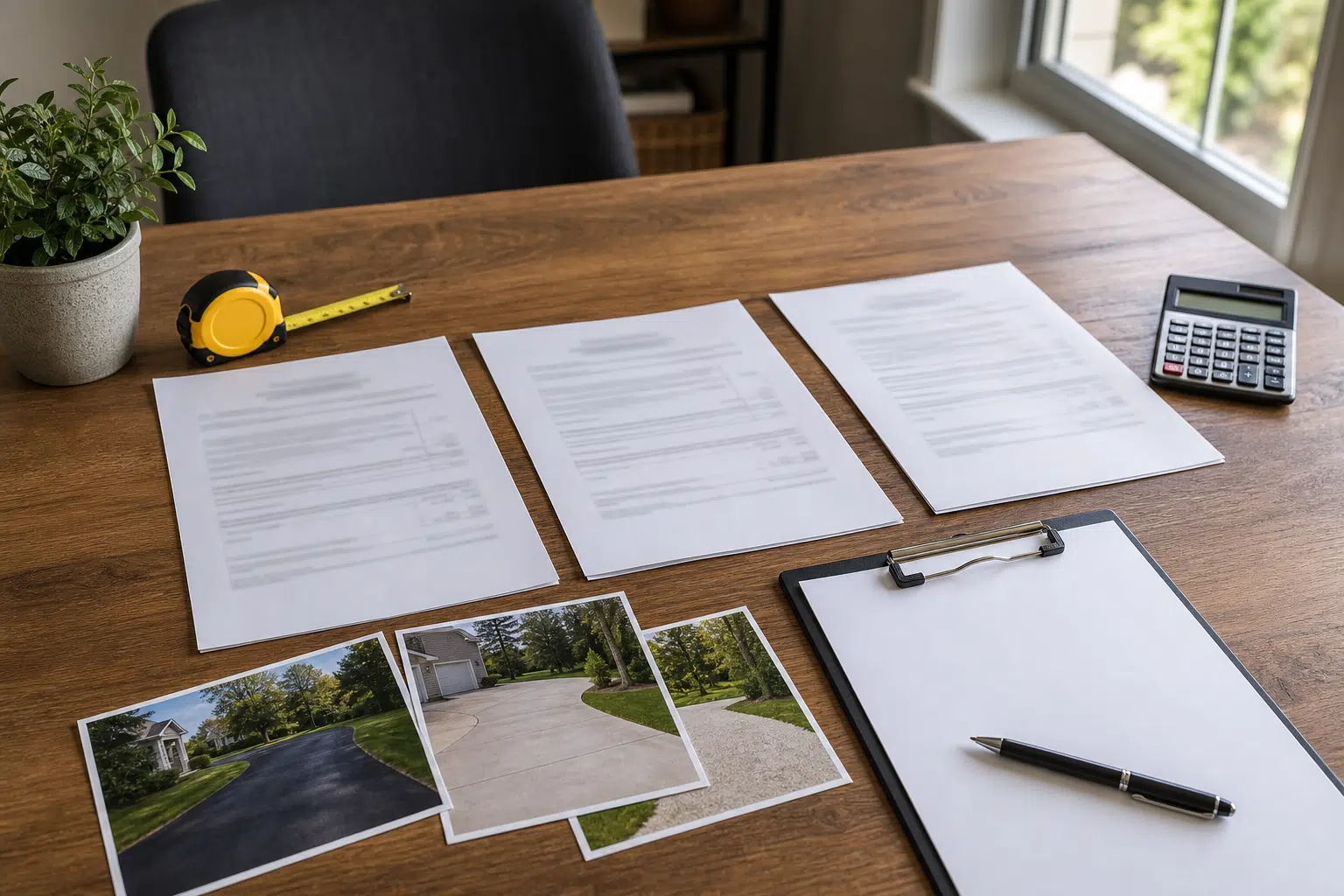
    Create a quick checklist with columns for scope, base prep, thickness, drainage, cleanup, exclusions, warranty, and payment terms. Then mark each bid against the same categories. This keeps the decision grounded in facts instead of gut feeling.

    If one estimate is clearly more complete, the comparison usually becomes easier. A quote that includes proper base work and cleanup may cost more up front, but it can be the better long-term value.

    Questions to ask before you decide

    • What exactly is included in this price?
    • What work is excluded?
    • How thick will the new asphalt be?
    • How deep is the base going to be?
    • What happens if you uncover a problem after excavation?
    • Is cleanup and disposal included?

    What to do after you compare

    Once the scope is clear, call back the contractor with the strongest proposal and ask any final questions. If the estimates still feel too different, ask for a revised scope so the bids are built on the same assumptions.

    It also helps to review the broader asphalt paving services, residential paving services, and estimate request process before choosing a contractor.

    FAQs

    Should I always get three bids?

    Three is a good baseline. It gives you enough comparison without dragging the process out too long.

    Is the cheapest quote ever okay?

    Yes, but only if the scope matches the others and nothing important is missing.

    What if one estimate is much higher than the rest?

    Ask why. It may include more prep, better materials, or a more realistic plan.

    Can I compare estimates over the phone?

    Not reliably. Written estimates are better because you can compare the details item by item.

    What if two bids look the same?

    Then compare warranty terms, communication quality, recent work, and how clearly each contractor explains the scope.

    Compare the real job, not the headline number

    The best bid is not automatically the lowest bid. It is the one that clearly describes the work and gives you the best chance of a durable driveway. If you want help comparing paving estimates, contact Maisano Brothers Inc. or request an estimate.
  • How to Hire a Trustworthy Driveway Paving Contractor

    How to Hire a Trustworthy Driveway Paving Contractor

    Hiring a driveway paving contractor should not feel like gambling on the lowest number. A trustworthy contractor makes the job easier to understand. They explain the scope, show proof of insurance, answer questions directly, and provide a written proposal that matches the condition of your driveway.

    This guide walks through the checks that matter most, so you can tell the difference between a polished sales pitch and a company that can actually do the work. If you are comparing local options, start by looking for a consistent company presence, clear asphalt paving services, and a direct way to contact the contractor.

    Key Takeaways

    The right contractor should be able to explain the work clearly, provide proof of coverage, and put the estimate in writing.

    Quick answer

    • Verify insurance, licensing requirements, and local business standing.
    • Ask for a written scope, not just a price.
    • Compare recent work and references, not only online reviews.
    • Walk away from pressure tactics, vague answers, or cash-only urgency.
    • Choose the contractor who reduces risk, not the one who simply sounds confident.

    What a trustworthy contractor should look like

    A good driveway paving contractor should be easy to reach, easy to question, and easy to verify. They do not need a flashy pitch, but they should be willing to show how they work and what is included in the job.

    They provide a real business identity

    You should be able to confirm the company name, service area, contact details, and basic business presence. A contractor who avoids clear identification or changes names often is harder to trust.

    For Maisano Brothers, the asphalt paving company overview, residential paving services, and service descriptions should all tell a consistent story.

    They show proof, not just confidence

    Ask for insurance certificates, recent project examples, and references when appropriate. The point is not to interrogate the contractor. It is to confirm that the business can back up its claims.

    They explain the work in plain language

    The best contractors can talk through base prep, grading, compaction, drainage, and asphalt thickness without dodging the details. If the explanation is vague before the job starts, the work may be vague too.

    They put the proposal in writing

    A written proposal protects both sides. It should list the scope, materials, estimated thickness, prep work, cleanup, payment terms, and exclusions. The FTC also recommends getting home improvement details in writing before work begins: FTC home improvement guidance.

    How to Hire a Trustworthy Driveway Paving Contractor
    A trustworthy contractor should make the scope, price, and process easy to understand.

    Questions that separate pros from pretenders

    1. Are you insured?

    Ask for proof of general liability and workers’ compensation. Hesitation here is a serious red flag.

    2. Who will actually do the work?

    Some companies sell the job and send another crew. That is not automatically bad, but you should know who is responsible for the final result.

    3. How will you prepare the base?

    The base controls how long the driveway lasts. Weak prep usually leads to weak pavement.

    4. What thickness will you install?

    A contractor should be able to explain the planned asphalt thickness and whether it changes in higher-use areas.

    5. How will drainage be handled?

    Water shortens pavement life. If the driveway has low spots or runoff problems, drainage needs to be part of the plan.

    6. Can I see recent work?

    Photos help, but recent local projects and references are better.

    7. What happens if site conditions change?

    A seasoned contractor should explain how extra base repair, drainage issues, or access problems are handled before the crew arrives.

    Red flags that should make you slow down

    Pressure to sign immediately

    A contractor who pushes same-day signing may be trying to keep you from comparing the scope.

    No written scope

    If the company wants to work from a verbal agreement, you carry most of the risk.

    Confusing price terms

    Watch for vague line items, cash-only requests, or extra fees that appear after the estimate.

    Poor communication early

    If the contractor is hard to reach before the job, they probably will not become easier to reach after the deposit.

    Refusal to discuss references

    A good contractor should be comfortable standing behind past work. The Better Business Bureau also recommends checking licensing, insurance, and complaint history before hiring: BBB home improvement tips.

    How to compare more than one contractor

    Compare scope, not just price

    One bid might include excavation and base repair while another only covers paving over the existing surface. Those are not the same job.

    Compare prep details

    The cheapest quote is often missing the most important work. Look closely at excavation, asphalt grading, compaction, and cleanup.

    Compare communication

    Did the contractor inspect the site carefully?
    Answered questions clearly?
    Sent the estimate when they said they would?

    Compare long-term value

    A slightly higher price may be the better choice if it includes stronger prep, better drainage, and a more durable result.

    What a strong quote should include

    A serious paving contractor should turn the conversation into a clear proposal. At minimum, the quote should spell out the project area, material type, thickness, prep work, cleanup, exclusions, warranty, and payment terms.

    If those details are missing, ask for a revised estimate before you compare it against another contractor’s offer.

    FAQs

    Is the lowest bid ever the right one?

    Sometimes, but only if the scope truly matches the other bids and nothing important is missing.

    Should I trust online reviews alone?

    No. Reviews help, but they should be backed up by proof of insurance, recent work, and a written proposal.

    Do I need a local contractor?

    Usually yes. Local contractors understand regional weather, materials, access issues, and permitting realities.

    What if a contractor will not provide references?

    That is a reason to keep looking, especially for a larger driveway project.

    How many estimates should I get?

    Three is a practical number. It gives you comparison without turning the process into a full-time job.

    Choose the contractor who removes risk

    A trustworthy contractor should make you feel more certain after the estimate, not less. If you want a clear proposal for your driveway, review the FAQ, contact Maisano Brothers Inc., or request an estimate.

  • How to Prepare Your Property Before Asphalt Paving

    How to Prepare Your Property Before Asphalt Paving

    If you’re planning a new driveway, resurfacing an older surface, or paving a parking area, the work starts before the asphalt truck arrives. In this guide, you’ll learn the seven prep steps that make a paving job go smoother: clearing access, confirming scope, handling drainage, marking utilities, protecting nearby surfaces, coordinating timing, and checking the site one last time before work begins.

    Good prep does more than save time. It helps the crew set the right elevations, avoid conflicts with buried or fragile fixtures, and finish a cleaner, more durable surface.

    Why prep matters before the first load arrives

    Asphalt paving is a construction project, not just a material drop. The better the site is prepared, the easier it is for the contractor to grade the surface correctly, complete any needed base repair, and place a smooth overlay when that is the right solution.

    Preparation also helps reduce delays, vehicle conflicts, utility problems, cleanup issues, and confusion about what is included in the job. A few hours of planning can save a lot of backtracking later.

    1. Clear the work area

    Remove anything that could block equipment or slow the crew down.

    That usually includes:

    • cars and trucks
    • basketball hoops
    • planters
    • patio furniture
    • trailers
    • storage items
    • trash cans

    If the crew cannot reach the paving area cleanly, the project can stall before it starts. Clearing the site also gives the contractor room to work edges, transitions, and corners without damage.

    2. Confirm the scope before paving day

    The most common project problems start with assumptions. Before the crew arrives, make sure everyone agrees on what is being done and what is not.

    Ask:

    • Is this a new install, an overlay, or a repair?
    • Are base repairs included?
    • Will old material be removed?
    • Is cleanup included?
    • Who handles striping or markings on a commercial site?

    This conversation matters because the right prep depends on the project type. A simple residential driveway needs a different setup than a commercial lot with traffic control, multiple users, or phased work.

    3. Pay attention to grading and drainage

    Water is one of asphalt’s biggest enemies, so the site needs to shed it correctly. When the surface holds water, the pavement wears faster and weak spots show up sooner.

    Walk the property and point out:

    • low spots
    • soft spots
    • areas that already collect water
    • edge breakdown
    • runoff paths
    • places where a slope feels wrong

    If you’re dealing with a problem area, ask whether grading or additional base repair should be included before paving. Even a great asphalt surface will struggle if the water has nowhere to go.

    4. Mark utilities and protect fixtures

    If the work involves digging, edge work, or any kind of deeper prep, utility markings matter.

    Before paving day:

    • call 811 if digging is part of the job
    • identify sprinkler heads, drain covers, or landscape lighting
    • point out buried service lines if you know their location
    • mark anything fragile or hidden near the work zone

    The official 811 Before You Dig guidance exists for a reason: buried lines are easy to miss and expensive to hit. If the site also has drains, lights, or decorative edges, flag those too so the crew can protect them.

    5. Make access and staging easy

    The crew needs a clear path for trucks, rollers, and handwork.

    Check for:

    • locked gates
    • low branches
    • narrow entrances
    • parked vehicles nearby
    • obstacles along the route in and out
    • areas where material or equipment can be staged

    If access is tight, tell the contractor ahead of time so they can plan for truck position, equipment layout, and turning room. Small access problems can slow a job down fast.

    6. Coordinate people, timing, and weather

    If the property is shared or busy, timing matters almost as much as the paving itself.

    For example:

    • tell tenants when vehicles must be moved
    • notify employees or customers about closure windows
    • keep deliveries away from paving time
    • make sure someone is available onsite to answer questions
    • watch the forecast and build in flexibility for weather delays

    The best paving crews can work efficiently, but they still need the site to be ready. Coordination keeps the job from turning into a stop-and-start mess.

    7. Protect landscaping and nearby surfaces

    If the paving area sits near grass, beds, fencing, or finished concrete, protect those areas before work starts.

    Good paving crews are careful, but it helps to point out:

    • fresh landscaping
    • fragile edging
    • sprinkler heads
    • decorative stone
    • garage aprons
    • walkways

    A quick walk-through before work starts is usually enough to catch trouble spots. For a public utility-focused reference, 811 Before You Dig explains why buried-line marking matters before excavation starts.

    Residential vs. commercial prep

    Residential prep is usually simpler: clear the driveway, move vehicles, and give the crew access. If this is a home project, residential paving is a good place to see how that work fits into the bigger project.

    Commercial prep usually needs more coordination:

    • traffic control
    • tenant notices
    • staging areas
    • reopening plans
    • after-hours scheduling
    • signage or striping coordination

    For larger sites, commercial paving is the better fit.

    The bigger the site, the more important the prep plan becomes.

    Common mistakes to avoid

    • leaving vehicles in the work area
    • assuming the contractor knows where everything is buried
    • forgetting to plan for rain or weather delays
    • not telling occupants when the site will be unavailable
    • failing to ask what prep work is included in the estimate
    • skipping a final walk-through before the crew starts

    FAQs

    How far in advance should I prepare my property?

    For most residential projects, a day or two is enough. Larger commercial jobs may need more lead time because of traffic control, tenant coordination, or phased access.

    Do I need to remove everything from the driveway or parking area?

    Yes. Anything inside the work zone should be moved before the crew arrives so equipment, material, and handwork can move without interruption.

    Should I warn my neighbors?

    If access, noise, or temporary parking changes may affect them, yes. A quick heads-up can prevent complaints and confusion, especially in tight neighborhoods or shared lots.

    What if I find a drainage issue before paving?

    Bring it up before the job starts. Drainage problems are much easier to correct during prep than after asphalt is already in place, and the contractor can decide whether grading or repair is needed.

    Does prep differ for resurfacing and new paving?

    Yes. New paving usually needs more site preparation than a simple overlay because the crew may need to adjust elevations, fix the base, or correct drainage before the new surface goes down.

    What should I ask the contractor before paving day?

    Ask what prep work they expect from you, what they will handle, and whether any site issues could change the scope. That short conversation often prevents the biggest surprises.

    Sources

    Are you ready for paving day?

    If you want a paving project to go smoothly, the prep matters. Maisano Brothers Inc. can review the site, confirm the scope, and help you plan the work the right way. If you’re ready to move forward, contact us and we’ll take it from there.

  • Achieving Optimal Asphalt Compaction: 4 Essential Tips

    Achieving Optimal Asphalt Compaction: 4 Essential Tips

    Asphalt compaction is a critical step in the road construction process, ensuring durability, longevity, and a smooth surface. Proper compaction not only enhances the structural integrity of the pavement but also reduces the risk of premature deterioration and costly repairs. To achieve optimal asphalt compaction, construction crews must adhere to best practices and employ effective techniques. Here are four essential tips to ensure successful asphalt compaction:

    1. Adequate Temperature Control

    Temperature plays a pivotal role in asphalt compaction, influencing the material’s workability and density. For optimal compaction, asphalt must be delivered and placed at the appropriate temperature range, typically between 275°F and 300°F (135°C to 150°C). This temperature ensures that the asphalt remains sufficiently malleable for compaction while preventing premature cooling and solidification.

    Construction crews must monitor ambient temperatures and adjust heating equipment accordingly to maintain the desired temperature range throughout the paving process. Additionally, using warm mix asphalt (WMA) technologies can help lower mixing and compaction temperatures, reducing energy consumption and emissions while improving workability and compaction efficiency.

    2. Proper Rolling Technique

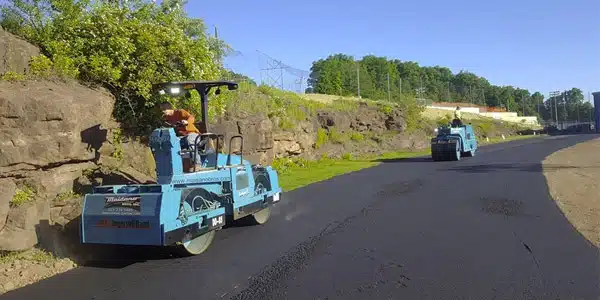
    Effective compaction relies on the proper application of rolling techniques and equipment. The compaction process typically involves the use of heavy rollers, including static steel wheel rollers and vibratory rollers, to achieve the desired density and smoothness of the asphalt surface.

    To ensure uniform compaction, construction crews should employ a systematic rolling pattern, starting from the outer edges of the pavement and gradually working toward the center. Overlapping each pass by at least one-half of the roller’s width helps eliminate gaps and achieve consistent compaction across the entire surface.

    Vibratory rollers are particularly effective for achieving high-density compaction in dense-graded mixes, as they generate vibratory forces that penetrate deeper into the asphalt layers, minimizing voids and air pockets.

    3. Proper Moisture Content

    Moisture content is another critical factor influencing asphalt compaction. Excessive moisture can hinder compaction efforts, resulting in decreased density and reduced pavement performance. Conversely, insufficient moisture can lead to premature cooling and inadequate bonding between asphalt particles.

    Construction crews must carefully monitor and adjust moisture levels during the paving process to ensure optimal compaction. Proper hydration techniques, such as using water sprayers or additives, can help control moisture content and improve workability without compromising compaction quality.

    4. Compaction Density Testing

    Regular density testing is essential to verify the effectiveness of compaction efforts and ensure compliance with project specifications. Non-destructive testing methods, such as nuclear density gauges or lightweight deflectometers, provide real-time measurements of asphalt density and stiffness, allowing construction crews to adjust compaction parameters as needed.

    Density testing should be conducted at various stages of the paving process, including during initial placement, intermediate rolling, and final compaction, to identify any potential issues early and address them promptly. By proactively monitoring compaction density, construction crews can optimize pavement performance and minimize the risk of premature failure.

    Conclusion

    Achieving optimal asphalt compaction is essential for the long-term performance and durability of paved surfaces. By adhering to best practices, including controlling temperature, employing proper rolling techniques, managing moisture content, and conducting regular density testing, construction crews can ensure that asphalt pavements meet or exceed project specifications and deliver superior quality and performance for years to come.