Tag: asphalt questions

  • What’s Included in a Driveway Paving Quote?

    What’s Included in a Driveway Paving Quote?

    A driveway paving quote should tell you much more than the final price. It should explain what the contractor plans to do, what materials will be used, what prep work is included, and what is not covered. If the quote is vague, you may be comparing numbers that do not mean the same thing.

    This guide breaks down the common pieces of a paving quote so you know what to look for before saying yes. A clear quote should line up with the contractor’s asphalt paving services and the actual needs of your residential driveway.

    What's Included in a Driveway Paving Quote?
    A good paving quote should read like a clear scope of work, not just a price.

    Key Takeaways

    A strong driveway paving quote should be specific enough to show the scope, materials, prep work, exclusions, and payment terms.

    Quick answer

    • Look for scope, materials, thickness, and prep work.
    • Make sure exclusions, cleanup, and disposal are listed.
    • Confirm payment terms and warranty details.
    • Ask for a revised written quote if anything important is vague.
    • Read the quote like a scope of work, not just a number.

    The basic parts of a paving quote

    Project description

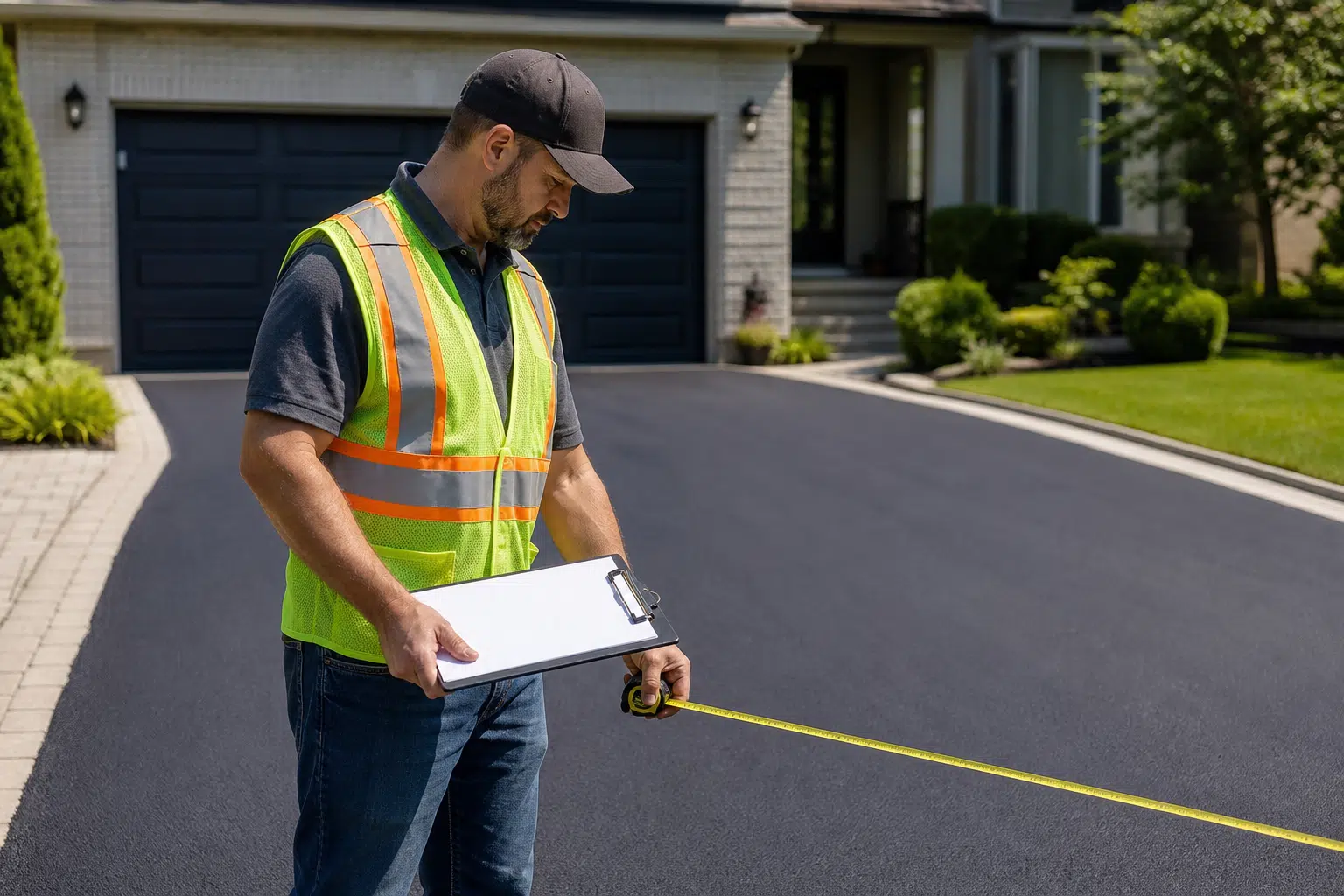
    This should explain what area is being paved, how large it is, and whether the contractor is replacing, resurfacing, repairing, or installing a new driveway.

    Site preparation

    Prep work may include excavation, base repair, stone placement, compaction, and asphalt grading. This is one of the most important sections of the quote because it affects how long the driveway lasts.

    Asphalt or material specs

    The quote should identify the material type and any thickness details that matter to the job. If it is tied to new asphalt driveway installation, the written scope should make that clear.

    Labor and equipment

    A quote should reflect the crew, machinery, and time required to complete the work correctly.

    Cleanup and disposal

    Old asphalt, excess dirt, and job debris should either be included or clearly excluded.

    HomeGuide notes that paving estimates should list base prep, installation, and cleanup so homeowners can compare offers more accurately: HomeGuide driveway cost guide.

    Common items that may be excluded

    Unseen base problems

    If the contractor finds soft spots or hidden drainage issues during excavation, those repairs may not be included in the original quote.

    Permit fees

    Some jobs need permits depending on local rules and driveway location.

    Drainage corrections

    If the slope needs to be changed or water needs to be redirected, that work may be separate.

    Extra haul-off or disposal

    Unexpected debris can raise the total cost if disposal is not included.

    Sidewalk, apron, or transition work

    The quote should say whether aprons, transitions, edging, or nearby repairs are part of the job.

    Why details matter so much

    Two quotes can look similar and still describe very different jobs. One may include a deeper base and proper cleanup. Another may be a bare minimum surface install. That is why a quote should be read like a scope document.

    The FTC recommends getting key promises in writing so homeowners can compare offers and avoid misunderstandings: FTC home improvement guidance.

    What to ask if the quote is vague

    • Is excavation included?
    • What thickness will be installed?
    • How is the base being prepared?
    • Is cleanup part of the price?
    • Are there any likely extra charges?
    • What happens if hidden site issues are found?

    Typical quote formats you may see

    Some contractors use a short estimate with a few line items. Others provide a more detailed scope sheet. The format matters less than the clarity. A useful quote should still show the project area, prep work, materials, exclusions, and any conditions that could change the final price.

    If drainage is part of the concern, the guide to driveway drainage solutions can help explain why slope and runoff deserve attention before the quote is approved.

    When a revised quote is the right move

    Ask for a revised quote if the contractor leaves out excavation, cleanup, thickness, drainage, or any condition that clearly affects the scope. You should also ask for a revision if the quote makes promises that are hard to measure.

    A better quote makes the job easier to approve, schedule, and compare.

    Signs the quote is detailed enough

    A solid quote usually reads like a mini project plan. You should be able to tell what area is being paved, how the crew will prepare it, what material is going down, what cleanup is included, and what happens if a hidden issue appears.

    Common mistakes homeowners make

    The biggest mistake is assuming every quote means the same thing. Another is focusing only on the final number and ignoring exclusions. Homeowners also forget to ask whether the quote is based on a site visit, when payment is due, and who handles cleanup.

    Those small details can make a big difference once work begins.

    FAQs

    Is a cheap quote always missing something?

    Not always, but it often is. The only way to know is to compare the line items.

    Should cleanup be included?

    Usually yes, or it should be clearly listed as excluded.

    Do I need the quote in writing?

    Yes. Written quotes are easier to compare and safer to approve.

    What if the contractor says the details are obvious?

    They are not obvious if you are the one paying for the work. Ask for the details anyway.

    Can I negotiate the quote?

    You can ask questions, but first make sure you understand exactly what is being priced.

    Read the quote like a scope of work

    A good quote tells you what is included, what is excluded, and what kind of driveway you will actually get. If you want a clear written quote for your property, contact Maisano Brothers Inc. or request an estimate.
  • How to Hire a Trustworthy Driveway Paving Contractor

    How to Hire a Trustworthy Driveway Paving Contractor

    Hiring a driveway paving contractor should not feel like gambling on the lowest number. A trustworthy contractor makes the job easier to understand. They explain the scope, show proof of insurance, answer questions directly, and provide a written proposal that matches the condition of your driveway.

    This guide walks through the checks that matter most, so you can tell the difference between a polished sales pitch and a company that can actually do the work. If you are comparing local options, start by looking for a consistent company presence, clear asphalt paving services, and a direct way to contact the contractor.

    Key Takeaways

    The right contractor should be able to explain the work clearly, provide proof of coverage, and put the estimate in writing.

    Quick answer

    • Verify insurance, licensing requirements, and local business standing.
    • Ask for a written scope, not just a price.
    • Compare recent work and references, not only online reviews.
    • Walk away from pressure tactics, vague answers, or cash-only urgency.
    • Choose the contractor who reduces risk, not the one who simply sounds confident.

    What a trustworthy contractor should look like

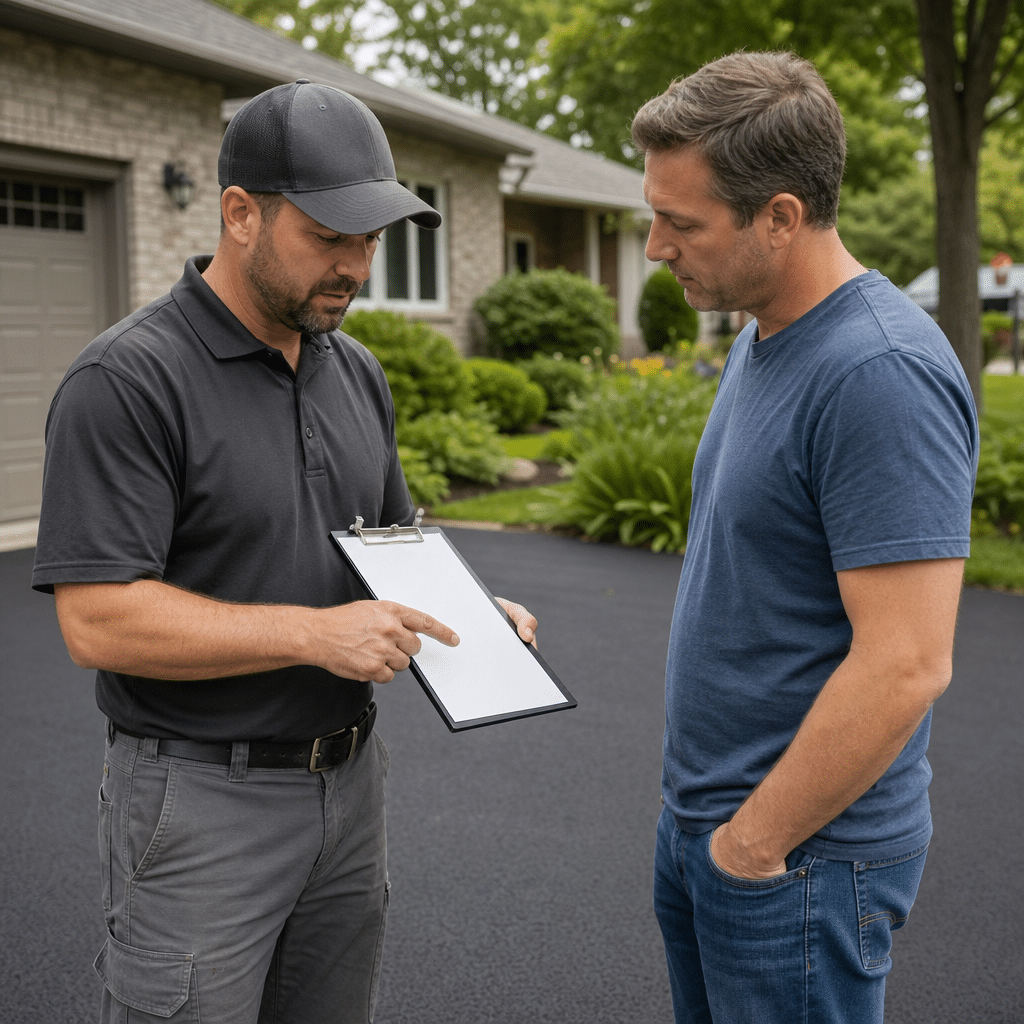
    A good driveway paving contractor should be easy to reach, easy to question, and easy to verify. They do not need a flashy pitch, but they should be willing to show how they work and what is included in the job.

    They provide a real business identity

    You should be able to confirm the company name, service area, contact details, and basic business presence. A contractor who avoids clear identification or changes names often is harder to trust.

    For Maisano Brothers, the asphalt paving company overview, residential paving services, and service descriptions should all tell a consistent story.

    They show proof, not just confidence

    Ask for insurance certificates, recent project examples, and references when appropriate. The point is not to interrogate the contractor. It is to confirm that the business can back up its claims.

    They explain the work in plain language

    The best contractors can talk through base prep, grading, compaction, drainage, and asphalt thickness without dodging the details. If the explanation is vague before the job starts, the work may be vague too.

    They put the proposal in writing

    A written proposal protects both sides. It should list the scope, materials, estimated thickness, prep work, cleanup, payment terms, and exclusions. The FTC also recommends getting home improvement details in writing before work begins: FTC home improvement guidance.

    How to Hire a Trustworthy Driveway Paving Contractor
    A trustworthy contractor should make the scope, price, and process easy to understand.

    Questions that separate pros from pretenders

    1. Are you insured?

    Ask for proof of general liability and workers’ compensation. Hesitation here is a serious red flag.

    2. Who will actually do the work?

    Some companies sell the job and send another crew. That is not automatically bad, but you should know who is responsible for the final result.

    3. How will you prepare the base?

    The base controls how long the driveway lasts. Weak prep usually leads to weak pavement.

    4. What thickness will you install?

    A contractor should be able to explain the planned asphalt thickness and whether it changes in higher-use areas.

    5. How will drainage be handled?

    Water shortens pavement life. If the driveway has low spots or runoff problems, drainage needs to be part of the plan.

    6. Can I see recent work?

    Photos help, but recent local projects and references are better.

    7. What happens if site conditions change?

    A seasoned contractor should explain how extra base repair, drainage issues, or access problems are handled before the crew arrives.

    Red flags that should make you slow down

    Pressure to sign immediately

    A contractor who pushes same-day signing may be trying to keep you from comparing the scope.

    No written scope

    If the company wants to work from a verbal agreement, you carry most of the risk.

    Confusing price terms

    Watch for vague line items, cash-only requests, or extra fees that appear after the estimate.

    Poor communication early

    If the contractor is hard to reach before the job, they probably will not become easier to reach after the deposit.

    Refusal to discuss references

    A good contractor should be comfortable standing behind past work. The Better Business Bureau also recommends checking licensing, insurance, and complaint history before hiring: BBB home improvement tips.

    How to compare more than one contractor

    Compare scope, not just price

    One bid might include excavation and base repair while another only covers paving over the existing surface. Those are not the same job.

    Compare prep details

    The cheapest quote is often missing the most important work. Look closely at excavation, asphalt grading, compaction, and cleanup.

    Compare communication

    Did the contractor inspect the site carefully?
    Answered questions clearly?
    Sent the estimate when they said they would?

    Compare long-term value

    A slightly higher price may be the better choice if it includes stronger prep, better drainage, and a more durable result.

    What a strong quote should include

    A serious paving contractor should turn the conversation into a clear proposal. At minimum, the quote should spell out the project area, material type, thickness, prep work, cleanup, exclusions, warranty, and payment terms.

    If those details are missing, ask for a revised estimate before you compare it against another contractor’s offer.

    FAQs

    Is the lowest bid ever the right one?

    Sometimes, but only if the scope truly matches the other bids and nothing important is missing.

    Should I trust online reviews alone?

    No. Reviews help, but they should be backed up by proof of insurance, recent work, and a written proposal.

    Do I need a local contractor?

    Usually yes. Local contractors understand regional weather, materials, access issues, and permitting realities.

    What if a contractor will not provide references?

    That is a reason to keep looking, especially for a larger driveway project.

    How many estimates should I get?

    Three is a practical number. It gives you comparison without turning the process into a full-time job.

    Choose the contractor who removes risk

    A trustworthy contractor should make you feel more certain after the estimate, not less. If you want a clear proposal for your driveway, review the FAQ, contact Maisano Brothers Inc., or request an estimate.

  • What is a Chip Seal Driveway? Professional Installation, Maintainance, and Repair.

    What is a Chip Seal Driveway? Professional Installation, Maintainance, and Repair.

    Chip seal driveways, also known as tar-and-chip or seal chip driveways, provide an attractive, durable, and cost-effective alternative to traditional asphalt. Here’s a comprehensive look at what chip seal driveways are, their benefits, common questions, installation process, and maintenance tips.

    What is a Chip Seal Driveway?

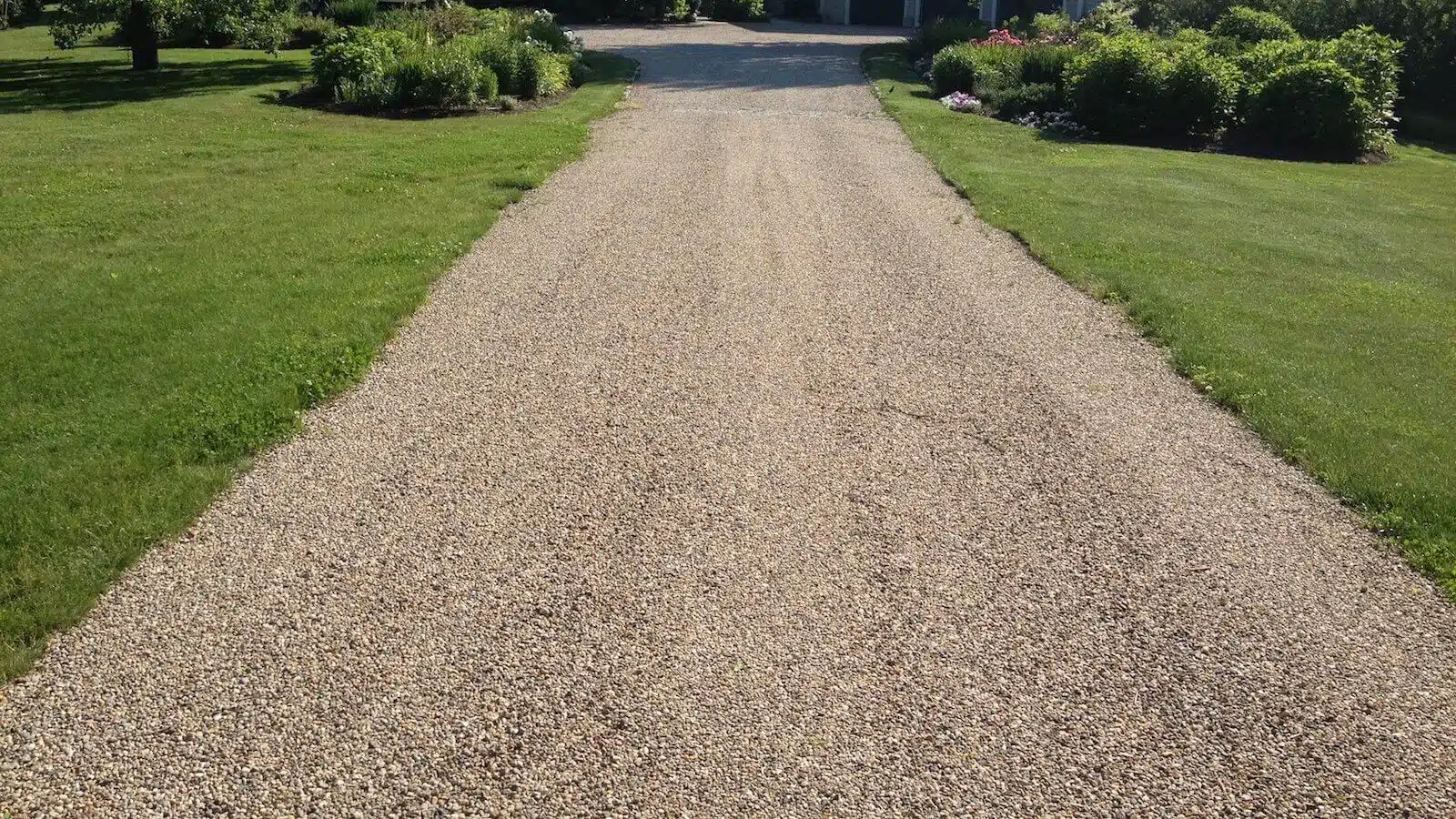
    A chip seal driveway is constructed by applying a layer of hot liquid asphalt to a prepared base, followed by a layer of crushed stone. The stones are then compacted into the asphalt, creating a textured, durable surface. This method combines elements of both gravel and asphalt driveways, offering the benefits of both materials.

    Benefits of Chip Seal Driveways

    Cost-Effective

    Chip seal driveways are typically more affordable than traditional asphalt or concrete driveways. The materials and installation process are less expensive, making it a budget-friendly option for many homeowners.

    Aesthetic Appeal

    The appearance of a chip seal driveway can be customized by choosing different colors and types of stone. This allows homeowners to create a unique look that complements their property’s style. The natural look of chip seal can blend seamlessly with various landscape designs.

    Durability

    The combination of asphalt and stone provides a robust surface that can withstand various weather conditions and heavy traffic. With proper maintenance, a chip seal driveway can last for many years, providing long-term value.

    Low Maintenance

    Chip seal driveways require less maintenance compared to traditional asphalt. Occasional reapplication of the chip seal layer can refresh the surface and address any minor issues. They are also less prone to cracking compared to asphalt.

    Quick Installation

    The installation process for chip seal driveways is relatively quick, reducing the inconvenience to homeowners. It can often be completed in a day or two, depending on the size of the driveway.

      5 Common Questions About Chip Seal Driveways

      How Long Does a Chip Seal Driveway Last?

      A chip seal driveway can last between 7 to 10 years, depending on factors such as climate, traffic, and maintenance practices. Regular upkeep, such as resealing, can extend its lifespan.

      What is the Installation Process?

      The installation process involves several steps:

      • Preparation: The existing base is graded and compacted.
      • Application of Asphalt: A layer of hot liquid asphalt is evenly applied.
      • Spreading of Stones: Crushed stone is spread over the hot asphalt.
      • Compaction: The stones are compacted into the asphalt to create a smooth surface.

      Can It Be Applied Over Existing Driveways?

      Yes, chip seal can be applied over existing gravel or asphalt driveways, making it a versatile option for resurfacing older pavements. This can save time and reduce the cost of completely removing the old driveway.

      How Does Weather Affect a Chip Seal Driveway?

      Chip seal driveways perform well in various weather conditions. However, extreme temperatures and heavy rainfall can impact their longevity. Proper drainage and timely maintenance help mitigate weather-related issues. For areas with heavy snowfall, it is important to ensure proper snow removal techniques to avoid damage.

      Is a Chip Seal Driveway Suitable for All Areas?

      While chip seal driveways are suitable for many regions, they are particularly popular in rural and suburban areas. They may not be the best choice for areas with extremely high traffic volumes or severe freeze-thaw cycles, as these conditions can accelerate wear and tear.

        Maintenance Tips for Chip Seal Driveways

        Regular Inspection

        Periodically inspect your driveway for any signs of wear or damage. Early detection allows for timely repairs and prevents further deterioration. Look for loose stones, cracks, or areas where the asphalt is exposed.

        Seal Coating

        Applying a seal coat every few years helps maintain the driveway’s integrity and appearance. This layer protects the underlying materials from the elements and extends the life of the driveway.

        Cleaning

        Keep the surface clean by removing debris, leaves, and dirt. This prevents organic material from breaking down and causing damage to the asphalt and stone layers. Regular sweeping and washing can help maintain its appearance.

        Prompt Repairs

        Address any issues such as potholes or cracks immediately to prevent them from worsening. Small problems can quickly become larger ones if not addressed in a timely manner.

        Snow Removal

        Use a rubber-bladed shovel or snow blower to remove snow to avoid damaging the surface. Avoid using metal blades that can scrape and damage the stone layer.

        Installation Considerations

        Base Preparation

        Proper preparation of the base is crucial for the longevity of a chip seal driveway. Ensure the base is well-graded and compacted.

        Material Quality

        Use high-quality asphalt and stone materials to ensure a durable and long-lasting surface.

        Professional Installation

        While some homeowners may consider a DIY approach, professional installation is recommended to ensure proper application and compaction.

        Conclusion

        Chip seal driveways offer a cost-effective, durable, and aesthetically pleasing alternative to traditional asphalt and concrete driveways. By understanding the installation process, benefits, and maintenance requirements, homeowners can make an informed decision about whether a chip seal driveway is right for their property. Proper care and regular maintenance will ensure that your chip seal driveway remains a beautiful and functional part of your home for years to come.