Tag: asphalt repair

  • Asphalt Driveway Repair or Replacement: How to Choose the Right Fix

    Asphalt Driveway Repair or Replacement: How to Choose the Right Fix

    If your driveway is cracked, rough, or starting to sink, the real question is not whether it looks bad — it is whether the damage is still fixable. Some pavement problems can be handled with targeted repairs. Others point to deeper base failure and a full replacement. For a residential driveway, the condition of the base matters more than the age alone. In this guide, you’ll learn how to tell the difference, what warning signs matter most, and how to think through the choice without guessing. By the end, you’ll know when a repair buys time, when replacement protects the property, and what to ask before you move forward.

    Key Takeaways

    If the damage is isolated and the base is still sound, repair is often enough. If you see widespread alligator cracking, sinking, drainage problems, or repeated patch failures, replacement is usually the better long-term fix.

    Quick answer

    • Repair works best for small, localized surface issues
    • Replacement is better for structural failure and recurring damage
    • A site visit is the safest way to confirm the right option
    • Cracks alone do not tell the full story; the base and drainage matter more.
    • Isolated damage can often be repaired, but widespread alligator cracking usually points to replacement.
    • Repeated patching is a warning sign that the pavement is failing as a system.
    • A contractor should inspect the surface, slope, water flow, and subgrade before recommending a fix.

    When asphalt driveway repair makes sense

    Repair is the better call when the damage is limited and the structure underneath is still doing its job.

    Small cracks and isolated trouble spots

    A few narrow cracks, a small pothole, or a single soft area can often be handled without rebuilding the whole driveway. In those cases, a focused repair may be enough to slow further damage and restore a cleaner surface.

    If the issue is localized, our driveway repair service is usually the first place to start.

    Surface wear without base failure

    Fading, minor roughness, and light surface raveling do not always mean the driveway is failing structurally. Those issues can look worse than they are, especially if the base is still stable and water is draining properly.

    The key question is whether the problem stays on the surface or keeps coming back after patching.

    Repair is usually the right move when:

    • cracks are narrow and isolated
    • the surface is mostly level
    • water is not pooling in multiple areas
    • the driveway is otherwise holding up well
    • prior repairs have lasted

    When replacement is the smarter choice

    Replacement becomes the better option when the driveway is failing as a system, not just showing a few bad spots.

    Alligator cracking points to structural trouble

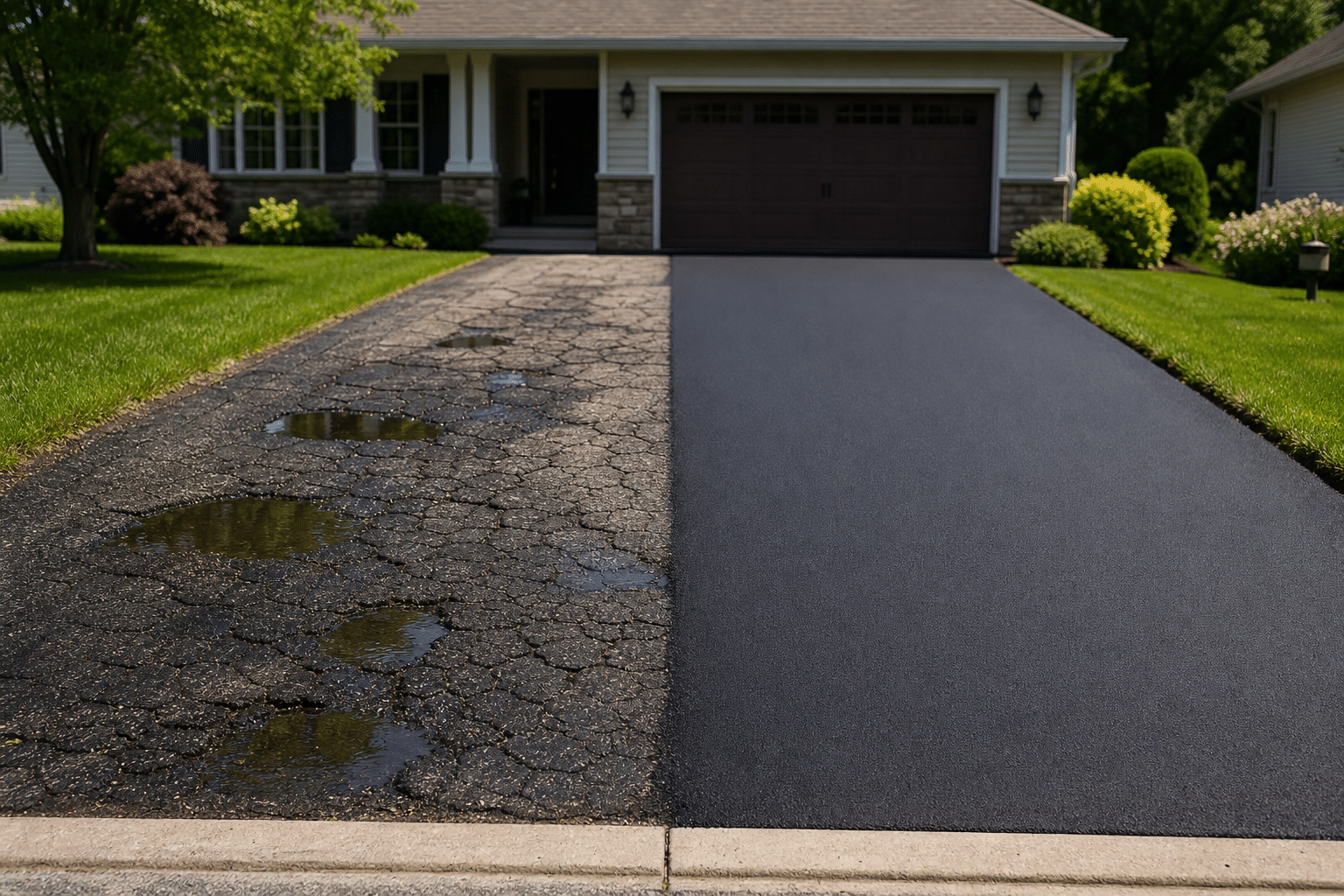
    If you see interconnected cracking that looks like a web or fish scales, the base is often compromised. That kind of damage usually means patching will not solve the underlying problem.

    That is where new asphalt driveway installation makes more sense than more surface fixes.

    Sinking, rutting, and drainage issues

    A driveway that dips, holds water, or develops repeated soft spots is telling you the problem goes deeper than the top layer. Drainage and grade problems can keep feeding damage back into the pavement.

    Replacement is usually the better move when:

    • alligator cracking is widespread
    • potholes keep returning
    • the driveway has settled or sunk in spots
    • drainage problems keep coming back
    • repairs are no longer lasting
    • large areas are breaking down at once
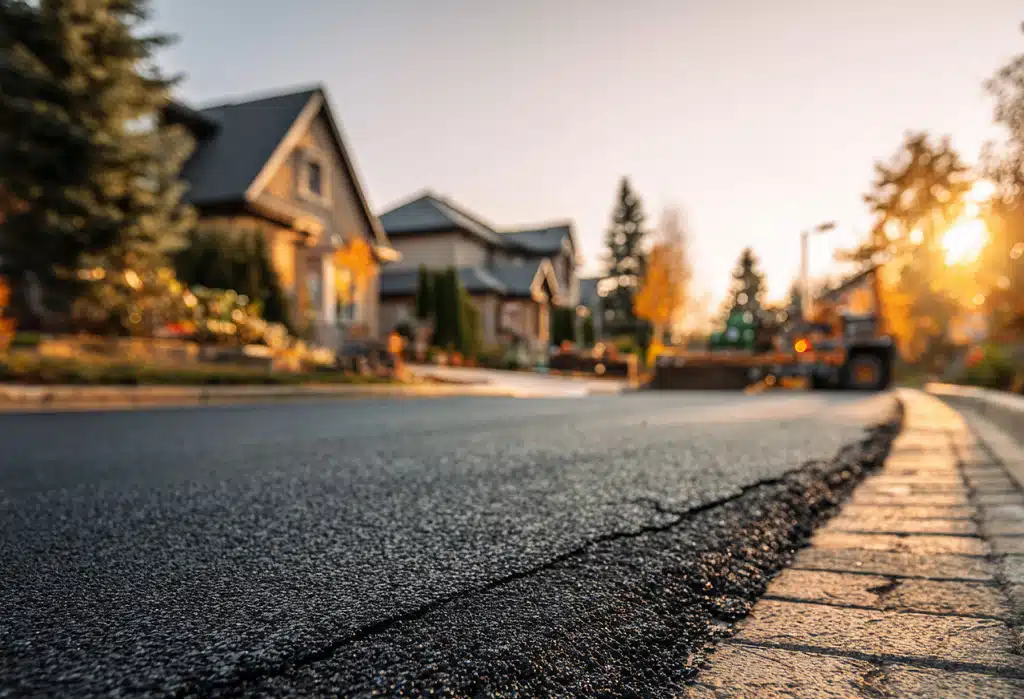
    Cracked and repaired asphalt driveway
    Cracks can point to either surface wear or deeper structural failure.

    A simple way to decide

    Step 1: Look at how widespread the damage is

    If the problem covers one corner, one edge, or one isolated section, repair may be enough. If the damage is scattered across the driveway, the odds of replacement go up fast.

    Step 2: Ask whether the base is still sound

    The base is the part you do not see, but it controls most of the driveway’s life. If the base is weak, no surface patch will hold up for long.

    Step 3: Think about how often you’ve already fixed it

    If you are patching the same area over and over, the driveway may be telling you it has reached the end of its useful life.

    Step 4: Compare short-term savings with long-term value

    Repair costs less up front. Replacement costs more now, but it can reset the whole system and save you from chasing the same problems year after year.

    If you want a clear recommendation, request an estimate and have the site looked at before you spend money twice.

    What can make repair look cheaper than it is

    A repair quote can look appealing when you only compare the number on the estimate. But if the driveway keeps failing, the same area may need to be reopened, patched again, or monitored after every storm. That can make a lower upfront price less attractive over time.

    Replacement costs more because it does more work: it removes failed material, resets the structure, and gives the contractor a chance to correct drainage and base issues together. If the driveway is still young and mostly intact, repair usually wins. If the pavement is old and the failures are spreading, replacement tends to be the better value.

    What repair can actually involve

    Not every repair is the same. The right fix depends on how far the damage has spread and what caused it in the first place.

    Crack filling and sealing

    For narrow cracks, filling helps keep water out and slow further damage. This is useful when the asphalt is still structurally sound.

    Patching isolated failures

    If one section has broken down, a patch can remove the failed material and restore that area without disturbing the rest of the driveway.

    Resurfacing worn pavement

    When the surface is worn but the base is still stable, resurfacing can give the driveway a fresh riding surface without a full rebuild.

    Partial or full replacement

    If the damage is tied to base failure, soft spots, or repeated settlement, repair stops being cost-effective. At that point, replacement is the cleaner long-term fix.

    What a contractor should inspect on site

    A good contractor is not just looking at the surface. They should check the whole performance picture.

    1. Cracking pattern

    Linear cracks, edge cracks, and alligator cracking all mean different things. The pattern helps show whether the issue is cosmetic or structural.

    2. Drainage and slope

    Standing water is a warning sign. If water cannot leave the surface, the driveway will keep breaking down faster than it should.

    3. Base condition

    Soft subgrade, settling, and repeated failures usually mean the foundation needs attention before any new asphalt goes down.

    4. Age and maintenance history

    A well-maintained driveway can last much longer than a neglected one. Age matters, but only when you combine it with the condition of the base and surface.

    For a broader look at how preservation works, the Asphalt Institute’s engineering FAQs reinforce that good construction practices and compaction are central to pavement performance: Asphalt Institute technical FAQs.

    Repair vs replacement in real life

    If the problem is cosmetic

    You may be able to repair the surface and keep the driveway in service.

    If the problem is structural

    Replacement is usually the safer investment because it addresses the base, drainage, and surface together.

    If you are somewhere in the middle

    A contractor can sometimes recommend a partial repair, but only if the damaged area is truly isolated.

    A city pavement preservation program makes the same point: treatments work best before cracking becomes extensive, which is why timing matters so much: Pavement Preservation Program.

    What not to do when you are trying to decide

    Do not keep sealing over structural failures and hope they disappear. Sealcoat helps protect the surface, but it does not rebuild a weak base.

    Do not judge the driveway by appearance alone, either. A surface that looks rough may still be repairable, while a surface that looks okay on top can hide deeper problems underneath.

    Do not wait until the driveway is breaking apart in multiple places. The earlier you get an evaluation, the more options you usually have.

    FAQs

    Is resurfacing the same as repair?

    Not exactly. Resurfacing adds a new layer over the existing pavement, while repair usually means fixing a specific damaged area. Which one makes sense depends on the driveway’s overall condition.

    How do I know if cracks are bad enough to replace the driveway?

    If the cracks are widespread, connected, or tied to sinking and water issues, replacement is more likely than repair.

    Can a bad-looking driveway still be repairable?

    Yes. Some driveways look rough but still have a solid structure underneath. A site visit is the best way to tell.

    Should I keep patching a driveway that keeps failing?

    Usually not. Repeated patching can turn into a short-term habit that costs more than rebuilding the driveway the right way.

    What should I ask before I decide?

    Ask whether the problem is surface-level or structural, whether the base is sound, and whether repair will last long enough to be worth the cost.

    Choose the fix that protects the whole driveway

    The best choice is not the cheapest one today — it is the one that keeps the driveway from failing again next season. If you want help deciding whether repair or replacement is the right move, reach out to Maisano Brothers Inc. and request an estimate before the damage spreads.

    Image credits: featured image and in-body image generated with OpenAI.
  • How Much Does It Cost to Pave a Driveway in 2026?

    How Much Does It Cost to Pave a Driveway in 2026?

    Key Takeaways
    • Average asphalt driveway cost in 2026: $4–$10 per sq ft
    • Total cost depends heavily on site prep and base condition
    • Asphalt is more cost-effective than concrete upfront
    • Repairs and resurfacing can reduce costs if the base is stable
    • Proper installation matters more than choosing the lowest price

    The cost to pave a driveway in 2026 depends on several factors, including size, site conditions, materials, and the amount of preparation required. While many homeowners look for a quick price per square foot, the reality is that no two driveways are exactly the same.

    Understanding what goes into driveway pricing can help you budget accurately and avoid costly surprises during your project. If you’re planning a new installation, explore our full range of asphalt paving services.

    Average Cost to Pave a Driveway in 2026

    In 2026, the average cost to pave an asphalt driveway typically ranges between $4 to $10 per square foot, depending on the complexity of the job.

    Driveway Cost Breakdown (2026)

    Project Type Cost Per Sq Ft Typical Total Cost
    Basic Installation $4 – $6 $3,000 – $5,000
    Standard Residential $6 – $8 $4,000 – $7,000
    Premium / Complex $8 – $10+ $6,000 – $10,000+

    For an approximate estimate based on your property, use our asphalt cost calculator.

    What Affects the Cost of Paving a Driveway?

    1. Site Preparation and Excavation

    Removing old pavement, grading, and preparing the base are some of the biggest cost drivers. Proper asphalt grading ensures long-term durability.

    2. Drainage and Base Condition

    Poor drainage leads to early failure. Many issues stem from improper installation, which is a leading cause of asphalt deterioration.

    3. Asphalt Thickness

    Thicker asphalt increases durability but also cost. This is especially important for high-use driveways.

    4. Accessibility and Layout

    Steep slopes, tight access, or complex layouts can increase labor and equipment costs.

    5. Climate and Location

    Regional conditions like the Connecticut climate affect both installation methods and long-term performance.

    Asphalt vs Concrete Driveway Costs

    Asphalt is generally more affordable upfront, while concrete offers different long-term benefits. Learn more in our guide to asphalt vs concrete driveways.

    Asphalt vs Concrete Comparison

    Feature Asphalt Concrete
    Cost $4 – $10 / sq ft $8 – $15+ / sq ft
    Lifespan 15–25 years 25–40 years
    Maintenance Moderate Low
    Best Climate Cold climates Warm climates
    [elementor-template id=”4630″]

    Repair vs Replacement Costs

    Not every driveway needs full replacement. Some can be repaired or resurfaced depending on the condition. Learn more about resurfacing vs replacement.

    Repair vs Replacement Cost Comparison

    Service Cost Best For
    Crack Filling $1 – $3 / linear ft Minor damage
    Pothole Repair $150 – $600+ Localized damage
    Resurfacing $3 – $7 / sq ft Solid base
    Full Replacement $4 – $10+ / sq ft Severe damage

    If you’re dealing with damage, check out our guide on pothole repair and patching.

    How Maintenance Impacts Cost

    Preventative maintenance is the easiest way to reduce long-term costs. Regular sealcoating protects your investment and delays replacement.

    Winter conditions also play a major role. Learn how to protect your driveway with proper snow removal techniques and safe salting practices.

    Choosing the Right Contractor

    The contractor you hire has a major impact on cost and longevity. Learn how to choose a reputable asphalt paving contractor before starting your project.

    Conclusion

    The cost to pave a driveway in 2026 typically ranges from $4 to $10 per square foot, but the final price depends on preparation, materials, and site conditions.

    Getting the right estimate is the best way to plan your project. Request a free estimate or use our asphalt cost calculator to get started.

    [elementor-template id=”4630″]

    Frequently Asked Questions

    How much does a driveway cost in 2026?

    Most asphalt driveways cost between $4 and $10 per square foot depending on site conditions and scope.

    What is the cheapest way to pave a driveway?

    Resurfacing is typically cheaper than full replacement if the base is still stable.

    How long does an asphalt driveway last?

    20–30 years with proper maintenance like sealcoating and crack repair.

    Is asphalt cheaper than concrete?

    Yes, asphalt typically costs less upfront but may require more maintenance.

    What increases driveway paving cost the most?

    Excavation, poor soil conditions, drainage issues, and base repair are the biggest cost drivers.

  • Best Practices for Snow Removal on Asphalt Driveways and Parking Lots

    Best Practices for Snow Removal on Asphalt Driveways and Parking Lots

    Key Takeaways
    • Improper snow removal can damage asphalt through scraping, pressure, and freeze-thaw cycles
    • Rubber-edged plows are safer than metal blades
    • Removing snow early prevents compaction and bonding
    • Deicing materials should be used carefully to avoid long-term damage
    • Preventative maintenance before winter significantly reduces damage

    Snow and ice are part of Connecticut winters, but improper snow removal can cause serious damage to asphalt driveways and parking lots. What seems like routine maintenance can lead to scraping, cracking, and long-term deterioration if done incorrectly.

    Understanding how to safely remove snow while you protect your asphalt is essential for maintaining the life of your pavement.

    Why Snow Removal Can Damage Asphalt

    Asphalt is a flexible material, but during colder temperatures it becomes more brittle. This makes it more vulnerable to damage from heavy equipment, sharp plow blades, and improper techniques.

    In addition, freeze-thaw cycles allow water to enter cracks and expand, weakening the structure beneath the surface.

    Use the Right Snow Removal Equipment

    Avoid Metal Blades on Asphalt

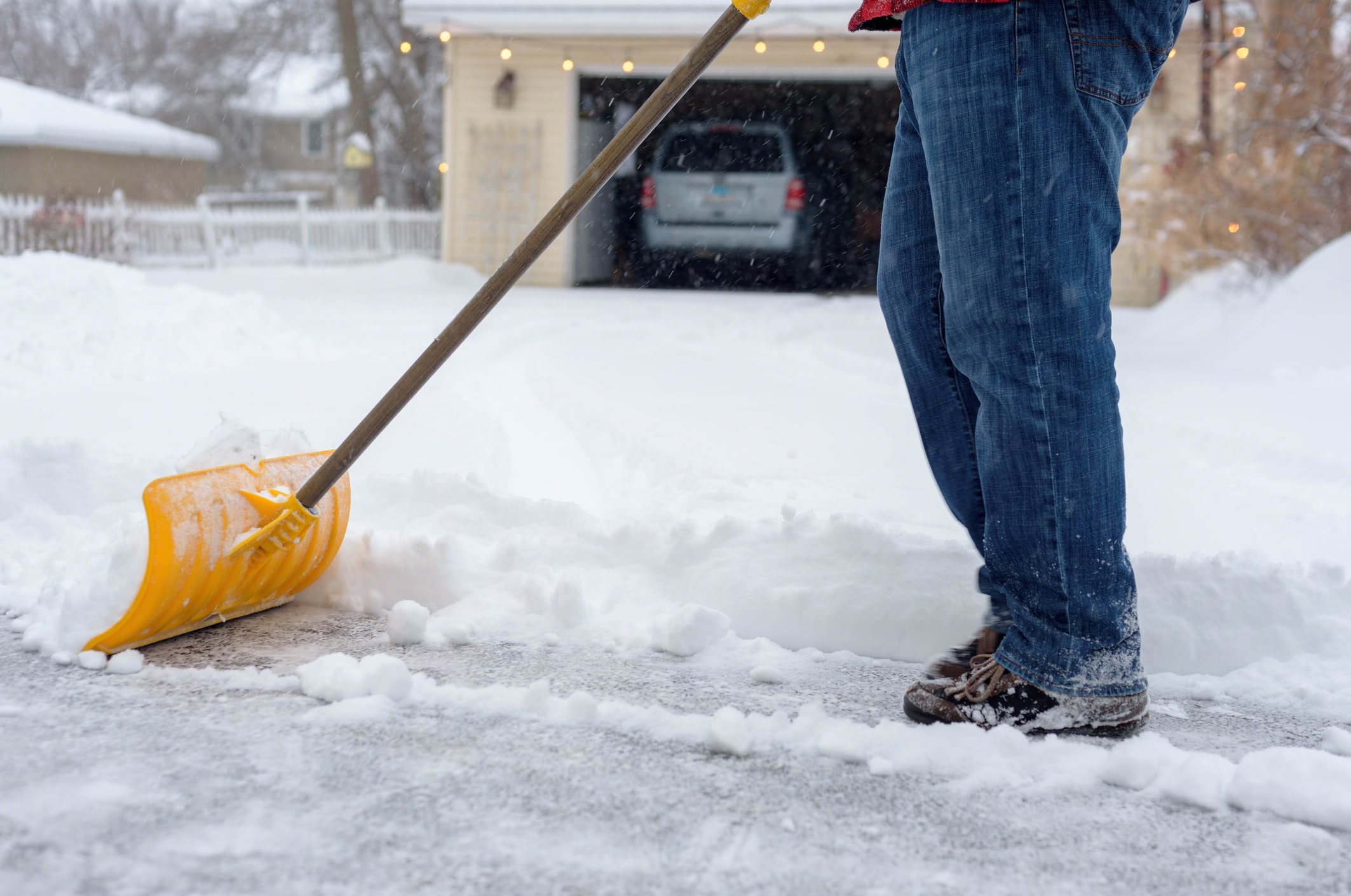
    Metal plow blades can scrape and gouge asphalt surfaces, especially if the driveway is already worn or cracked.

    Instead, use plows with rubber or polyurethane edges to reduce the risk of surface damage.

    Adjust Plow Height Properly

    Setting the plow blade slightly above the surface helps prevent direct contact with the asphalt, minimizing wear and tear.

    Don’t Wait Too Long to Remove Snow

    Allowing snow to compact and freeze makes removal more difficult and increases the likelihood of damage. Packed snow can bond to the surface, requiring more aggressive removal methods.

    Clearing snow early and consistently is the safest approach.

    Be Careful with Deicing Materials

    Deicing products can help improve safety, but some materials can impact asphalt over time. If you’re unsure what to use or how much to apply, check out our complete guide to salting asphalt driveways for safe and effective winter maintenance strategies.

    Safer Options

    • Calcium chloride
    • Magnesium chloride

    These are generally less aggressive than traditional rock salt and work effectively at lower temperatures.

    Use Salt in Moderation

    While salt does not directly destroy asphalt, excessive use can contribute to moisture penetration and accelerate deterioration when combined with freeze-thaw cycles.

    Protect Edges and Weak Areas

    The edges of asphalt driveways and parking lots are especially vulnerable during winter. Plows can catch edges and cause cracking or breakage.

    Take extra care around:

    • Driveway edges
    • Transitions to sidewalks or aprons
    • Areas with existing damage
    [elementor-template id=”4630″]

    Avoid Heavy Equipment on Residential Driveways

    Residential asphalt is typically not designed for heavy commercial plows or equipment. Using oversized machinery can cause stress, especially when the ground is frozen and less flexible.

    Use appropriately sized equipment for the surface you’re clearing.

    Watch for Freeze-Thaw Damage

    Winter conditions create constant expansion and contraction within asphalt. Water enters small cracks, freezes, expands, and then melts, repeating the cycle and weakening the pavement.

    This is one of the main causes of cracks and potholes in the spring.

    Schedule Repairs After Winter

    Winter often reveals existing weaknesses in asphalt. Once the weather warms up, it’s important to inspect your surface for damage.

    Look for:

    • New cracks
    • Potholes
    • Surface raveling
    • Drainage issues

    Addressing these problems early prevents further deterioration.

    Preventative Maintenance Before Winter

    The best way to protect asphalt during winter is to prepare it ahead of time.

    Sealcoating

    Sealcoating helps protect asphalt from water infiltration, chemicals, and oxidation.

    Crack Filling

    Sealing cracks before winter prevents water from entering and freezing beneath the surface.

    Drainage Improvements

    Ensuring proper drainage reduces standing water and limits freeze-thaw damage.

    Conclusion

    Snow removal is necessary, but it should be done carefully to avoid damaging your asphalt. Using the right equipment, removing snow early, and maintaining your pavement properly can significantly extend its lifespan.

    Winter conditions are tough on asphalt, but with the right approach, you can protect your driveway or parking lot and avoid costly repairs in the spring.

    Connecticut winters are tough on asphalt. If your driveway has taken a beating this season, request a free spring inspection from Maisano Brothers. A timely sealcoating application can prevent costly repairs down the road.

    Can snow plowing damage asphalt?

    Yes. Improper plowing, especially with metal blades, can scrape and damage the surface.

    What is the safest way to remove snow from asphalt?

    Use rubber-edged plows, remove snow early, and avoid aggressive scraping.

    Does salt damage asphalt driveways?

    Salt does not directly damage asphalt, but it can contribute to moisture-related deterioration over time.

    Should you shovel or plow an asphalt driveway?

    Both are fine when done carefully, but avoid sharp tools that can gouge the surface.

    When should I repair asphalt after winter?

    Repairs should be done in spring once temperatures rise and damage is visible.

    How do I protect my driveway before winter?

    Sealcoating, crack filling, and proper drainage are the best preventative steps.

  • Asphalt Rutting Explained: Causes, Mix Design Solutions & Prevention Strategies (2025 Update)

    Asphalt Rutting Explained: Causes, Mix Design Solutions & Prevention Strategies (2025 Update)

    Key Takeaways
    • Rutting accelerates under heavy loads and high temperatures.
    • Strong, well-drained foundations and adequate base thickness are essential.
    • Use rut-resistant mixes, performance-graded/polymer-modified binders, and Balanced Mix Design.
    • Compaction quality and drainage management make or break performance.
    • Inspect and maintain routinely; intervene early to avoid reconstruction.

    Asphalt rutting is a pavement distress characterized by longitudinal depressions in wheel paths. These grooves form when pavement layers or the underlying soil deform under repeated traffic loads. Rutting is most visible after rain as water collects in the depressions. Left untreated, it reduces ride quality, increases hydroplaning risk, and accelerates structural failure. Understanding causes and applying best-practice design and maintenance can significantly extend the life of driveways, parking lots, and roads.

    What Causes Asphalt Rutting?

    Traffic Loads and High Temperatures

    Rutting is a load-related distress. Repeated wheel loads compact or laterally move asphalt, and the effect accelerates at higher pavement temperatures when the binder softens. Heavy axle loads (trucks, forklifts, delivery traffic) intensify rutting, especially during hot weather.

    Subgrade Stability

    The subgrade (supporting soil) must be uniform and well-compacted. Weak, poorly compacted, or saturated subgrade allows the pavement to deflect and settle, creating structural ruts often accompanied by cracking. Water intrusion and variable soils are common triggers.

    Subbase Thickness & Load Distribution

    The aggregate base distributes loads to the subgrade. If base layers are too thin or inadequately compacted, the asphalt above will rut. Typical ranges:

    • Residential driveways: 2–3 in asphalt over 4–6 in compacted aggregate base.
    • Light-duty commercial lots: 3 in asphalt over 6–8 in base.
    • Heavy-duty truck areas: 4–6 in asphalt over 8–12 in base.

    Asphalt Mix Design

    Unstable mixes (excess binder, poor gradation, rounded aggregates) are prone to rutting. Modern Superpave mix design, stone-matrix asphalt (SMA), and performance-graded binders improve rut resistance when paired with proper quality control and lab performance tests (e.g., Hamburg wheel tracking, IDEAL-RT).

    Polymer-Modified Asphalt & Additives

    Elastomeric polymers (e.g., SBS/SBR), plastomers (e.g., polyethylene), crumb rubber, and chemical modifiers increase high-temperature stiffness and elasticity, improving rut resistance while often enhancing fatigue and thermal cracking performance.

    Recent Practice: Balanced Mix Design (BMD) & Recycled Materials

    Balanced Mix Design (BMD) uses performance tests to verify rutting, cracking, and moisture resistance before a mix is approved. Rather than relying only on volumetrics, BMD adjusts binder content, polymer modification, and recycled content to meet performance thresholds.

    Recycled materials (e.g., RAP, crumb rubber, some recycled plastics) can increase stiffness and rut resistance; blends with polymers or rubber can balance cracking performance. Performance testing is essential to ensure overall durability.

    Compaction & Densification

    Insufficient compaction during paving leads to post-construction densification under traffic, manifesting as ruts. Achieving target density at the proper mat temperature with appropriate rolling patterns is critical.

    Drainage & Moisture

    Water is the enemy of pavement. Positive surface cross-slope, functioning gutters/inlets, and subsurface drains (where needed) keep the base and subgrade dry. Saturated layers lose strength and rut more quickly.

    Environmental Factors

    Freeze-thaw cycles, extreme heat, and seasonal temperature swings influence rutting rates. Northern climates often benefit from thicker sections and robust drainage; hot climates from rut-resistant mixes and polymer-modified binders.

    Effects on Safety & Pavement Performance

    • Safety: Water-filled ruts increase hydroplaning risk and vehicle tracking.
    • Serviceability: Ruts degrade ride quality and can lead to secondary cracking and potholes.
    • Drainage: Depressed wheel paths trap water, worsening moisture damage below.
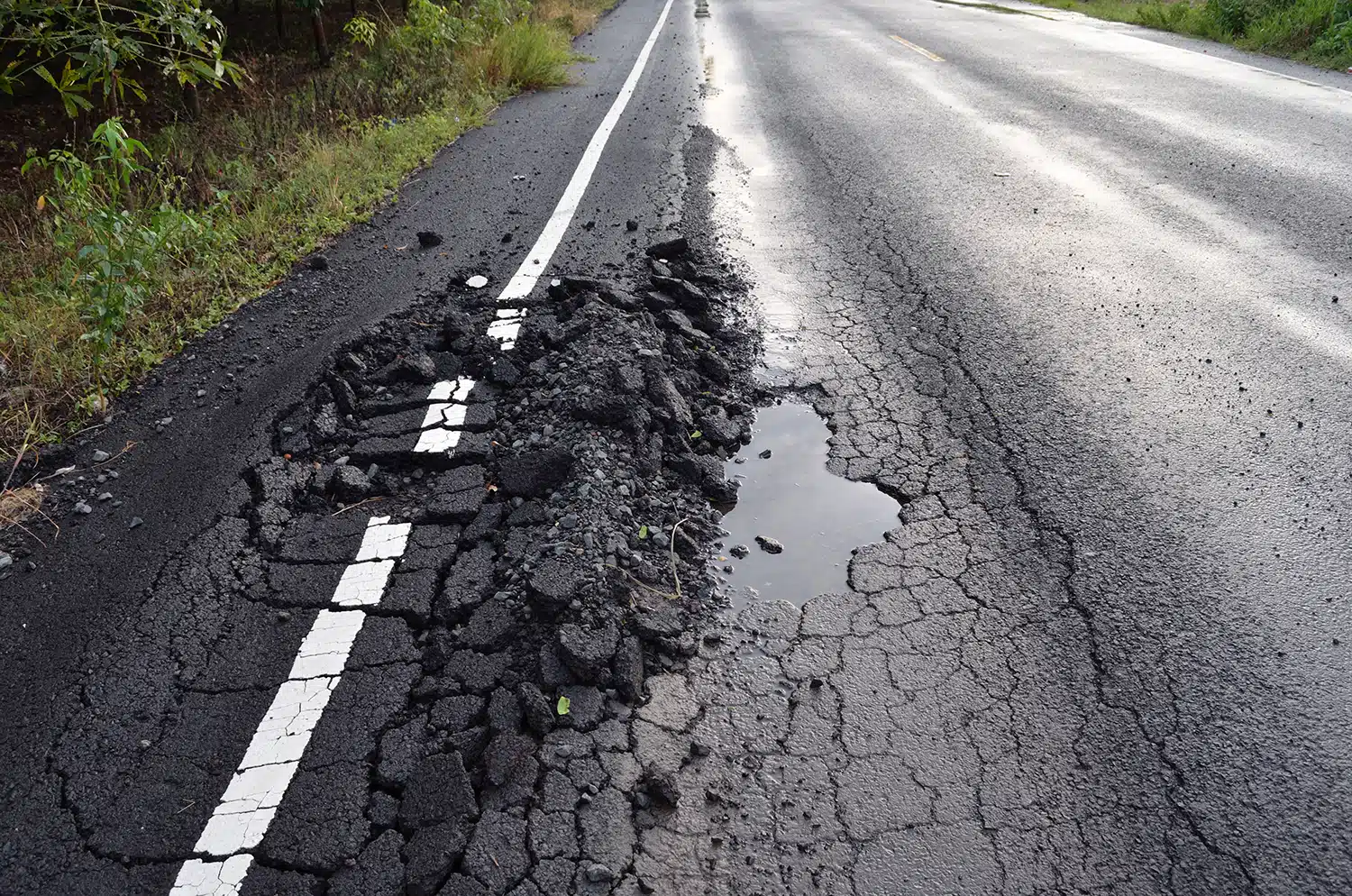
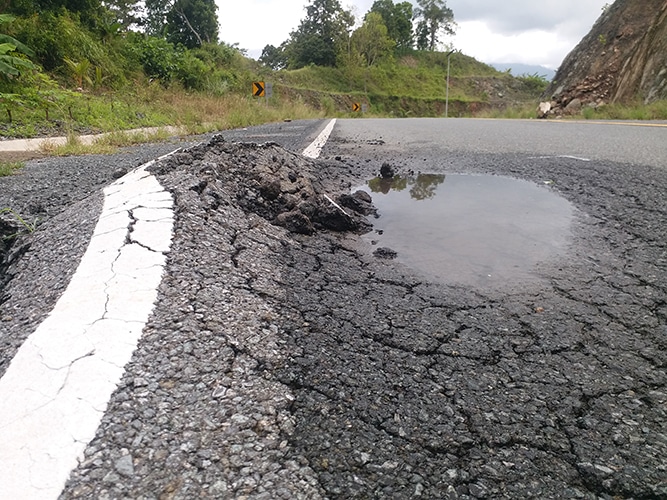
    Cracked asphalt and rutting along a road edge with standing water
    Edge rutting and cracking caused by inadequate base support and trapped moisture.

    Preventing Asphalt Rutting

    Site Preparation & Subgrade Treatment

    1. Soil testing & stabilization: Verify bearing capacity and moisture. Stabilize weak soils with lime/cement or geosynthetics.
    2. Uniform compaction: Compact subgrade to spec; undercut and replace soft spots.
    3. Adequate base thickness: Size the aggregate base for traffic and soil conditions; compact each lift.

    Material Selection

    1. Performance-graded/polymer-modified binders: Select PG grades for climate; consider polymer-modified or highly-modified binders for heavy loads/heat.
    2. Rut-resistant mixes: Superpave or SMA with angular aggregates and stone-on-stone contact.
    3. Balanced Mix Design: Approve mixes with lab rutting/cracking tests; optimize RAP/polymer/plastics content.
    4. Rubber-polymer options: Rubber-polymer blends can offer rut resistance with sustainability benefits.

    Construction Practices

    1. Compaction: Achieve density targets with correct rolling trains and temperatures.
    2. Lift thickness & temperature: Place uniform lifts; manage haul times and paving temperatures.
    3. Joints & smoothness: Build tight, well-compacted joints; maintain screed for uniform thickness.

    Maintenance & Repair

    1. Sealcoating & crack sealing: Limit water/oxygen ingress; schedule periodic sealcoats.
    2. Drainage upkeep: Keep inlets, gutters, and underdrains clear; preserve cross-slope.
    3. Timely intervention: Mill/overlay before ruts deepen; reconstruct where structural rutting is severe.

    Case Studies

    Polymer-modified overlay on a hot-weather corridor: A truck route prone to summer rutting received an SBS-modified surface mix. Post-construction monitoring showed notable reductions in rut depth and longer resurfacing intervals compared to the previous conventional mix.

    Stabilized base for a delivery-intensive commercial lot: A distribution center addressed subgrade soft spots with undercut, geotextile, and a thicker base, then paved with an SMA surface. After multiple winters and heavy truck traffic, rutting remained minimal.

    Frequently Asked Questions

    What is asphalt rutting?

    Longitudinal depressions in wheel paths are caused by permanent deformation of asphalt layers and/or supporting soils under repeated traffic.

    What causes rutting in driveways and parking lots?

    • Heavy loads and high pavement temperatures
    • Weak or saturated subgrade
    • Insufficient base thickness
    • Poor/unstable mix design
    • Inadequate compaction
    • Poor surface/subsurface drainage

    How can I prevent rutting on my driveway or parking lot?

    • Prepare and compact the subgrade; use geotextiles on weak soils
    • Install adequate base thickness for expected loads
    • Specify rut-resistant mixes (Superpave/SMA) and, where appropriate, polymer-modified binders
    • Ensure proper compaction at the correct temperatures
    • Maintain drainage and seal cracks regularly

    Do recycled plastics or rubber help?

    They can increase stiffness and rut resistance. Balanced Mix Design and performance testing are essential to ensure that crack resistance and overall durability are maintained.

    Can rutting be fixed once it starts?

    Yes. Shallow ruts may be addressed with thin overlays after leveling. Moderate ruts are typically milled and overlaid. Severe, structural rutting may require full-depth reclamation or reconstruction.

  • How Long Is The Curing Time for Freshly Laid Asphalt?

    How Long Is The Curing Time for Freshly Laid Asphalt?

    Key Takeaways
    • Initial Set Time: Fresh asphalt can typically support light foot traffic within 24–48 hours after paving.
    • Curing Period: Full curing can take 3 to 6 months, depending on weather, thickness, and asphalt mix type.
    • Factors That Affect Curing Time:
      • Weather: Hot, dry conditions speed up curing; cold, damp weather slows it down.
      • Traffic Load: Heavier vehicles require a longer wait before use.
      • Thickness of the Pavement: Thicker layers cure more slowly.
      • Asphalt Mix Design: Different mixes have varying cure profiles.
    • What You Can Do During Curing:
      • Avoid parking in the same spot repeatedly.
      • Limit turning the steering wheel when the vehicle is not in motion.
      • Refrain from placing heavy items (e.g., dumpsters) on the surface.
    • Why Curing Matters: Proper curing ensures the asphalt reaches full strength, resists rutting and surface damage, and increases long-term durability.

    When laying fresh asphalt, curing time is crucial for achieving a durable and long-lasting pavement. Here’s an in-depth look at the curing process, including answers to frequently asked questions.

    What is Asphalt Curing?

    Curing refers to the period required for freshly laid asphalt to harden and reach its full structural integrity. This process involves the evaporation of moisture and the bonding of asphalt binders with aggregates.

    How Long Does Asphalt Take to Cure?

    While asphalt can support foot traffic within 24 hours and vehicle traffic within 48 to 72 hours, it typically takes 6 to 12 months to fully cure. During this time, the asphalt will continue to harden and become more resilient.

    Frequently Asked Questions

    1. How Long After Paving Can You Walk on It?

    You can generally walk on freshly laid asphalt within 24 hours of installation. During this initial period, the asphalt begins to set and harden, making it safe for light foot traffic. However, it’s crucial to avoid heavy or sharp objects that could damage the surface. Allowing this brief curing time ensures the asphalt maintains its integrity and provides a durable walking surface.

    2. Can I Drive on Fresh Asphalt Right Away?

    It’s recommended to wait at least 24 to 48 hours before driving on fresh asphalt to allow it to set properly. Premature driving can cause indentations and damage.

    3. How Can Weather Affect Curing Time?

    Warm weather speeds up curing, while cold or wet conditions can slow it down. Ideal temperatures for laying and curing asphalt are between 50°F and 90°F.

    4. What Are the Signs that Asphalt is Fully Cured?

    Fully cured asphalt appears harder and less oily. It no longer feels soft to the touch and is resistant to indentations from heavy objects or vehicles.

    5. Can Sealing Help the Curing Process?

    Sealcoating can protect asphalt and extend its lifespan, but it should be applied only after the asphalt is fully cured, usually after 6 to 12 months.

    6. How Can I Maintain Asphalt During the Curing Period?

    Avoid parking in the same spot repeatedly, do not use sharp objects that can gouge the surface, and keep heavy trucks off the pavement until it’s fully cured.

    7. What If It Rains After Laying Asphalt?

    Light rain won’t significantly affect the curing process, but heavy rain can disrupt it, especially in the first few hours. Proper drainage and protective measures are essential during this time.

    8. Are There Any Precautions for High-Traffic Areas?

    For high-traffic areas, consider keeping the area closed off for a longer period to ensure proper curing. Applying a temporary surface covering can also help protect the asphalt during the initial curing phase.

    Detailed Steps in the Asphalt Curing Process

    Initial Setting Period

    Within the first 24 hours, the asphalt sets and begins to harden. This period is critical as the surface is most vulnerable to damage from foot or vehicle traffic. It’s important to keep all traffic off the asphalt during this time.

    Early Curing Phase

    Over the next few days, the asphalt continues to harden. During this phase, light foot traffic may be allowed after 24 hours, but vehicle traffic should wait at least 48 to 72 hours. Avoid parking heavy vehicles or machinery on the asphalt.

    Ongoing Curing

    For the first few months, the asphalt will continue to cure and harden. During this time, it’s essential to avoid practices that could damage the surface, such as turning vehicle wheels sharply when stationary or placing heavy objects on the driveway.

    Full Curing

    Asphalt reaches its full strength and hardness after about 6 to 12 months. Once fully cured, the asphalt is less susceptible to damage and can support regular use without significant issues.

    Maintenance Tips During the Curing Period

    Regular Cleaning: Keep the surface free from debris, dirt, and leaves to prevent staining and damage. Use a soft broom or blower for cleaning.

    Avoid Chemical Spills: Substances like oil, gasoline, or antifreeze can damage the asphalt. Clean spills immediately using appropriate cleaning methods.

    Limit Heavy Loads: Try to avoid parking heavy vehicles on the asphalt until it has fully cured. If necessary, distribute the weight by using boards or plywood under the tires.

    Mind the Edges: The edges of the asphalt are more prone to damage. Avoid driving over the edges and consider installing curbs or landscaping to protect them.

    Conclusion

    Understanding and respecting the curing time for freshly laid asphalt is essential for ensuring a durable and long-lasting pavement. Proper care and maintenance during the curing period can prevent premature damage and extend the life of your asphalt surface. Always consult with professional paving contractors to get specific advice tailored to your project and local conditions. By following these guidelines, you can enjoy a smooth, strong, and resilient asphalt surface for many years.

  • Should You Salt Your Asphalt Driveway? (What Contractors Won’t Tell You)

    Should You Salt Your Asphalt Driveway? (What Contractors Won’t Tell You)

    Key Takeaways
    • Salting works by lowering the freezing point of water, but different de-icing materials perform best at different temperatures and have varying environmental impacts.
    • Excessive salt use can accelerate asphalt wear primarily by increasing freeze–thaw stress, where melted water enters existing cracks, refreezes, and expands, leading to cracking and surface deterioration over time.
    • Proper salting practices, including pre-treating before storms, applying controlled amounts, and focusing on high-risk areas, improve safety while minimizing unnecessary pavement wear.
    • Alternative de-icing options such as calcium magnesium acetate (CMA), blended chlorides, or organic additives can help reduce overall chloride use while maintaining effective ice control under appropriate conditions.
    • Routine maintenance, including sealcoating, timely crack repair, and proper drainage, significantly extends the life of asphalt driveways and reduces reliance on heavy salt application during winter.

    In winter, maintaining a safe driveway becomes a top priority. Ice and snow accumulation create hazards for both pedestrians and vehicles, making salting a commonly relied-upon solution. However, salting is not as simple as it may seem. Improper use can contribute to unnecessary asphalt wear, increased costs, and environmental concerns. This guide explains how de-icers work, how they affect asphalt driveways, and how to use them responsibly while protecting your pavement.

    The Chemistry of De-Icers

    The Role of Freezing Point Depression

    De-icing salts work through a process known as freezing point depression. When salt dissolves in water, it separates into ions that disrupt the formation of ice crystals, allowing water to remain in a liquid state at lower temperatures. This prevents ice from bonding to the pavement and helps existing ice melt.

    Comparing Common De-Icing Materials

    • Sodium Chloride (Rock Salt): The most affordable and widely used option. Most effective at temperatures around 20°F (-6°C) and above. Performance declines in colder conditions, and excessive use can increase runoff concerns.
    • Calcium Chloride: Effective at temperatures as low as -25°F (-32°C). It attracts moisture and works quickly, but it is more expensive and should be handled carefully.
    • Magnesium Chloride: Effective down to approximately -13°F (-25°C). Often used in blends and generally less harsh than rock salt.
    • Potassium Chloride: Effective in milder winter conditions around 20°F (-7°C). Safer for plants but less commonly used due to cost and reduced cold-weather performance.
    • Calcium Magnesium Acetate (CMA): A biodegradable, non-corrosive option suitable for environmentally sensitive areas.
    • Urea and Beet-Based Alternatives: Organic or agricultural byproducts that reduce chloride use. These products are often blended with traditional salts to improve performance.

    Eutectic vs. Working Temperatures

    The eutectic temperature represents the lowest temperature at which a de-icer can theoretically melt ice. In practice, most de-icers become far less effective before reaching that point. Understanding realistic working temperatures helps homeowners choose the right product for their climate and avoid unnecessary application.

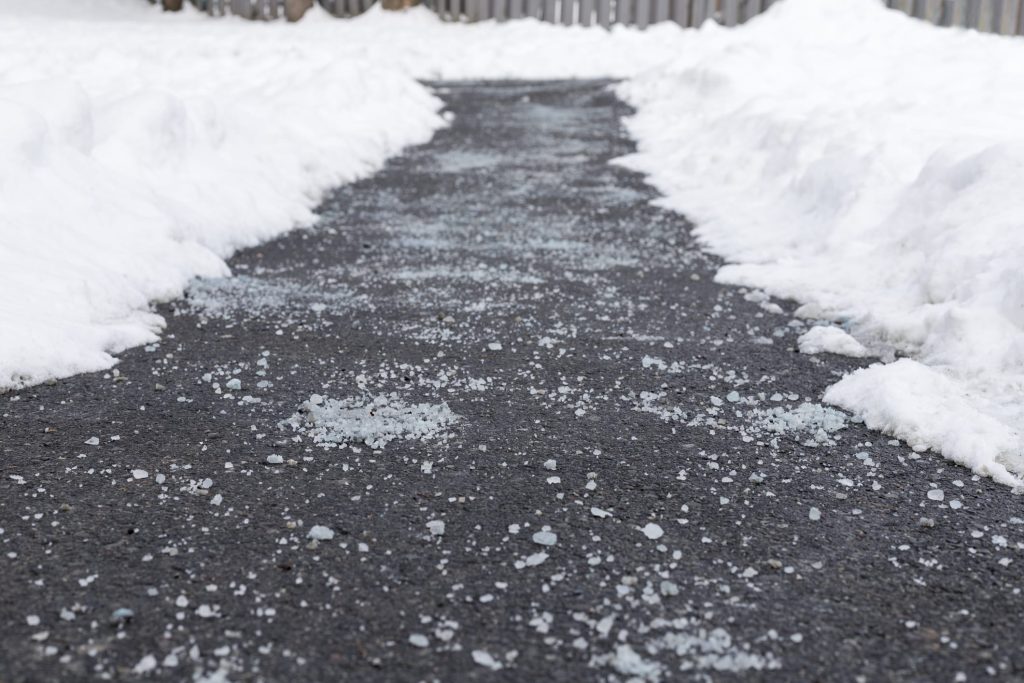
    Salted asphalt sidewalk cleaned path with salt
    Salted asphalt sidewalk cleaned path with salt

    Physical and Environmental Impacts of Salting

    How Salt Affects Asphalt Driveways

    Salt does not chemically dissolve or break down properly installed asphalt. Modern asphalt surfaces are designed to withstand exposure to common de-icing materials. However, salt can indirectly contribute to wear when combined with moisture and freeze-thaw cycles.

    • Freeze-Thaw Stress: When salt melts ice, water can seep into existing cracks or surface imperfections. As temperatures drop, this water refreezes and expands, gradually widening cracks and accelerating normal pavement aging.
    • Surface Wear: Over time, repeated freeze-thaw cycles may lead to surface deterioration if cracks are not properly sealed.

    There is no strong evidence that sodium or chloride ions chemically react with asphalt binder or aggregates under normal driveway conditions. Damage is primarily physical, not chemical.

    Environmental Considerations

    • Soil Impact: Excessive salt use can stress nearby vegetation and alter soil conditions, particularly in areas with poor drainage.
    • Water Quality: Chloride runoff can accumulate in waterways. A responsible application significantly reduces this risk.
    • Wildlife Exposure: Concentrated salt runoff may affect wildlife in certain environments, emphasizing the importance of controlled use.

    Best Practices for Salting Your Driveway

    When to Salt

    • Pre-Treatment: Applying liquid brine before a storm helps prevent ice from bonding to the pavement.
    • After Snow Removal: Clear snow first, then apply salt lightly to remaining icy areas.
    • Before Sudden Freezes: Early application can help prevent overnight ice formation.

    How Much Salt to Apply

    Over-application is one of the most common mistakes. A general rule of thumb is approximately 1–2 pounds of rock salt per 100 square feet. Using a spreader helps ensure even coverage and reduces waste.

    Targeting High-Risk Areas

    Focus salting efforts on shaded areas, low spots, and locations near downspouts where ice forms more quickly, rather than uniformly treating the entire surface.

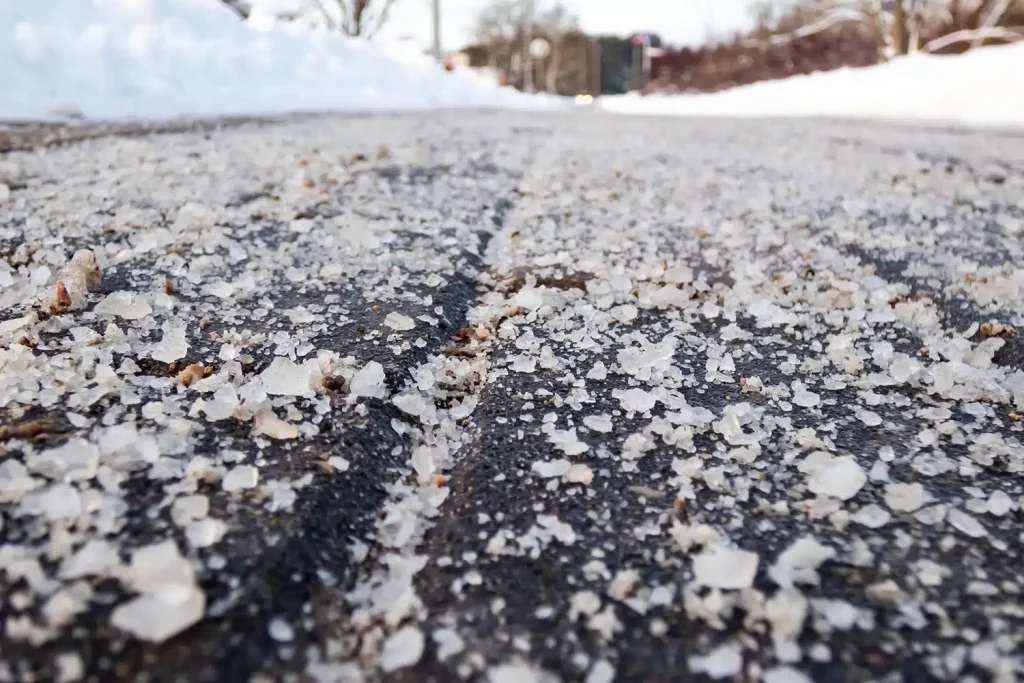
    Rock salt scattered across an asphalt driveway during winter to melt ice and improve traction.
    Rock salt spread across an asphalt driveway helps melt ice.

    Maintenance and Prevention Strategies

    Regular Sealcoating

    Sealcoating asphalt every 2–3 years creates a protective barrier that limits water infiltration and helps asphalt withstand winter conditions.

    Crack and Pothole Repairs

    Filling asphalt cracks before winter prevents moisture from entering the pavement and reduces freeze-thaw damage.

    Improving Drainage

    Proper asphalt grading and drainage reduce standing water, ice formation, and the need for excessive de-icing.

    Alternative De-Icing Solutions

    Blended De-Icers

    Blends combining sodium chloride with calcium or magnesium chloride improve low-temperature performance while reducing overall chloride use.

    Organic and Biodegradable Options

    • Calcium Magnesium Acetate (CMA): Non-corrosive and environmentally friendly.
    • Beet Juice Blends: Often mixed with traditional salts to improve effectiveness and reduce chloride reliance.

    Non-Chemical Methods

    • Sand and Gravel: Provide traction without melting ice.
    • Heated Driveways: Electric or hydronic systems eliminate the need for salt entirely, though installation costs are higher.

    The Economics of Salting

    Balancing Cost and Performance

    Rock salt (Sodium Chloride) is inexpensive but limited in extreme cold. Higher-performance de-icers may reduce labor and reapplication costs during severe weather.

    Long-Term Savings Through Maintenance

    Routine maintenance, such as sealing, repairs, and drainage improvements, reduces long-term repair costs and extends the driveway’s lifespan.

    Professional Assistance and Advanced Technologies

    When to Call a Professional

    If your driveway shows signs of significant wear, or if you’re uncertain about the most effective de-icing strategy, a professional asphalt contractor can assess the situation. They can recommend appropriate treatments, suggest alternative products, and perform necessary repairs to prolong the life of your asphalt surface.

    Emerging Ice Management Technologies

    Frequently Asked Questions

    Does salt damage asphalt driveways?

    Salt doesn’t chemically break down asphalt, but it accelerates freeze–thaw cycles by allowing water to penetrate small cracks and refreeze, which leads to potholes, cracking, and long-term surface wear.

    What type of salt is best for asphalt?

    Rock salt (sodium chloride) is the most common, but calcium chloride and magnesium chloride work better in colder temperatures and require smaller amounts, making them gentler on asphalt and the environment.

    How much salt should I apply to my driveway?

    A general guideline is 1–2 pounds of rock salt per 100 square feet. Using more doesn’t melt ice any faster and can increase environmental damage and asphalt deterioration.

    Is pre-treating my driveway with brine effective?

    Yes. Applying a brine solution before a storm prevents ice from bonding to the pavement, reduces the amount of salt needed, and makes post-storm clearing easier.

    What environmentally friendly alternatives to salt can I use?

    Options like calcium magnesium acetate (CMA), beet-based de-icers, or blended products reduce chloride runoff and are safer for plants, soil, and waterways.

    How does salt affect nearby landscaping?

    Salt runoff can burn grass, alter soil pH, and stress shrubs or trees. Using less salt, switching to safer alternatives, or installing protective edging can reduce the impact.

    Should I sealcoat my driveway before winter?

    Yes. Sealcoating every 2–3 years provides a protective barrier that helps prevent moisture and salt penetration, reducing freeze–thaw damage.

    Can improving drainage help reduce salt usage?

    Definitely. Good drainage prevents water from pooling and freezing, lowering the need for repeated salting throughout winter.

    Are heated driveways a better option than salting?

    Heated driveways eliminate salt altogether by keeping pavement above freezing, but they require a higher upfront investment and may not fit every budget.

    When should I contact a professional?

    If your driveway has significant cracking, frequent ice buildup, drainage problems, or recurring potholes, an asphalt professional can recommend repairs and winter protection strategies.

    Conclusion

    Salting an asphalt driveway is more than a routine winter chore; it’s a process that involves chemistry, environmental stewardship, and thoughtful planning. By selecting the right de-icing materials, applying them at the proper time, maintaining your driveway regularly, and considering innovative alternatives, you can ensure safety, and protect your investment.

  • What is Frost Heave? Is Your Driveway Protected?

    What is Frost Heave? Is Your Driveway Protected?

    Frost heave is a common issue in regions that experience freezing temperatures as we have in New England, particularly affecting asphalt surfaces such as driveways, roads, and parking lots. Understanding the causes, effects, and prevention of frost heave is crucial for maintaining the integrity of asphalt surfaces and ensuring their longevity.

    What is Frost Heave?

    Frost heave occurs when the ground beneath an asphalt surface freezes and thaws repeatedly. During the freezing process, moisture in the soil turns to ice, expanding and pushing the ground upward. When the ice melts during warmer periods, the ground contracts. This cycle of expansion and contraction can cause significant damage to asphalt surfaces, leading to cracking, buckling, and uneven surfaces.

    Causes of Frost Heave in Asphalt

    Soil Composition

    The type of soil beneath the asphalt plays a significant role in frost heave. Soils with high moisture content, such as clay and silt, are more prone to frost heave because they retain more water, which expands when frozen.

    Water Accumulation

    Poor drainage can lead to water accumulation beneath the asphalt surface. When this water freezes, it causes the ground to expand, leading to frost heave.

    Freeze-Thaw Cycles

    Regions with frequent freeze-thaw cycles are more susceptible to frost heave. The repeated freezing and thawing process causes the ground to shift and can lead to significant damage over time.

    Insufficient Base Layer

    A poorly constructed or insufficient base layer beneath the asphalt can make the surface more vulnerable to frost heave. The base layer acts as a buffer, and when it is not properly designed, it fails to protect the asphalt from the effects of frost heave.

      Effects of Frost Heave on Asphalt Surfaces

      Frost heave can lead to various issues with asphalt surfaces, including:

      • Cracking: The expansion and contraction of the ground can cause cracks to form on the asphalt surface. These cracks can widen over time, leading to more significant damage.
      • Uneven Surfaces: As the ground beneath the asphalt heaves, it can create an uneven surface. This not only affects the aesthetics of the asphalt but can also create hazards for vehicles and pedestrians.
      • Buckling and Warping: In severe cases, frost heave can cause the asphalt to buckle or warp, making the surface unusable.

      Preventing Frost Heave in Asphalt

      While it is challenging to completely eliminate the risk of frost heave, there are several measures that can be taken to minimize its impact:

      Proper Soil Preparation

      Before laying asphalt, it is crucial to prepare the soil properly. This includes removing any organic material, ensuring proper drainage, and compacting the soil to reduce the likelihood of frost heave.

      Quality Base Layer

      A well-constructed base layer is essential in preventing frost heave. Using materials that allow for proper drainage and provide stability can help protect the asphalt surface from the effects of freeze-thaw cycles.

      Improved Drainage Systems

      Installing an efficient drainage system can prevent water from accumulating beneath the asphalt surface. This reduces the risk of frost heave by minimizing the amount of water that can freeze and expand.

      Regular Maintenance

      Regular inspection and maintenance of asphalt surfaces can help identify early signs of frost heave. Repairing cracks and other minor damages promptly can prevent more extensive damage over time.

      Use of Frost-Resistant Materials

      In regions prone to frost heave, using frost-resistant materials for both the base layer and the asphalt mix can help mitigate the effects of freezing and thawing.

        Conclusion

        Frost heave is a significant concern for asphalt surfaces in colder climates, but with proper preparation and maintenance, its impact can be minimized. Understanding the causes and effects of frost heave allows for better prevention strategies, ensuring that asphalt surfaces remain functional and safe for years to come. Investing in quality materials, proper drainage, and regular maintenance is key to protecting asphalt from the damaging effects of frost heave.

      1. The Surprising Environmental Benefits of Using Asphalt Concrete for Paving

        The Surprising Environmental Benefits of Using Asphalt Concrete for Paving

        Asphalt is everywhere. It’s the most noticeable material in paving, from highways to driveways. While its durability and cost-effectiveness are well recognized, asphalt concrete’s environmental benefits are also surprisingly significant but less widely known. This article explores how asphalt contributes to sustainable building practices and environmental conservation, right there in your own neighborhood or town.

        Recycling and Reusability

        Asphalt stands out for its recyclability, with the National Asphalt Pavement Association noting that it is the most recycled product in the United States. Old asphalt pavements are frequently milled and recycled into new pavements, reducing the need for virgin raw materials and minimizing waste in landfills. This process conserves natural resources and reduces environmental impact, making asphalt a preferable choice in eco-friendly construction and renovation projects.

        Energy Efficiency

        The production of Warm Mix Asphalt (WMA) requires temperatures that are 50 to 70 degrees Fahrenheit lower than those needed for Hot Mix Asphalt (HMA). This significant reduction in heating requirements leads to lower emissions of greenhouse gases and pollutants. Additionally, the lower temperature decreases fuel consumption, enhancing overall energy efficiency in road construction and maintenance. This is not some kind of a pipe dream, but it is highly effective technology, currently being produced and used in 44 states across the country.

        Durability and Maintenance

        Asphalt concrete’s longevity means roads and driveways need less frequent replacement or repair, leading to a decrease in the use of construction materials and resources over time. Technological advancements in asphalt mixes also contribute to this durability, further enhancing its environmental benefit by prolonging the pavement lifecycle and reducing the frequency of resource-intensive repair work.

        Water Management and Quality

        Prepare to be amazed! Did you realize that there is such a thing as “porous asphalt”? Absolutely, because porous asphalt is an innovative solution that addresses urban runoff and water quality issues by allowing water to drain through the pavement surface into the ground below, thus recharging aquifers and reducing stormwater runoff. This type of pavement system diminishes the impact on local sewer systems and mitigates the risk of flooding, playing a crucial role in sustainable urban planning. By having fewer ‘fines’ (rock dust, sand, etc.) in the mix, the gap between aggregate is slightly greater–just enough to allow a pass-through of water. The ecological benefit is that allowing the water to percolate into the soil beneath the asphalt rather than just flow across the surface, out to the street, and then to oceans and waterways, it gets directly returned to the aquifers below ground. 

        Reduction of Urban Heat

        Asphalt’s potential to minimize urban heat islands is significant. Reflective or lighter-colored asphalt surfaces reflect more sunlight and absorb less heat than traditional black asphalt. This property can significantly reduce urban temperatures, decreasing the demand for air conditioning in surrounding buildings and thus reducing energy consumption and associated emissions. Heat islands are defined as urban areas that are warmer in the summer because of the preponderance of nearby buildings, other structures, and roads. EPA – Heat Islands

        Noise Reduction

        Asphalt pavements contribute to reduced noise pollution compared to other pavement types. The smooth surface of asphalt absorbs road noise better, leading to quieter neighborhoods and urban areas. This reduction in noise pollution not only enhances the quality of life but also contributes to a healthier urban environment.

        Conclusion

        Asphalt offers numerous environmental benefits that make it a smart choice for sustainable construction and paving projects. In fact, the Virginia Asphalt Association labels asphalt concrete as “…the most sustainable paving material for constructing pavements…”

        Its ability to be recycled, combined with its energy-efficient production processes and contributions to improved water management and reduced urban heat, underscores its role in environmental stewardship. Opting for an asphalt driveway or pavement reflects a commitment to sustainability and responsibility toward preserving our environment for future generations.

        Secure Your Custom Asphalt Paving Estimate Today!

        When planning your next paving project, consider asphalt not just for its practical and economic advantages but also for its environmental benefits. By choosing asphalt, you’re opting for a material that supports sustainable development and offers a range of ecological advantages.

        A good way to begin is to contact one of the designers in the estimating department at Maisano Brothers, Inc., paving contractors, now in its 57th year of service to this community. They can supply you with design ideas and cost information. At the very least, it’s a great way to begin.

      2. The Difference Between Hot Mix Asphalt and Cold Mix Asphalt

        The Difference Between Hot Mix Asphalt and Cold Mix Asphalt

        Asphalt is a popular choice for paving due to its affordability, ease of repair, and maintenance. However, understanding the differences between hot mix and cold mix asphalt is essential for selecting the right material for your project.

        Hot Mix Asphalt

        Composition and Application

        Hot mix asphalt combines aggregates like sand, gravel, and asphalt cement, which are heated to 300-500 degrees before application. It’s typically used for large-scale projects such as roads, parking lots, and driveways. The high temperature ensures a strong bond between the components, resulting in a durable surface.

        Pros:

        Weather-Resistant

        Hot mix asphalt performs well in extreme weather conditions. Its ability to absorb heat helps in melting snow and ice quickly, enhancing safety.

        Quick Cooling

        Despite being applied at high temperatures, hot mix asphalt cools rapidly, allowing roads and driveways to be used within hours after installation. This minimizes disruption and road closures.

        Durability

        The high-temperature application creates a strong bond among aggregates, making it highly durable and suitable for high-traffic areas like highways and commercial parking lots.

        Flexibility

        Asphalt’s flexibility allows it to expand and contract with temperature changes, reducing the risk of cracks compared to more rigid materials like concrete.

        Cons:

        Higher Cost

        Hot mix asphalt is more expensive than cold mix asphalt due to the materials and heating process involved. However, its longevity and durability often justify the higher initial cost.

        Temperature Constraints

        Installation of hot mix asphalt requires ambient temperatures to be at least 40 degrees Fahrenheit, limiting its use during colder months in certain regions.

        Cold Mix Asphalt

        Composition and Application

        Cold mix asphalt is a more straightforward mixture that doesn’t require heating. It is typically used for temporary repairs and small-scale patches. This type of asphalt can be stored and used as needed, making it convenient for addressing potholes and minor cracks quickly.

        Pros:

        Cost-Effective

        Cold mix asphalt is significantly cheaper than hot mix asphalt. It is also easy to apply, making it ideal for quick fixes.

        Convenient for Temporary Fixes

        Because it doesn’t require heating, cold mix asphalt is perfect for temporary repairs during colder months or when immediate repairs are needed. It can prevent further damage until a more permanent solution can be applied.

        Cons:

        Less Durable

        Cold mix asphalt is not designed for long-term use. It lacks the strong binding properties of hot mix asphalt, making it more susceptible to wear and tear.

        Not Suitable for Heavy Traffic

        This type of asphalt is best for low-traffic areas or temporary repairs. For more permanent solutions in high-traffic areas, hot mix asphalt is recommended.

        Making the Right Choice

        Choosing between hot mix and cold mix asphalt depends on your specific needs and circumstances. Here are some factors to consider:

        Project Scale

        For large-scale projects like highways, parking lots, and driveways, hot mix asphalt is the preferred choice due to its durability and weather resistance. For smaller, more temporary repairs, cold mix asphalt is suitable and cost-effective.

        Weather Conditions

        In regions with extreme temperature variations, hot mix asphalt is more reliable. Cold mix asphalt is useful in colder conditions when hot mix cannot be applied.

        Budget

        If budget constraints are a concern and the project does not require long-term durability, cold mix asphalt provides a cost-effective solution. However, for high-traffic areas, investing in hot mix asphalt can offer better long-term value.

        Conclusion

        Understanding the differences between hot mix and cold mix asphalt is crucial for making an informed decision. Hot mix asphalt offers superior durability and weather resistance, making it ideal for permanent installations in high-traffic areas. Cold mix asphalt, on the other hand, provides a cost-effective and convenient solution for temporary repairs and low-traffic applications. Consulting with professional paving contractors can help determine the best option for your specific project, ensuring a durable and effective paving solution.

      3. What is a Chip Seal Driveway? Professional Installation, Maintainance, and Repair.

        What is a Chip Seal Driveway? Professional Installation, Maintainance, and Repair.

        Chip seal driveways, also known as tar-and-chip or seal chip driveways, provide an attractive, durable, and cost-effective alternative to traditional asphalt. Here’s a comprehensive look at what chip seal driveways are, their benefits, common questions, installation process, and maintenance tips.

        What is a Chip Seal Driveway?

        A chip seal driveway is constructed by applying a layer of hot liquid asphalt to a prepared base, followed by a layer of crushed stone. The stones are then compacted into the asphalt, creating a textured, durable surface. This method combines elements of both gravel and asphalt driveways, offering the benefits of both materials.

        Benefits of Chip Seal Driveways

        Cost-Effective

        Chip seal driveways are typically more affordable than traditional asphalt or concrete driveways. The materials and installation process are less expensive, making it a budget-friendly option for many homeowners.

        Aesthetic Appeal

        The appearance of a chip seal driveway can be customized by choosing different colors and types of stone. This allows homeowners to create a unique look that complements their property’s style. The natural look of chip seal can blend seamlessly with various landscape designs.

        Durability

        The combination of asphalt and stone provides a robust surface that can withstand various weather conditions and heavy traffic. With proper maintenance, a chip seal driveway can last for many years, providing long-term value.

        Low Maintenance

        Chip seal driveways require less maintenance compared to traditional asphalt. Occasional reapplication of the chip seal layer can refresh the surface and address any minor issues. They are also less prone to cracking compared to asphalt.

        Quick Installation

        The installation process for chip seal driveways is relatively quick, reducing the inconvenience to homeowners. It can often be completed in a day or two, depending on the size of the driveway.

          5 Common Questions About Chip Seal Driveways

          How Long Does a Chip Seal Driveway Last?

          A chip seal driveway can last between 7 to 10 years, depending on factors such as climate, traffic, and maintenance practices. Regular upkeep, such as resealing, can extend its lifespan.

          What is the Installation Process?

          The installation process involves several steps:

          • Preparation: The existing base is graded and compacted.
          • Application of Asphalt: A layer of hot liquid asphalt is evenly applied.
          • Spreading of Stones: Crushed stone is spread over the hot asphalt.
          • Compaction: The stones are compacted into the asphalt to create a smooth surface.

          Can It Be Applied Over Existing Driveways?

          Yes, chip seal can be applied over existing gravel or asphalt driveways, making it a versatile option for resurfacing older pavements. This can save time and reduce the cost of completely removing the old driveway.

          How Does Weather Affect a Chip Seal Driveway?

          Chip seal driveways perform well in various weather conditions. However, extreme temperatures and heavy rainfall can impact their longevity. Proper drainage and timely maintenance help mitigate weather-related issues. For areas with heavy snowfall, it is important to ensure proper snow removal techniques to avoid damage.

          Is a Chip Seal Driveway Suitable for All Areas?

          While chip seal driveways are suitable for many regions, they are particularly popular in rural and suburban areas. They may not be the best choice for areas with extremely high traffic volumes or severe freeze-thaw cycles, as these conditions can accelerate wear and tear.

            Maintenance Tips for Chip Seal Driveways

            Regular Inspection

            Periodically inspect your driveway for any signs of wear or damage. Early detection allows for timely repairs and prevents further deterioration. Look for loose stones, cracks, or areas where the asphalt is exposed.

            Seal Coating

            Applying a seal coat every few years helps maintain the driveway’s integrity and appearance. This layer protects the underlying materials from the elements and extends the life of the driveway.

            Cleaning

            Keep the surface clean by removing debris, leaves, and dirt. This prevents organic material from breaking down and causing damage to the asphalt and stone layers. Regular sweeping and washing can help maintain its appearance.

            Prompt Repairs

            Address any issues such as potholes or cracks immediately to prevent them from worsening. Small problems can quickly become larger ones if not addressed in a timely manner.

            Snow Removal

            Use a rubber-bladed shovel or snow blower to remove snow to avoid damaging the surface. Avoid using metal blades that can scrape and damage the stone layer.

            Installation Considerations

            Base Preparation

            Proper preparation of the base is crucial for the longevity of a chip seal driveway. Ensure the base is well-graded and compacted.

            Material Quality

            Use high-quality asphalt and stone materials to ensure a durable and long-lasting surface.

            Professional Installation

            While some homeowners may consider a DIY approach, professional installation is recommended to ensure proper application and compaction.

            Conclusion

            Chip seal driveways offer a cost-effective, durable, and aesthetically pleasing alternative to traditional asphalt and concrete driveways. By understanding the installation process, benefits, and maintenance requirements, homeowners can make an informed decision about whether a chip seal driveway is right for their property. Proper care and regular maintenance will ensure that your chip seal driveway remains a beautiful and functional part of your home for years to come.