Key Takeaways
- Rutting accelerates under heavy loads and high temperatures.
- Strong, well-drained foundations and adequate base thickness are essential.
- Use rut-resistant mixes, performance-graded/polymer-modified binders, and Balanced Mix Design.
- Compaction quality and drainage management make or break performance.
- Inspect and maintain routinely; intervene early to avoid reconstruction.
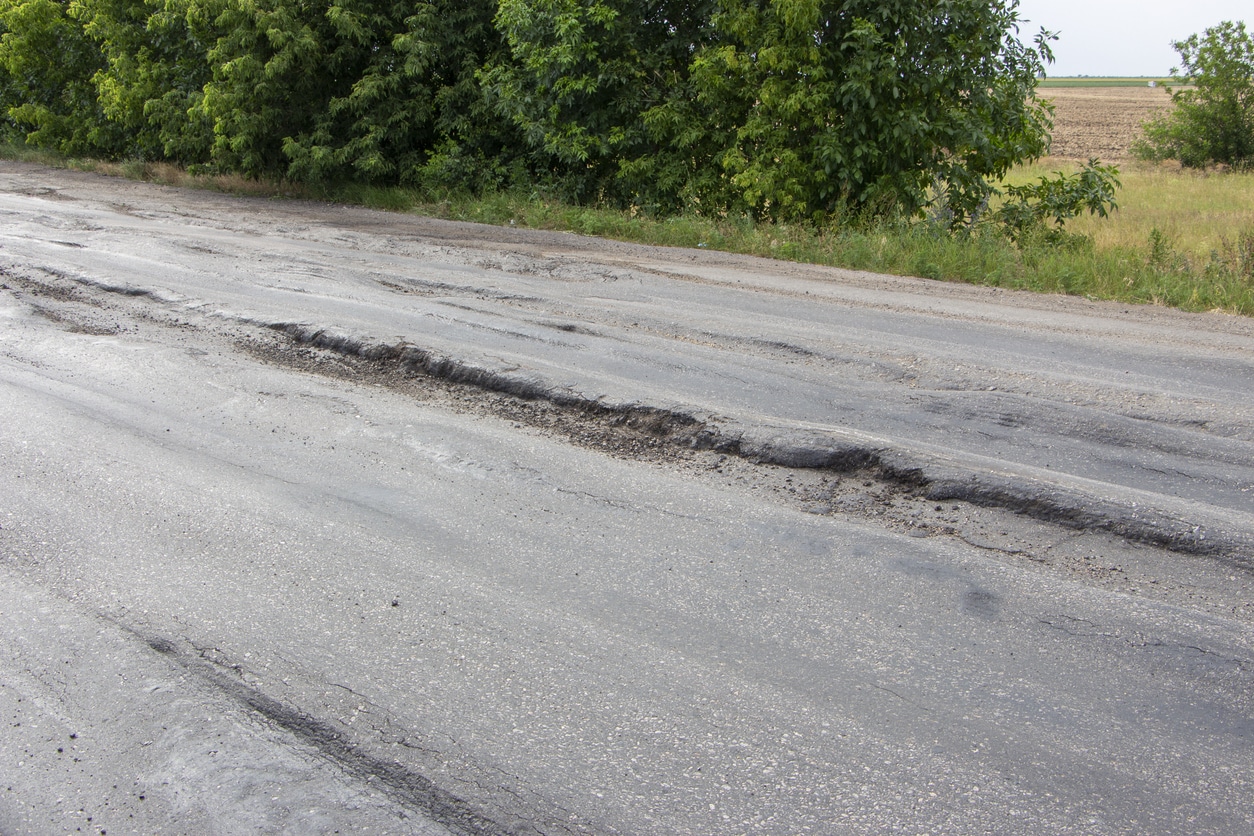
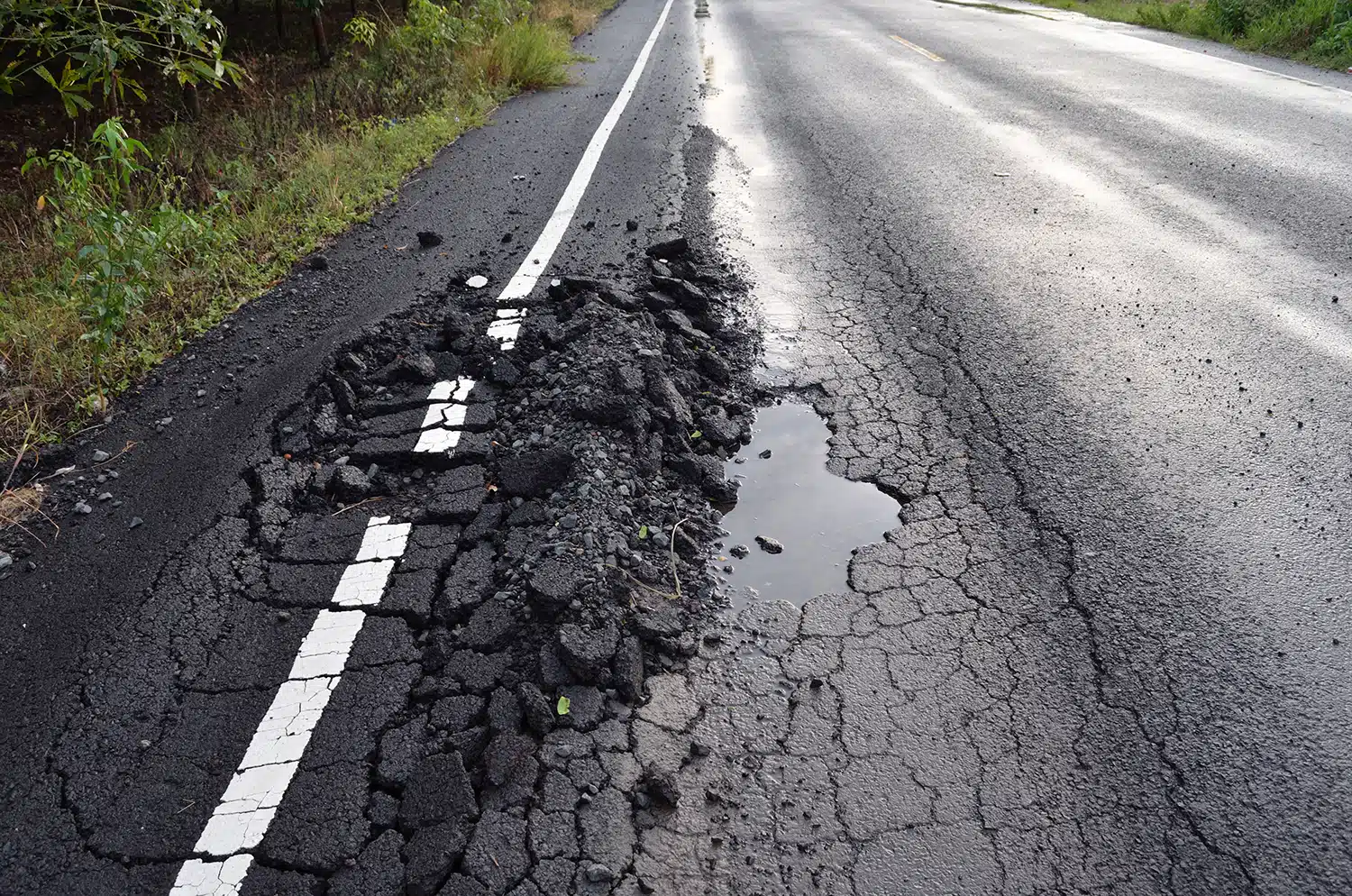
Asphalt rutting is a pavement distress characterized by longitudinal depressions in wheel paths. These grooves form when pavement layers or the underlying soil deform under repeated traffic loads. Rutting is most visible after rain as water collects in the depressions. Left untreated, it reduces ride quality, increases hydroplaning risk, and accelerates structural failure. Understanding causes and applying best-practice design and maintenance can significantly extend the life of driveways, parking lots, and roads.
What Causes Asphalt Rutting?
Traffic Loads and High Temperatures
Rutting is a load-related distress. Repeated wheel loads compact or laterally move asphalt, and the effect accelerates at higher pavement temperatures when the binder softens. Heavy axle loads (trucks, forklifts, delivery traffic) intensify rutting, especially during hot weather.
Subgrade Stability
The subgrade (supporting soil) must be uniform and well-compacted. Weak, poorly compacted, or saturated subgrade allows the pavement to deflect and settle, creating structural ruts often accompanied by cracking. Water intrusion and variable soils are common triggers.
Subbase Thickness & Load Distribution
The aggregate base distributes loads to the subgrade. If base layers are too thin or inadequately compacted, the asphalt above will rut. Typical ranges:
- Residential driveways: 2–3 in asphalt over 4–6 in compacted aggregate base.
- Light-duty commercial lots: 3 in asphalt over 6–8 in base.
- Heavy-duty truck areas: 4–6 in asphalt over 8–12 in base.
Asphalt Mix Design
Unstable mixes (excess binder, poor gradation, rounded aggregates) are prone to rutting. Modern Superpave mix design, stone-matrix asphalt (SMA), and performance-graded binders improve rut resistance when paired with proper quality control and lab performance tests (e.g., Hamburg wheel tracking, IDEAL-RT).
Polymer-Modified Asphalt & Additives
Elastomeric polymers (e.g., SBS/SBR), plastomers (e.g., polyethylene), crumb rubber, and chemical modifiers increase high-temperature stiffness and elasticity, improving rut resistance while often enhancing fatigue and thermal cracking performance.
Recent Practice: Balanced Mix Design (BMD) & Recycled Materials
Balanced Mix Design (BMD) uses performance tests to verify rutting, cracking, and moisture resistance before a mix is approved. Rather than relying only on volumetrics, BMD adjusts binder content, polymer modification, and recycled content to meet performance thresholds.
Recycled materials (e.g., RAP, crumb rubber, some recycled plastics) can increase stiffness and rut resistance; blends with polymers or rubber can balance cracking performance. Performance testing is essential to ensure overall durability.
Compaction & Densification
Insufficient compaction during paving leads to post-construction densification under traffic, manifesting as ruts. Achieving target density at the proper mat temperature with appropriate rolling patterns is critical.
Drainage & Moisture
Water is the enemy of pavement. Positive surface cross-slope, functioning gutters/inlets, and subsurface drains (where needed) keep the base and subgrade dry. Saturated layers lose strength and rut more quickly.
Environmental Factors
Freeze-thaw cycles, extreme heat, and seasonal temperature swings influence rutting rates. Northern climates often benefit from thicker sections and robust drainage; hot climates from rut-resistant mixes and polymer-modified binders.
Effects on Safety & Pavement Performance
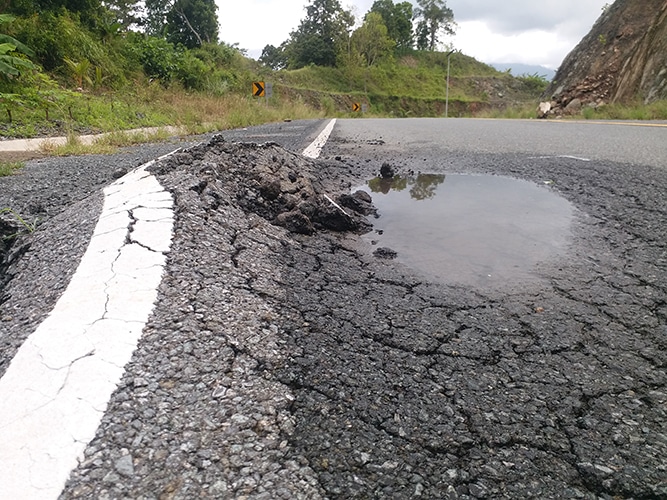
- Safety: Water-filled ruts increase hydroplaning risk and vehicle tracking.
- Serviceability: Ruts degrade ride quality and can lead to secondary cracking and potholes.
- Drainage: Depressed wheel paths trap water, worsening moisture damage below.
Preventing Asphalt Rutting
Site Preparation & Subgrade Treatment
- Soil testing & stabilization: Verify bearing capacity and moisture. Stabilize weak soils with lime/cement or geosynthetics.
- Uniform compaction: Compact subgrade to spec; undercut and replace soft spots.
- Adequate base thickness: Size the aggregate base for traffic and soil conditions; compact each lift.
Material Selection
- Performance-graded/polymer-modified binders: Select PG grades for climate; consider polymer-modified or highly-modified binders for heavy loads/heat.
- Rut-resistant mixes: Superpave or SMA with angular aggregates and stone-on-stone contact.
- Balanced Mix Design: Approve mixes with lab rutting/cracking tests; optimize RAP/polymer/plastics content.
- Rubber-polymer options: Rubber-polymer blends can offer rut resistance with sustainability benefits.
Construction Practices
- Compaction: Achieve density targets with correct rolling trains and temperatures.
- Lift thickness & temperature: Place uniform lifts; manage haul times and paving temperatures.
- Joints & smoothness: Build tight, well-compacted joints; maintain screed for uniform thickness.
Maintenance & Repair
- Sealcoating & crack sealing: Limit water/oxygen ingress; schedule periodic sealcoats.
- Drainage upkeep: Keep inlets, gutters, and underdrains clear; preserve cross-slope.
- Timely intervention: Mill/overlay before ruts deepen; reconstruct where structural rutting is severe.
Case Studies
Polymer-modified overlay on a hot-weather corridor: A truck route prone to summer rutting received an SBS-modified surface mix. Post-construction monitoring showed notable reductions in rut depth and longer resurfacing intervals compared to the previous conventional mix.
Stabilized base for a delivery-intensive commercial lot: A distribution center addressed subgrade soft spots with undercut, geotextile, and a thicker base, then paved with an SMA surface. After multiple winters and heavy truck traffic, rutting remained minimal.
Frequently Asked Questions
What is asphalt rutting?
Longitudinal depressions in wheel paths are caused by permanent deformation of asphalt layers and/or supporting soils under repeated traffic.
What causes rutting in driveways and parking lots?
- Heavy loads and high pavement temperatures
- Weak or saturated subgrade
- Insufficient base thickness
- Poor/unstable mix design
- Inadequate compaction
- Poor surface/subsurface drainage
How can I prevent rutting on my driveway or parking lot?
- Prepare and compact the subgrade; use geotextiles on weak soils
- Install adequate base thickness for expected loads
- Specify rut-resistant mixes (Superpave/SMA) and, where appropriate, polymer-modified binders
- Ensure proper compaction at the correct temperatures
- Maintain drainage and seal cracks regularly
Do recycled plastics or rubber help?
They can increase stiffness and rut resistance. Balanced Mix Design and performance testing are essential to ensure that crack resistance and overall durability are maintained.
Can rutting be fixed once it starts?
Yes. Shallow ruts may be addressed with thin overlays after leveling. Moderate ruts are typically milled and overlaid. Severe, structural rutting may require full-depth reclamation or reconstruction.