Tag: driveway salt

  • Heated Driveway: Is It Worth It for CT Homeowners?

    Heated Driveway: Is It Worth It for CT Homeowners?

    If a Connecticut driveway turns slick after every storm, a heated driveway can sound like the perfect fix. It can be a serious upgrade, especially for steep, shaded, or high-use driveways where snow and ice create real access problems. But it is not a simple add-on, and it is rarely the cheapest path.

    The better question is whether the system solves a problem that matters enough to justify the added cost. If you are already planning a full replacement through asphalt paving services or comparing options for residential paving services, that is usually the right time to discuss heating. For a broader comparison, Maisano Brothers also has a related guide on heated asphalt and concrete driveways.

    Key Takeaways

    A heated driveway is usually worth considering when safety, access, and winter convenience matter more than upfront cost.

    Quick answer

    • Heated driveways are most useful on long, steep, shaded, or high-use driveways.
    • They can reduce shoveling, salting, and ice buildup.
    • They cost more than standard asphalt because the system must be built into the driveway.
    • Base prep, grading, and drainage matter even more than they do on a normal paving job.
    • New installations are usually better candidates than retrofits.

    What a heated driveway actually does

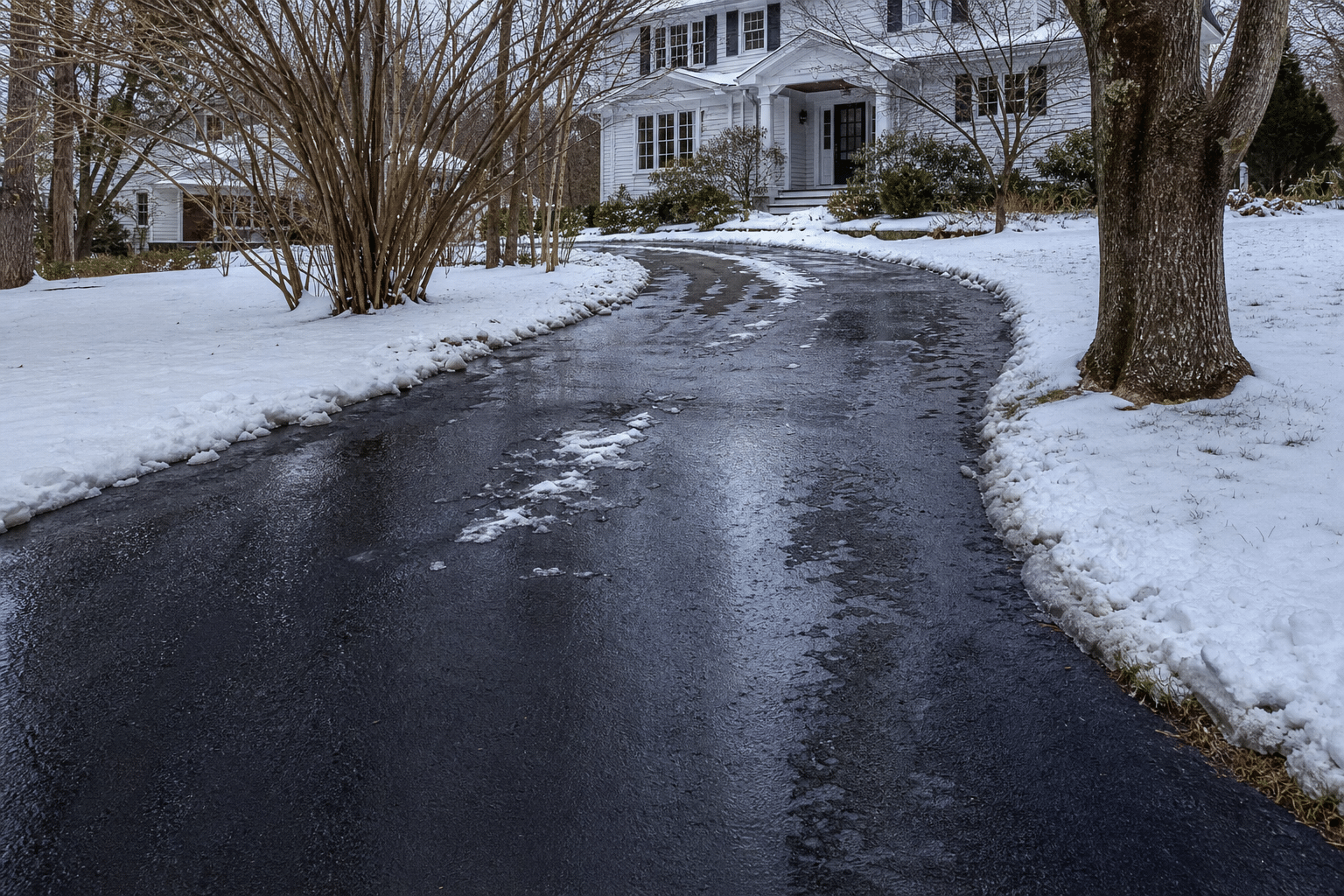
    A heated driveway uses electric cables or hydronic tubing below the pavement to warm the surface from underneath. When the system runs, it helps melt snow before it bonds to the asphalt and limits the ice that forms after storms.

    Electric systems are often simpler for smaller residential areas. Hydronic systems are more complex, but they may make sense for larger driveways or properties where operating efficiency matters over time.

    When it makes sense for Connecticut homeowners

    The strongest candidates are driveways where winter creates more than a mild inconvenience. A short, flat driveway may not justify the cost. A steep driveway that refreezes every night is a different conversation.

    Good candidates include

    • Steep residential driveways
    • Long or wide paved approaches
    • Homes with mobility concerns
    • Driveways with heavy shade and frequent refreeze
    • Properties where snow removal is a recurring problem

    What changes in the paving process

    A heated driveway is not a normal overlay. The heating layout has to be planned before the asphalt goes down, and the base has to be stable enough to protect both the pavement and the system underneath it.

    Heated driveway installation layers
    The base, drainage, and heating layout need to work together before the asphalt is installed.

    Base prep matters more than ever

    Soft areas, poor compaction, and weak subbase material can cause movement under the heating system. That is why asphalt grading should be part of the planning before the system is installed.

    Drainage has to be deliberate

    Melting snow creates water. If that water pools in low spots or refreezes along the edges, the system loses much of its value. Drainage should be designed as part of the driveway, not treated as an afterthought.

    Retrofits are harder

    Adding heat to an existing driveway usually means major reconstruction. For most homeowners, it makes more sense to consider the upgrade during a full replacement or new asphalt driveway installation.

    Is it worth the money?

    It depends on the problem you are trying to solve. If you are looking for the lowest-cost driveway, heating is not the right answer. If winter access is a constant frustration, the convenience and safety may be worth the premium.

    Operating cost depends on the system type, the driveway size, and how often it runs. Installation cost depends on the heating system, base condition, drainage work, and paving scope. The asphalt cost calculator can help frame the standard paving side before you compare the added heating cost.

    When a standard driveway is still the better move

    A standard asphalt driveway is still the smarter choice for many homes. It costs less, is simpler to maintain, and avoids the complexity of a heating system. If the driveway is flat, easy to clear, and not prone to ice, the extra investment may not return enough value.

    The right decision should fit how the driveway is used. A premium system only makes sense when the site and winter conditions call for it.

    Questions to ask before you commit

    • Is my driveway a strong candidate for a heated system?
    • Would this be part of a replacement or a retrofit?
    • Which system type fits the driveway size and layout?
    • How will drainage be handled after snow melts?
    • What operating cost should I expect?
    • What happens if the heating system needs repair later?

    FAQs

    Can a heated driveway be added to any driveway?

    Not always. Some properties are much better candidates than others, and retrofits can be expensive.

    Is a heated driveway better for new construction?

    Usually yes. It is easier to build the heating system into a new driveway than to cut into an existing one.

    Does it eliminate all snow removal?

    It can reduce snow and ice significantly, but performance depends on the system, storm conditions, and how the driveway drains.

    Is it a luxury upgrade?

    Yes, but that does not make it unreasonable. For the right property, it can be a practical safety and access improvement.

    Should I talk to a paving contractor first?

    Yes. The heating system, base, drainage, and asphalt all need to be planned together.

    Bottom line for CT homeowners

    A heated driveway can be worth it in Connecticut when winter access is a real problem and the driveway is being rebuilt correctly from the base up. If you want to compare a heated option with a standard asphalt driveway, contact Maisano Brothers Inc. or request an estimate.
  • Should You Salt Your Asphalt Driveway? (What Contractors Won’t Tell You)

    Should You Salt Your Asphalt Driveway? (What Contractors Won’t Tell You)

    Key Takeaways
    • Salting works by lowering the freezing point of water, but different de-icing materials perform best at different temperatures and have varying environmental impacts.
    • Excessive salt use can accelerate asphalt wear primarily by increasing freeze–thaw stress, where melted water enters existing cracks, refreezes, and expands, leading to cracking and surface deterioration over time.
    • Proper salting practices, including pre-treating before storms, applying controlled amounts, and focusing on high-risk areas, improve safety while minimizing unnecessary pavement wear.
    • Alternative de-icing options such as calcium magnesium acetate (CMA), blended chlorides, or organic additives can help reduce overall chloride use while maintaining effective ice control under appropriate conditions.
    • Routine maintenance, including sealcoating, timely crack repair, and proper drainage, significantly extends the life of asphalt driveways and reduces reliance on heavy salt application during winter.

    In winter, maintaining a safe driveway becomes a top priority. Ice and snow accumulation create hazards for both pedestrians and vehicles, making salting a commonly relied-upon solution. However, salting is not as simple as it may seem. Improper use can contribute to unnecessary asphalt wear, increased costs, and environmental concerns. This guide explains how de-icers work, how they affect asphalt driveways, and how to use them responsibly while protecting your pavement.

    The Chemistry of De-Icers

    The Role of Freezing Point Depression

    De-icing salts work through a process known as freezing point depression. When salt dissolves in water, it separates into ions that disrupt the formation of ice crystals, allowing water to remain in a liquid state at lower temperatures. This prevents ice from bonding to the pavement and helps existing ice melt.

    Comparing Common De-Icing Materials

    • Sodium Chloride (Rock Salt): The most affordable and widely used option. Most effective at temperatures around 20°F (-6°C) and above. Performance declines in colder conditions, and excessive use can increase runoff concerns.
    • Calcium Chloride: Effective at temperatures as low as -25°F (-32°C). It attracts moisture and works quickly, but it is more expensive and should be handled carefully.
    • Magnesium Chloride: Effective down to approximately -13°F (-25°C). Often used in blends and generally less harsh than rock salt.
    • Potassium Chloride: Effective in milder winter conditions around 20°F (-7°C). Safer for plants but less commonly used due to cost and reduced cold-weather performance.
    • Calcium Magnesium Acetate (CMA): A biodegradable, non-corrosive option suitable for environmentally sensitive areas.
    • Urea and Beet-Based Alternatives: Organic or agricultural byproducts that reduce chloride use. These products are often blended with traditional salts to improve performance.

    Eutectic vs. Working Temperatures

    The eutectic temperature represents the lowest temperature at which a de-icer can theoretically melt ice. In practice, most de-icers become far less effective before reaching that point. Understanding realistic working temperatures helps homeowners choose the right product for their climate and avoid unnecessary application.

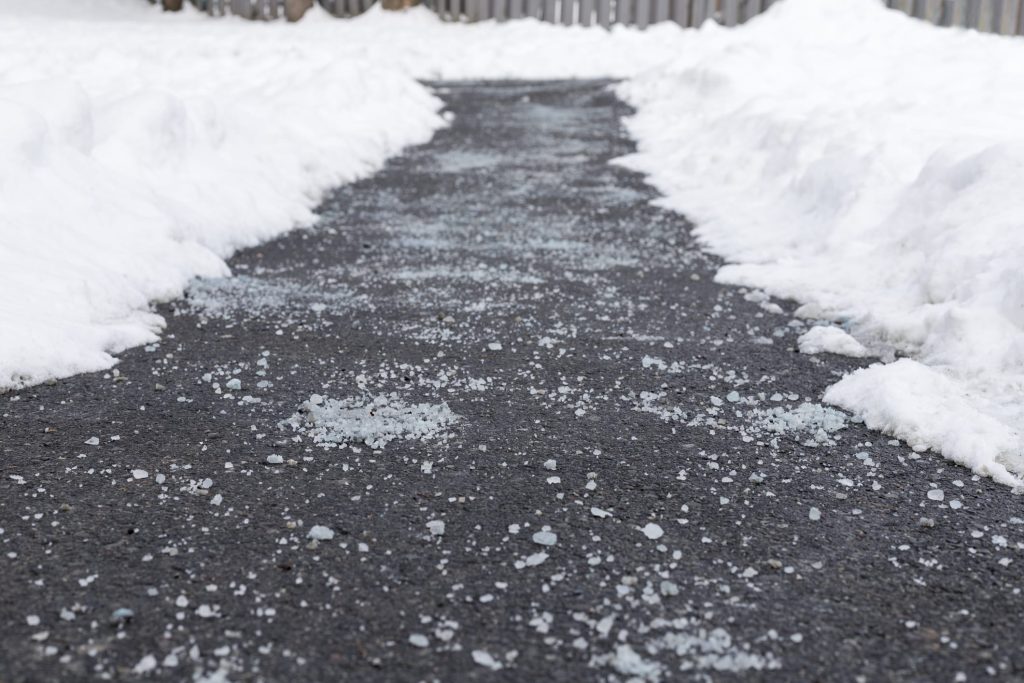
    Salted asphalt sidewalk cleaned path with salt
    Salted asphalt sidewalk cleaned path with salt

    Physical and Environmental Impacts of Salting

    How Salt Affects Asphalt Driveways

    Salt does not chemically dissolve or break down properly installed asphalt. Modern asphalt surfaces are designed to withstand exposure to common de-icing materials. However, salt can indirectly contribute to wear when combined with moisture and freeze-thaw cycles.

    • Freeze-Thaw Stress: When salt melts ice, water can seep into existing cracks or surface imperfections. As temperatures drop, this water refreezes and expands, gradually widening cracks and accelerating normal pavement aging.
    • Surface Wear: Over time, repeated freeze-thaw cycles may lead to surface deterioration if cracks are not properly sealed.

    There is no strong evidence that sodium or chloride ions chemically react with asphalt binder or aggregates under normal driveway conditions. Damage is primarily physical, not chemical.

    Environmental Considerations

    • Soil Impact: Excessive salt use can stress nearby vegetation and alter soil conditions, particularly in areas with poor drainage.
    • Water Quality: Chloride runoff can accumulate in waterways. A responsible application significantly reduces this risk.
    • Wildlife Exposure: Concentrated salt runoff may affect wildlife in certain environments, emphasizing the importance of controlled use.

    Best Practices for Salting Your Driveway

    When to Salt

    • Pre-Treatment: Applying liquid brine before a storm helps prevent ice from bonding to the pavement.
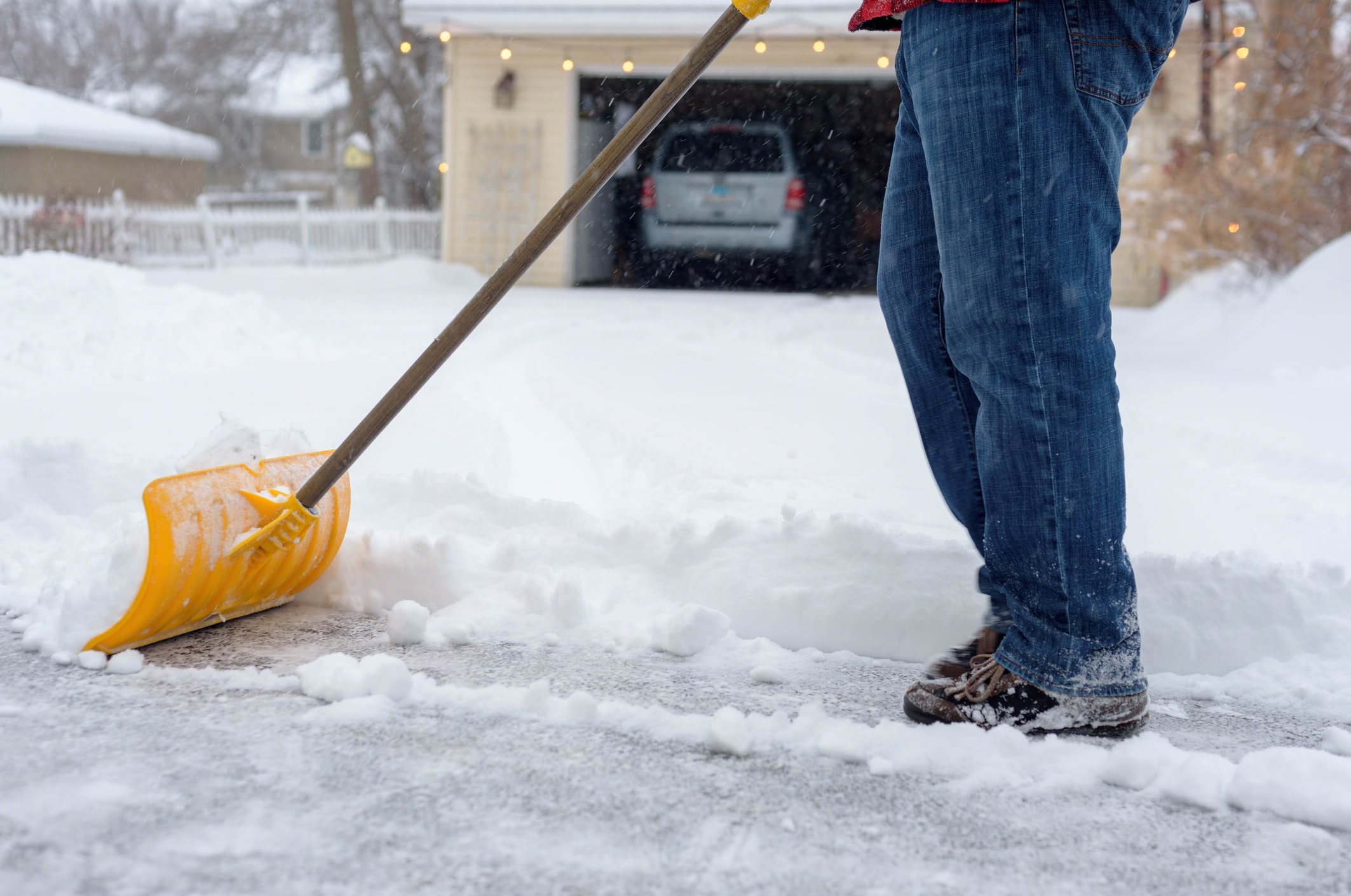
    • After Snow Removal: Clear snow first, then apply salt lightly to remaining icy areas.
    • Before Sudden Freezes: Early application can help prevent overnight ice formation.

    How Much Salt to Apply

    Over-application is one of the most common mistakes. A general rule of thumb is approximately 1–2 pounds of rock salt per 100 square feet. Using a spreader helps ensure even coverage and reduces waste.

    Targeting High-Risk Areas

    Focus salting efforts on shaded areas, low spots, and locations near downspouts where ice forms more quickly, rather than uniformly treating the entire surface.

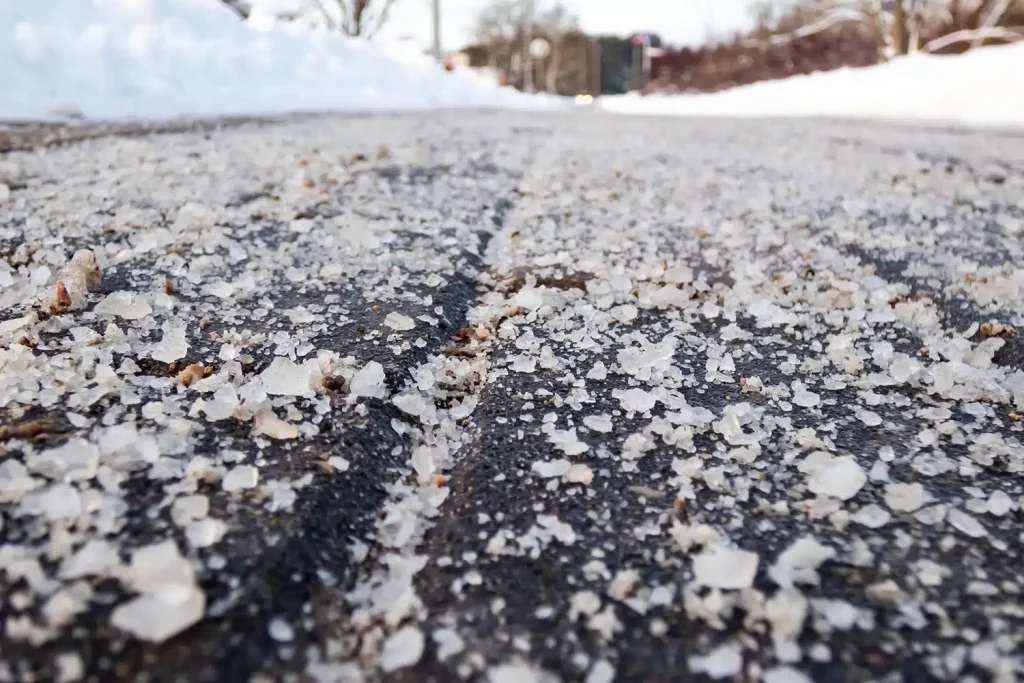
    Rock salt scattered across an asphalt driveway during winter to melt ice and improve traction.
    Rock salt spread across an asphalt driveway helps melt ice.

    Maintenance and Prevention Strategies

    Regular Sealcoating

    Sealcoating asphalt every 2–3 years creates a protective barrier that limits water infiltration and helps asphalt withstand winter conditions.

    Crack and Pothole Repairs

    Filling asphalt cracks before winter prevents moisture from entering the pavement and reduces freeze-thaw damage.

    Improving Drainage

    Proper asphalt grading and drainage reduce standing water, ice formation, and the need for excessive de-icing.

    Alternative De-Icing Solutions

    Blended De-Icers

    Blends combining sodium chloride with calcium or magnesium chloride improve low-temperature performance while reducing overall chloride use.

    Organic and Biodegradable Options

    • Calcium Magnesium Acetate (CMA): Non-corrosive and environmentally friendly.
    • Beet Juice Blends: Often mixed with traditional salts to improve effectiveness and reduce chloride reliance.

    Non-Chemical Methods

    • Sand and Gravel: Provide traction without melting ice.
    • Heated Driveways: Electric or hydronic systems eliminate the need for salt entirely, though installation costs are higher.

    The Economics of Salting

    Balancing Cost and Performance

    Rock salt (Sodium Chloride) is inexpensive but limited in extreme cold. Higher-performance de-icers may reduce labor and reapplication costs during severe weather.

    Long-Term Savings Through Maintenance

    Routine maintenance, such as sealing, repairs, and drainage improvements, reduces long-term repair costs and extends the driveway’s lifespan.

    Professional Assistance and Advanced Technologies

    When to Call a Professional

    If your driveway shows signs of significant wear, or if you’re uncertain about the most effective de-icing strategy, a professional asphalt contractor can assess the situation. They can recommend appropriate treatments, suggest alternative products, and perform necessary repairs to prolong the life of your asphalt surface.

    Emerging Ice Management Technologies

    Frequently Asked Questions

    Does salt damage asphalt driveways?

    Salt doesn’t chemically break down asphalt, but it accelerates freeze–thaw cycles by allowing water to penetrate small cracks and refreeze, which leads to potholes, cracking, and long-term surface wear.

    What type of salt is best for asphalt?

    Rock salt (sodium chloride) is the most common, but calcium chloride and magnesium chloride work better in colder temperatures and require smaller amounts, making them gentler on asphalt and the environment.

    How much salt should I apply to my driveway?

    A general guideline is 1–2 pounds of rock salt per 100 square feet. Using more doesn’t melt ice any faster and can increase environmental damage and asphalt deterioration.

    Is pre-treating my driveway with brine effective?

    Yes. Applying a brine solution before a storm prevents ice from bonding to the pavement, reduces the amount of salt needed, and makes post-storm clearing easier.

    What environmentally friendly alternatives to salt can I use?

    Options like calcium magnesium acetate (CMA), beet-based de-icers, or blended products reduce chloride runoff and are safer for plants, soil, and waterways.

    How does salt affect nearby landscaping?

    Salt runoff can burn grass, alter soil pH, and stress shrubs or trees. Using less salt, switching to safer alternatives, or installing protective edging can reduce the impact.

    Should I sealcoat my driveway before winter?

    Yes. Sealcoating every 2–3 years provides a protective barrier that helps prevent moisture and salt penetration, reducing freeze–thaw damage.

    Can improving drainage help reduce salt usage?

    Definitely. Good drainage prevents water from pooling and freezing, lowering the need for repeated salting throughout winter.

    Are heated driveways a better option than salting?

    Heated driveways eliminate salt altogether by keeping pavement above freezing, but they require a higher upfront investment and may not fit every budget.

    When should I contact a professional?

    If your driveway has significant cracking, frequent ice buildup, drainage problems, or recurring potholes, an asphalt professional can recommend repairs and winter protection strategies.

    Conclusion

    Salting an asphalt driveway is more than a routine winter chore; it’s a process that involves chemistry, environmental stewardship, and thoughtful planning. By selecting the right de-icing materials, applying them at the proper time, maintaining your driveway regularly, and considering innovative alternatives, you can ensure safety, and protect your investment.