Tag: how to

  • How to Find a Reputable Asphalt Paving Contractor

    How to Find a Reputable Asphalt Paving Contractor

    Key Takeaways
    • A reputable asphalt paving contractor should have a strong local reputation, clear communication, written estimates, and proof of insurance.
    • Online reviews are helpful when you look beyond the star rating and evaluate repeated patterns in workmanship, professionalism, and problem resolution. This is an inference based on the review guidance in the current article.
    • Detailed estimates matter because two paving proposals with similar prices may include very different levels of preparation, drainage work, and repair scope. This expands on the article’s emphasis on comprehensive quotes.
    • Large upfront deposits, rushed decisions, and vague explanations are common warning signs when hiring a paving contractor.
    • The best contractor for the job is not always the cheapest one. Experience, preparation, and honesty about the condition of the pavement often matter more than the lowest number.

    Hiring the right Connecticut asphalt paving contractor can make the difference between a driveway or parking lot that performs for years and one that starts failing far too soon. A good contractor does more than provide a low number on paper. They help you understand the scope of the work, prepare the site correctly, install the pavement properly, and stand behind the finished product.

    Unfortunately, not every paving contractor operates the same way. Some companies offer quality workmanship, clear communication, and honest recommendations. Others rely on vague estimates, rushed installations, poor materials, or high-pressure sales tactics. That is why it is so important to know what to look for before signing anything.

    If you are planning a new driveway, resurfacing an older surface, repairing problem areas, or exploring full paving services, this guide will help you evaluate contractors with more confidence and avoid common mistakes.

    Start With Local Reputation

    One of the best ways to begin your search is by looking for contractors with a proven local presence. A company that has been serving the same region for years usually has more at stake than a fly-by-night operator passing through town.

    Ask neighbors, family members, local business owners, or property managers who they have used and whether they would hire that contractor again.

    Check Reviews, But Read Them Carefully

    Online reviews can be helpful, but they need to be read with context.

    • Do customers mention professionalism and communication?
    • Do they describe long-lasting work?
    • Are there repeated complaints about cracking or drainage?
    • Does the contractor respond professionally to feedback?

    Verify Licensing and Insurance

    A reputable contractor should be able to provide proof of licensing (if required), general liability insurance, and workers’ compensation coverage.

    If a company cannot provide documentation, that is a major red flag.

    Look for Experience With Your Type of Project

    Not all contractors specialize in the same type of work. Some focus on residential driveways, while others handle commercial lots or municipal projects.

    Make sure the contractor has experience with projects similar to yours.

    Ask About the Full Scope of Work

    A reputable contractor should clearly explain the job from start to finish.

    • Will the old pavement be removed or resurfaced?
    • Is the base stable or does it need repair?
    • How will drainage be handled?
    • What thickness of asphalt is being installed?

    If they can’t explain it clearly, that’s a warning sign.

    [elementor-template id=”4630″]

    Get Detailed Written Estimates

    Always get everything in writing. This helps you compare contractors fairly.

    It’s also smart to get multiple estimates so you can evaluate pricing, scope, and professionalism side by side.

    A strong estimate should include:

    • Scope of work
    • Preparation details
    • Materials and application
    • Cleanup and finishing
    • Payment terms

    The lowest price is not always the best value. Missing steps like base prep or drainage can lead to expensive problems later.

    Be Wary of High-Pressure Sales Tactics

    Be cautious of contractors who push you to sign immediately or claim they have “extra asphalt” available at a discount.

    Reputable contractors give you time to make an informed decision.

    Watch the Payment Terms

    Payment structure matters. Avoid large upfront payments before work begins.

    A professional contractor typically uses a clear schedule tied to project progress.

    Evaluate Communication and Professionalism

    Pay attention to how the contractor communicates from the beginning.

    • Do they show up on time?
    • Do they answer questions clearly?
    • Do they follow through?

    Good communication early usually leads to a smoother project.

    Ask to See Previous Work

    A reputable contractor should provide examples of past projects or references.

    Seeing completed work helps you evaluate quality, finish, and durability.

    Understand Surface vs Structural Repairs

    Not all problems are surface-level. Some require deeper repairs or full replacement.

    A trustworthy contractor will explain whether your project needs maintenance, resurfacing, or reconstruction.

    Red Flags to Watch For

    • No written estimate
    • No proof of insurance
    • Unusually low pricing
    • Pressure to sign immediately
    • No references or past work

    Questions to Ask Before You Hire

    • How long have you been in business?
    • Are you licensed and insured?
    • What preparation work is included?
    • How will drainage be handled?
    • What happens if base issues are found?
    • What does your estimate include?

    Final Thoughts

    Finding a reputable asphalt paving contractor is about more than price. It’s about choosing a company that communicates clearly, prepares properly, and stands behind their work.

    Taking the time to evaluate contractors carefully helps you avoid costly mistakes and ensures long-term performance.

    Looking for a contractor you can trust? Maisano Brothers has served Connecticut homeowners since 1967 with fully licensed, insured paving services. Request your free estimate and see why our reputation speaks for itself.

    Frequently Asked Questions

    How do I know if an asphalt paving contractor is reputable?

    Look for a strong local reputation, verifiable insurance, clear written estimates, experience with projects like yours, and professional communication from the first interaction onward.

    Should an asphalt contractor be licensed and insured?

    Yes. The current article specifically recommends confirming licensing where required and verifying liability and workers’ compensation coverage.

    Why should I get more than one estimate?

    Comparing multiple written estimates helps you understand the scope of work, identify missing items, and avoid choosing a low number that leaves out critical preparation or repairs. This expands on the article’s guidance to obtain detailed written estimates from several contractors.

    Is the cheapest paving estimate usually the best option?

    Not necessarily. A much lower estimate can signal thinner asphalt, poor base work, limited drainage planning, or other shortcuts that may lead to early failure.

    What are red flags when hiring a paving contractor?

    Major red flags include vague quotes, no written proposal, no proof of insurance, pressure to sign immediately, and large upfront payment demands.

    Should I trust a contractor who says they have extra asphalt left over?

    That kind of pitch should be treated cautiously. While not every last-minute offer is illegitimate, rushed “extra material” deals are often associated with pressure tactics and lower-quality work. This is a practical warning based on the broader red-flag guidance in the article.

    What should be included in a paving estimate?

    A good estimate should clearly describe the project scope, materials, labor, and any additional charges so you can compare contractors fairly.
  • The Asphalt Paving Process: 9 Steps to Proper Asphalt Installation

    The Asphalt Paving Process: 9 Steps to Proper Asphalt Installation

    Key Takeaways
    • The asphalt paving process includes 9 critical steps from evaluation to final inspection
    • Proper grading, base preparation, and compaction are essential for long-term durability
    • The base and subgrade determine how well the pavement performs over time
    • Skipping steps or cutting corners leads to early failure and costly repairs
    • Regular maintenance after installation extends the life of asphalt significantly

    Installing asphalt is more than just laying down blacktop. A properly paved driveway or parking lot depends on preparation, grading, base construction, and precise installation techniques. When done correctly, asphalt pavement can last 20 years or more. When shortcuts are taken, problems like cracking, potholes, and drainage issues can appear much sooner.

    Whether you’re planning a new asphalt driveway or a commercial paving project, understanding the process helps you recognize quality workmanship and make informed decisions.

    Why the Asphalt Paving Process Matters

    Every step in the paving process plays a role in the long-term performance of your pavement. The surface layer may look smooth and finished, but what’s underneath determines how well it holds up over time.

    Proper asphalt installation ensures strength, drainage, durability, and resistance to wear from traffic and weather conditions.

    Step 1: Site Evaluation and Planning

    Before any work begins, the area is evaluated to determine soil conditions, drainage needs, and the scope of the project. This step identifies potential issues such as poor drainage, unstable subgrade, or grading challenges.

    Step 2: Demolition and Removal

    If replacing an existing driveway or parking lot, the old asphalt is removed. This may involve milling or full excavation depending on the condition of the pavement and base.

    Step 3: Grading and Slope Preparation

    Proper grading and slope preparation is critical to ensure water drains away from the surface. Without correct elevation and pitch, water can pool and lead to premature deterioration.

    This step sets the foundation for long-term performance and prevents future structural issues.

    Step 4: Subgrade Preparation

    The subgrade is the native soil beneath the pavement. It must be properly compacted and stabilized to support the layers above. Weak or soft subgrade conditions can lead to failure regardless of how well the asphalt is installed.

    Step 5: Installing the Base Course

    The base layer provides structural support for the asphalt surface. Typically made of crushed stone or aggregate, it is spread and compacted to create a stable foundation.

    A properly installed base ensures load distribution and prevents shifting or settling over time.

    Step 6: Binder Layer Installation

    The binder layer is a strong asphalt layer that adds structural integrity. It contains larger aggregate and acts as a bridge between the base and the surface layer.

    This layer is especially important in areas with heavier traffic loads.

    Step 7: Surface Course Installation

    The surface course is the top layer of asphalt. It provides a smooth, finished appearance and protects the underlying structure from water and environmental exposure.

    This layer is designed for durability, flexibility, and long-term performance.

    Step 8: Compaction

    Compaction is one of the most critical steps in the entire process. Rollers are used to compress the asphalt, eliminate air voids, and ensure proper density.

    Without proper compaction, the pavement may fail prematurely, leading to cracking and deformation.

    Step 9: Final Inspection and Finishing

    After installation, the surface is inspected to ensure proper grading, smoothness, and compaction. Edges are finished, transitions are cleaned up, and the pavement is prepared for use.

    Once cooled and cured, the asphalt is ready for traffic.

    How Long Does Asphalt Installation Take?

    Most residential driveways can be completed within one to two days, depending on size and site conditions. Larger commercial paving projects may take longer due to additional preparation and structural requirements.

    Common Mistakes That Lead to Early Failure

    • Poor base preparation
    • Improper grading or drainage
    • Insufficient compaction
    • Thin asphalt layers
    • Skipping critical steps in the process

    These issues can lead to cracking, potholes, rutting, and costly repairs.

    How to Extend the Life of Your Asphalt

    After installation, proper maintenance is essential to maximize lifespan.

    • Sealcoat every 2–3 years
    • Fill cracks early
    • Keep water draining away from the surface
    • Avoid heavy loads during early curing

    Routine maintenance protects your investment and delays the need for repairs or replacement.

    Conclusion

    The asphalt paving process is a step-by-step system designed to create a durable, long-lasting surface. Each phase—from site preparation to final compaction—plays a critical role in performance.

    Understanding these steps helps ensure your driveway or parking lot is built to last and performs well for years to come.

    Ready to see these steps in action on your own property? Maisano Brothers Inc. has been installing asphalt driveways across Connecticut since 1967. Request a free estimate for your new driveway installation.

    Frequently Asked Questions

    How many steps are in the asphalt paving process?

    There are typically 9 main steps, including site prep, grading, base installation, paving, and compaction.

    What is the most important step in asphalt paving?

    Base preparation and compaction are the most critical for long-term performance.

    How long does asphalt take to cure?

    Asphalt can be driven on within 24–72 hours but continues curing for several months.

    What is the binder layer in asphalt?

    It’s the structural layer between the base and surface course that adds strength.

    Why is grading important before paving?

    Proper grading ensures water drains correctly and prevents premature damage.

    How thick should asphalt be for a driveway?

    Typically 2–3 inches for residential use, depending on base conditions.

    Can asphalt be installed over old pavement?

    Yes, in some cases resurfacing is possible if the base is still stable.

  • Ways to Effectively Remove Oil Stains from Your Asphalt Driveway

    Ways to Effectively Remove Oil Stains from Your Asphalt Driveway

    Key Takeaways
    • Fresh oil stains are easiest to remove by absorbing them quickly with inexpensive materials like cat litter before the oil penetrates the asphalt surface.
    • Dish soap works as an effective degreaser and, when combined with scrubbing, can break down oil residue trapped in the porous surface of asphalt pavement.
    • Mild stains can often be removed with household solutions such as baking soda, which helps absorb oil while gently scrubbing the asphalt.
    • Older or stubborn oil stains may require commercial degreasers designed to lift petroleum-based contaminants from asphalt driveways.
    • Preventing oil stains through regular cleaning and periodic driveway sealcoating helps protect the asphalt binder and keeps the driveway looking clean and well maintained.

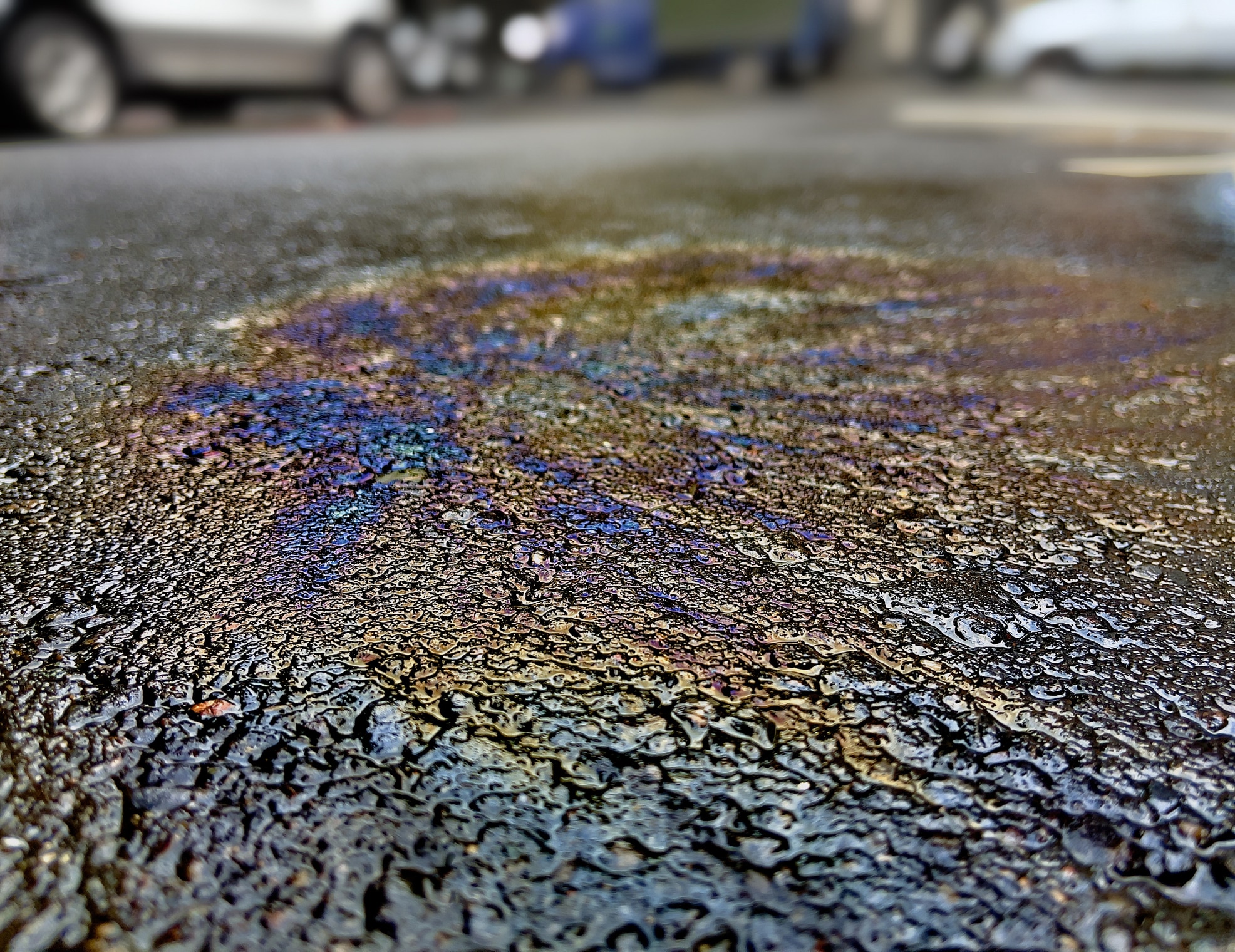
    Oil stains on an asphalt driveway can be unsightly and challenging to remove, but with the right techniques, you can restore your driveway to its original condition (or close to it). Here’s a detailed guide on how to effectively tackle oil stains:

    Absorbing Fresh Oil with Cat Litter

    One of the simplest methods for dealing with fresh oil stains is to use cat litter. This highly absorbent material works best when the spill is still recent. Spread a thick layer of cat litter over the stain and allow it to sit for at least 24 hours. The litter will soak up the oil, making it easier to clean. After the time has passed, simply sweep up the litter and dispose of it. This method is especially useful for fresh spills, as it helps to prevent the oil from penetrating deeper into the asphalt.

    No need to get expensive! The least expensive cat litter will help absorb the oil stains from your driveway.

    Using Dish Soap to Break Down Oil

    Dish soap is a powerful degreaser, making it an effective tool for removing oil stains. Apply a generous amount of dish soap directly onto the oil stain. Use a stiff-bristled brush to scrub the soap into the asphalt, breaking down the oil. After thoroughly scrubbing, rinse the area with warm water to wash away the soap and loosened oil. This method may need to be repeated for older or more stubborn stains, but it’s a simple and readily available solution that works well for many homeowners.

    Any dish soap in addition to scrubbing should help you achieve the desired result.

    Note: Durable materials like concrete and asphalt can handle rigorous scrubbing. Don’t hesitate to use some elbow grease and a sturdy brush to effectively tackle those tough oil stains.

    Baking Soda for Mild Stains

    Baking soda is another common household item that can be used to treat oil stains. Its mildly abrasive nature helps to break down oil while also absorbing it. To use this method, sprinkle baking soda over the stain, ensuring it covers the area completely. Scrub the baking soda into the stain with a brush and let it sit for about 30 minutes. Then, rinse the area thoroughly with water. Baking soda is particularly effective on smaller or less severe stains and offers a gentle cleaning option that’s safe for asphalt.

    Applying Commercial Degreasers for Tough Stains

    For more persistent oil stains that don’t respond well to household remedies, commercial degreasers are often the best option. These products are specifically designed to break down and lift tough oil stains from surfaces like asphalt. Follow the manufacturer’s instructions carefully, applying the degreaser to the stain and allowing it to sit for the recommended amount of time. Afterward, scrub the area with a stiff brush and rinse thoroughly with water. Commercial degreasers are powerful and effective, making them ideal for larger or older stains that have been set into the asphalt.

    Power Washing for Deep Cleaning

    When dealing with large, stubborn stains or when you want to clean a larger area of your driveway, power washing can be an excellent solution. A power washer uses high-pressure water to blast away dirt, grime, and oil from the surface of the asphalt. For the best results, pre-treat the stain with a degreaser before power washing. This combination helps to lift the oil from the asphalt, leaving your driveway clean and stain-free. Power washing is not only effective for oil stains but also for general maintenance, keeping your driveway looking its best.

    Frequently Asked Questions

    What is the best way to remove oil stains from an asphalt driveway?

    For a fresh spill, first absorb as much oil as possible with an absorbent such as clay cat litter, then clean the area with a degreasing cleaner and scrub as needed. Older stains are harder to fully remove because asphalt is porous, so the goal is often to reduce the stain significantly rather than restore a perfect like-new appearance.

    Does cat litter really absorb oil stains from asphalt?

    Yes. Plain clay cat litter can absorb fresh oil sitting on the surface, which helps limit how much oil penetrates the pavement. It works best immediately after the spill, not as a guaranteed cure for older set-in stains.

    Can dish soap remove oil stains from asphalt?

    Yes, dish soap can help break down surface oil because it acts as a degreaser. It is most effective on light or newer stains and may need repeated scrubbing. For deeper or older stains, a stronger asphalt-safe degreaser may work better.

    Is baking soda effective for cleaning driveway oil stains?

    Baking soda can help with small or mild stains because it provides light absorption and mild abrasion during scrubbing. It is a reasonable household option, but it is usually less effective on heavy petroleum stains than dedicated degreasers.

    When should you use a commercial degreaser on asphalt?

    Use a commercial degreaser when the stain is older, darker, larger, or still visible after basic cleaning methods. Follow the product label carefully and make sure the cleaner is suitable for asphalt surfaces.

    Can power washing remove oil stains from asphalt driveways?

    Power washing can help, especially after pretreating the stain with a degreaser, but it should be used carefully. Excessive pressure can damage surfaces, and pros note that the correct pressure matters because too much pressure can crack asphalt.

    Do oil stains damage asphalt driveways?

    Yes. Petroleum products can soften or weaken asphalt because asphalt binder itself is a petroleum-based material, making it vulnerable to fuels and oils. That is why prompt cleanup matters.

    How can you prevent oil stains on your driveway?

    The best prevention is to clean spills quickly, keep the driveway maintained, and use sealcoating as part of a broader maintenance plan. A sealed surface can make cleanup easier and offers added protection from vehicle fluids.

    Does sealcoating help protect against oil stains?

    Yes, sealcoating can help resist penetration from oil and other vehicle fluids, though it does not make the driveway stain-proof. It is best viewed as a protective maintenance layer, not a permanent shield.

    How often should an asphalt driveway be sealed to help protect against stains?

    A common industry rule of thumb is about every 2 to 3 years, but the right interval depends on traffic, weather, and the condition of the driveway. Some sources suggest longer intervals in lighter-use situations, so this is better stated as a typical range rather than a hard rule.

    Will oil permanently stain an asphalt driveway?

    Oil can leave a lasting dark mark on asphalt, especially if it sits too long, but quick cleanup and the right degreasing method can often reduce the stain and help protect the pavement from further damage.

    Preventing Future Stains

    While these methods can effectively remove existing oil stains, prevention is key to maintaining the appearance of your driveway. Here are a few tips to help prevent future oil stains:

    • Prompt Cleanup: Address any oil spills immediately to prevent the oil from seeping into the asphalt.
    • Regular Maintenance: Keep your driveway clean by regularly washing it and addressing minor stains before they become more significant problems.
    • Sealcoating: Consider sealcoating your driveway every few years. Sealcoating creates a protective barrier that helps prevent oil and other substances from penetrating the asphalt, making future stains easier to clean.

    By using these methods and maintaining your driveway, you can keep it looking clean and well-maintained for years to come.