Category: Commercial Asphalt Paving Blog

  • Do You Need to Resurface or Fully Replace Your Asphalt Driveway?

    Do You Need to Resurface or Fully Replace Your Asphalt Driveway?

    Key Takeaways
    • Resurfacing adds a new asphalt layer but does not fix structural issues
    • Full replacement rebuilds the driveway from the base up
    • Surface cracks and minor wear can often be resurfaced
    • Potholes, sinking, and alligator cracking require replacement
    • The condition of the base layer determines the correct solution

    If your asphalt driveway is starting to crack, fade, or break apart, you’re probably asking the big question: should you resurface it or replace it completely?

    The answer depends on what’s happening beneath the surface. Some driveways only need a new surface layer, while others require full reconstruction due to structural failure.

    Understanding whether to resurface your asphalt or move forward with a full rebuild can save you thousands—and help you make the right long-term investment for your property.

    Resurfacing vs Replacement: What’s the Difference?

    Asphalt Resurfacing (Overlay)

    Resurfacing involves installing a new layer of asphalt over the existing driveway. This process restores the appearance and performance of the surface without removing the entire structure.

    • Adds a new surface layer (typically 1.5”–2” of hot mix asphalt)
    • Improves appearance and smoothness
    • Extends the life of your driveway
    • More cost-effective than full replacement

    Resurfacing works best when the base layer is still stable and the damage is limited to the surface.

    Full Asphalt Replacement

    Full replacement involves removing the existing asphalt and rebuilding the driveway from the ground up. This includes addressing the subgrade and base layers.

    • Removes all existing asphalt
    • Repairs or replaces the base course
    • Installs new asphalt from the foundation up
    • Provides a completely new, long-lasting driveway

    This approach is necessary when there is base failure, widespread cracking, or structural instability.

    Signs You Only Need Asphalt Resurfacing

    Not every damaged driveway needs to be replaced. In many cases, resurfacing is the right solution.

    • Surface cracks (not deep or widespread)
    • Fading or oxidation
    • Minor surface wear
    • No major drainage issues
    • Driveway feels solid underfoot

    If the structure is still intact, resurfacing can restore your driveway at a lower cost while extending its usable life.

    Signs You Need Full Asphalt Replacement

    Some issues go deeper than the surface—and resurfacing won’t fix them.

    • Multiple or recurring potholes
    • Large cracks and alligator cracking
    • Soft spots or sinking areas
    • Poor drainage or standing water
    • Driveway is over 20–25 years old

    These are clear indicators of structural failure beneath the asphalt, meaning replacement is the only long-term solution.

    Resurfacing vs Replacement Cost Comparison

    A proper cost comparison between resurfacing and replacement helps homeowners understand the real investment involved.

    While resurfacing has a lower upfront cost, it may not last if underlying issues exist. Replacement costs more initially but provides a longer lifespan and fewer repairs over time.

    Choosing the wrong option can lead to repeat repairs, making resurfacing more expensive in the long run if the base is already compromised.

    The Role of the Base Layer

    Your driveway is only as strong as what’s underneath it.

    The base course supports the asphalt surface and distributes weight. If it becomes unstable due to water infiltration or poor compaction, the surface will fail regardless of how many times it is resurfaced.

    This is why professional evaluations focus on structural integrity—not just surface appearance.

    How Professionals Evaluate Your Driveway

    A professional contractor will assess several key factors before recommending resurfacing or replacement:

    • Depth and severity of cracks
    • Presence of potholes
    • Drainage conditions
    • Structural stability of the base
    • Age of the driveway

    If you’re unsure which option is right, it’s best to get a professional opinion before investing in the wrong solution.

    Resurfacing vs Replacement: Quick Comparison

    Factor Resurfacing Replacement
    Cost Lower upfront Higher upfront
    Durability 8–15 years 20+ years
    Fixes Base Issues No Yes
    Best For Surface-level damage Structural failure

    How to Extend the Lifespan of Your Asphalt Driveway

    Proper maintenance plays a major role in extending the lifespan of your asphalt driveway.

    • Sealcoat every 2–3 years
    • Fill cracks early to prevent water intrusion
    • Maintain proper drainage
    • Avoid repeated heavy loads in the same location

    Taking these steps helps protect your investment and delay the need for major repairs or replacement.

    Conclusion

    Choosing between resurfacing and replacement comes down to one key factor: the condition of your driveway’s foundation.

    If the base is stable, resurfacing can be a cost-effective way to restore your driveway. If the base is failing, replacement is the only solution that will provide long-term results.

    Making the right decision now can prevent future headaches and unnecessary expenses.

    Not sure which route is right for your driveway? Maisano Brothers can inspect your asphalt and recommend the most cost-effective solution. Get your free estimate today, or explore our full range of asphalt paving services for Connecticut homeowners.

    Frequently Asked Questions

    Is resurfacing cheaper than replacement?

    Yes upfront, but it can cost more long-term if the base is failing.

    How long does asphalt resurfacing last?

    Typically 8–15 years depending on conditions and maintenance.

    When should I replace my asphalt driveway?

    When there are structural issues like base failure, widespread cracking, or sinking.

    Can resurfacing fix potholes?

    Only if the base is still stable. Otherwise, potholes will return. If you’re dealing with recurring surface damage, learn more about proper pothole repair and patching methods to address the root of the issue.

    What is alligator cracking?

    A pattern of interconnected cracks that indicates structural failure in the pavement.

    How do I know if my driveway base is failing?

    Signs include soft spots, sinking areas, recurring potholes, and drainage issues.

    What’s the lifespan of a new asphalt driveway?

    A properly installed driveway can last 20–30 years with maintenance.

  • How to Plan a Commercial Asphalt Paving Project Without Disrupting Your Business

    How to Plan a Commercial Asphalt Paving Project Without Disrupting Your Business

    Key Takeaways
    • A commercial asphalt paving project starts with a site evaluation to assess pavement condition, drainage, traffic flow, and areas that need repair or replacement.
    • Hiring an experienced commercial paving contractor helps you manage logistics, safety, access, striping, and compliance requirements more effectively.
    • Phasing the work in sections allows businesses to stay open while minimizing disruptions to customers, employees, deliveries, and daily operations.
    • Clear communication before and during the project helps reduce confusion by outlining closures, parking changes, timelines, and access routes.
    • A successful paving project includes more than new asphalt, since striping, signage, access points, and long-term maintenance all affect performance and usability.

    Optimize Your Paving Schedule, Stay Open, and Keep Customers Happy

    Planning a commercial asphalt paving project can feel overwhelming, especially if your property needs to stay open during construction. Whether you’re paving a retail plaza, office park, medical center, or industrial facility, minimizing disruption is key to maintaining operations and avoiding lost revenue.

    In this article, we’ll walk you through how to plan your commercial paving project efficiently, stay on schedule, and create a smooth experience for employees, tenants, and visitors alike.

    Start with a Site Evaluation and Traffic Flow Review

    Before any asphalt paving begins, request a detailed on-site consultation from a licensed commercial paving contractor. A proper evaluation will include:

    • Current pavement condition
    • Drainage and grading issues
    • Entry and exit points
    • Traffic flow patterns and bottlenecks
    • Heavy-duty zones like loading docks or drive lanes

    This step is essential to understanding what needs to be repaired, replaced, or improved—and how to stage the work to avoid major disruption.

    Choose a Contractor with Commercial Experience

    Not all paving companies are equipped to handle commercial asphalt projects. You’ll want a team that understands:

    • OSHA compliance and safety protocols
    • Commercial equipment access and logistics
    • Communication with multiple stakeholders (tenants, property managers, etc.)
    • Striping, signage, ADA compliance, and fire lane markings

    Ask for references or a portfolio of previous commercial paving work—especially on properties similar to yours, such as shopping centers, medical campuses, or national brand parking lots.

    Schedule Paving in Phases

    To keep your business running, plan your paving in phases. A professional contractor will help divide the project into manageable zones, allowing traffic, deliveries, and parking to continue with minimal interruption.

    Common staging examples include:

    • Paving one half of the parking lot at a time
    • Keeping drive lanes or entry points open at all times
    • Completing work during off-hours, weekends, or holidays

    This approach allows ongoing access for employees, tenants, and customers while the work is completed safely and efficiently.

    Communicate Clearly with Tenants and Visitors

    Once your paving schedule is set, notify all relevant parties well in advance. Send emails, hang signs, and post online updates to let customers and tenants know:

    • Where to park
    • When each section will be closed
    • How long the project is expected to last
    • Who to contact with questions or concerns

    Keeping everyone in the loop will reduce confusion and build trust during the process.

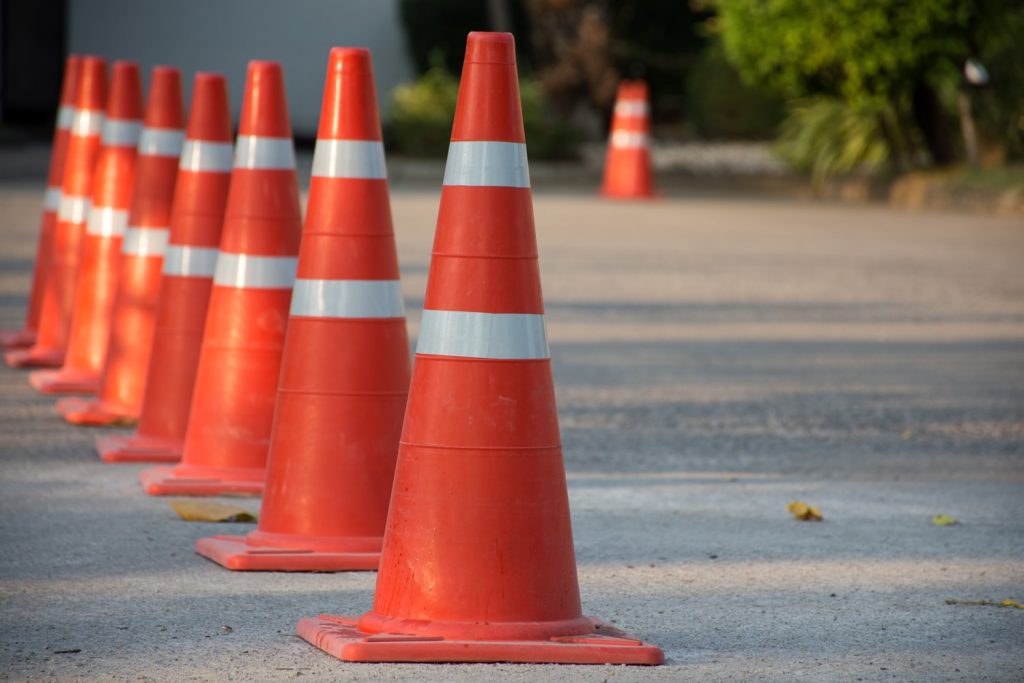
    Traffic cones placed on a commercial parking lot to guide traffic during an asphalt paving project
    Traffic cones help direct vehicles and pedestrians safely during a commercial asphalt paving project.

    Consider Temporary Signage and Traffic Control

    During paving, your commercial site may need temporary signage or cones to redirect traffic or footpaths. Your contractor should supply and install:

    • Safety cones or barriers
    • Temporary directional signs
    • ADA access reroutes if needed
    • Pedestrian guidance signs for walkways

    This keeps everyone safe while maintaining accessibility and business continuity.

    Plan for Final Touches: Line Striping, ADA Compliance & Finishes

    After the asphalt paving is complete, your lot will still need:

    • Fresh parking lot striping
    • ADA-compliant markings and access points
    • Crosswalks, arrows, and fire lane paint
    • Signage, curbing, and bump stops if needed

    Ensure these finishing elements are scheduled and completed promptly so your commercial property is fully functional and compliant.

    Schedule Preventative Maintenance Going Forward

    After investing in new asphalt, protect it. Ask your contractor about:

    • Sealcoating schedules (every 2–3 years)
    • Crack sealing and joint repair
    • Drainage monitoring and surface cleaning
    • Long-term maintenance contracts

    Proactive planning will extend the life of your asphalt and reduce future repair costs.

    Partner with the Right Commercial Paving Contractor

    With the right contractor and a thoughtful plan, your commercial paving project can be completed with minimal disruption, and maximum return on investment. At Maisano Brothers Inc., we specialize in commercial asphalt paving in Connecticut, Massachusetts, Rhode Island and properties nationwide providing phased scheduling, clear communication, and exceptional results.

    Frequently Asked Questions

    What is the first step in planning a commercial asphalt paving project?

    The first step is a site evaluation to review the condition of the pavement, drainage patterns, grading, traffic flow, and access points.

    How can I pave a parking lot without closing my business?

    Most commercial paving projects can be completed in phases so certain sections remain open while work is being done in other areas.

    Why is phasing important in commercial asphalt paving?

    Phasing helps maintain access for customers, employees, tenants, and delivery vehicles while improving safety and keeping operations moving.

    When is the best time to schedule commercial paving?

    The best time depends on your property’s traffic patterns, but many businesses choose off-hours, weekends, or slower periods to reduce disruption.

    What should I communicate before paving begins?

    You should let people know where to park, which areas will be closed, how long the project should take, and who to contact with questions.

    Do I need temporary signage during a paving project?

    Yes, temporary cones, barriers, and directional signs can help guide traffic, improve safety, and maintain pedestrian access during construction.

    What happens after the new asphalt is installed?

    After paving, the site may still need striping, directional arrows, accessible parking markings, curb work, signage, and other finishing details.

    How long should I wait before allowing traffic on new asphalt?

    The exact timing depends on weather, mix conditions, and site use, but your contractor should provide clear guidance before reopening the area.

    How do I protect a newly paved commercial lot?

    Routine maintenance such as crack sealing, drainage monitoring, cleaning, and sealcoating at appropriate intervals can help extend pavement life.

    What should I look for in a commercial paving contractor?

    Look for a contractor with commercial project experience, strong communication, proper equipment, a clear phasing plan, and a track record of quality work.

  • The Asphalt Paving Process: 9 Steps to Proper Asphalt Installation

    The Asphalt Paving Process: 9 Steps to Proper Asphalt Installation

    Key Takeaways
    • The asphalt paving process includes 9 critical steps from evaluation to final inspection
    • Proper grading, base preparation, and compaction are essential for long-term durability
    • The base and subgrade determine how well the pavement performs over time
    • Skipping steps or cutting corners leads to early failure and costly repairs
    • Regular maintenance after installation extends the life of asphalt significantly

    Installing asphalt is more than just laying down blacktop. A properly paved driveway or parking lot depends on preparation, grading, base construction, and precise installation techniques. When done correctly, asphalt pavement can last 20 years or more. When shortcuts are taken, problems like cracking, potholes, and drainage issues can appear much sooner.

    Whether you’re planning a new asphalt driveway or a commercial paving project, understanding the process helps you recognize quality workmanship and make informed decisions.

    Why the Asphalt Paving Process Matters

    Every step in the paving process plays a role in the long-term performance of your pavement. The surface layer may look smooth and finished, but what’s underneath determines how well it holds up over time.

    Proper asphalt installation ensures strength, drainage, durability, and resistance to wear from traffic and weather conditions.

    Step 1: Site Evaluation and Planning

    Before any work begins, the area is evaluated to determine soil conditions, drainage needs, and the scope of the project. This step identifies potential issues such as poor drainage, unstable subgrade, or grading challenges.

    Step 2: Demolition and Removal

    If replacing an existing driveway or parking lot, the old asphalt is removed. This may involve milling or full excavation depending on the condition of the pavement and base.

    Step 3: Grading and Slope Preparation

    Proper grading and slope preparation is critical to ensure water drains away from the surface. Without correct elevation and pitch, water can pool and lead to premature deterioration.

    This step sets the foundation for long-term performance and prevents future structural issues.

    Step 4: Subgrade Preparation

    The subgrade is the native soil beneath the pavement. It must be properly compacted and stabilized to support the layers above. Weak or soft subgrade conditions can lead to failure regardless of how well the asphalt is installed.

    Step 5: Installing the Base Course

    The base layer provides structural support for the asphalt surface. Typically made of crushed stone or aggregate, it is spread and compacted to create a stable foundation.

    A properly installed base ensures load distribution and prevents shifting or settling over time.

    Step 6: Binder Layer Installation

    The binder layer is a strong asphalt layer that adds structural integrity. It contains larger aggregate and acts as a bridge between the base and the surface layer.

    This layer is especially important in areas with heavier traffic loads.

    Step 7: Surface Course Installation

    The surface course is the top layer of asphalt. It provides a smooth, finished appearance and protects the underlying structure from water and environmental exposure.

    This layer is designed for durability, flexibility, and long-term performance.

    Step 8: Compaction

    Compaction is one of the most critical steps in the entire process. Rollers are used to compress the asphalt, eliminate air voids, and ensure proper density.

    Without proper compaction, the pavement may fail prematurely, leading to cracking and deformation.

    Step 9: Final Inspection and Finishing

    After installation, the surface is inspected to ensure proper grading, smoothness, and compaction. Edges are finished, transitions are cleaned up, and the pavement is prepared for use.

    Once cooled and cured, the asphalt is ready for traffic.

    How Long Does Asphalt Installation Take?

    Most residential driveways can be completed within one to two days, depending on size and site conditions. Larger commercial paving projects may take longer due to additional preparation and structural requirements.

    Common Mistakes That Lead to Early Failure

    • Poor base preparation
    • Improper grading or drainage
    • Insufficient compaction
    • Thin asphalt layers
    • Skipping critical steps in the process

    These issues can lead to cracking, potholes, rutting, and costly repairs.

    How to Extend the Life of Your Asphalt

    After installation, proper maintenance is essential to maximize lifespan.

    • Sealcoat every 2–3 years
    • Fill cracks early
    • Keep water draining away from the surface
    • Avoid heavy loads during early curing

    Routine maintenance protects your investment and delays the need for repairs or replacement.

    Conclusion

    The asphalt paving process is a step-by-step system designed to create a durable, long-lasting surface. Each phase—from site preparation to final compaction—plays a critical role in performance.

    Understanding these steps helps ensure your driveway or parking lot is built to last and performs well for years to come.

    Ready to see these steps in action on your own property? Maisano Brothers Inc. has been installing asphalt driveways across Connecticut since 1967. Request a free estimate for your new driveway installation.

    Frequently Asked Questions

    How many steps are in the asphalt paving process?

    There are typically 9 main steps, including site prep, grading, base installation, paving, and compaction.

    What is the most important step in asphalt paving?

    Base preparation and compaction are the most critical for long-term performance.

    How long does asphalt take to cure?

    Asphalt can be driven on within 24–72 hours but continues curing for several months.

    What is the binder layer in asphalt?

    It’s the structural layer between the base and surface course that adds strength.

    Why is grading important before paving?

    Proper grading ensures water drains correctly and prevents premature damage.

    How thick should asphalt be for a driveway?

    Typically 2–3 inches for residential use, depending on base conditions.

    Can asphalt be installed over old pavement?

    Yes, in some cases resurfacing is possible if the base is still stable.

  • Asphalt vs Concrete Driveways: What’s the Difference and Which One Is Right for You?

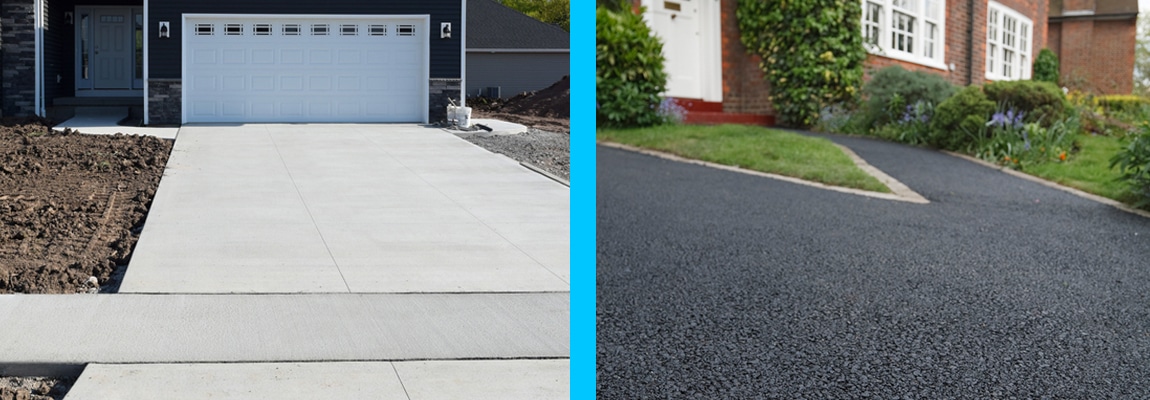
    Asphalt vs Concrete Driveways: What’s the Difference and Which One Is Right for You?

    Key Takeaways
    • Asphalt usually costs less up front than concrete, while concrete often costs more initially but may last longer.
    • Asphalt typically lasts about 15 to 20 years with maintenance, while concrete can last 30 years or more with proper care.
    • Asphalt is generally better suited to colder freeze-thaw climates because it is more flexible, while concrete is more rigid and more sensitive to movement and cracking.
    • Asphalt needs more routine maintenance such as sealcoating and crack repair, but repairs are usually easier and less expensive than concrete repairs.
    • Concrete offers more color, texture, and pattern options, making it a stronger choice for homeowners who want a more customized look.

    Choosing between an asphalt driveway and a concrete driveway is one of the biggest decisions homeowners make when planning a new installation. Both materials can create a durable, attractive surface, but they perform differently when it comes to cost, maintenance, appearance, climate resistance, and long-term repair needs.

    If you are trying to decide between the two, the right answer usually comes down to your budget, your property, your local conditions, and how you plan to use the driveway.

    What Is the Main Difference Between Asphalt and Concrete?

    The biggest difference is how the material behaves over time. Asphalt is more flexible, which helps it handle freeze-thaw conditions and minor movement in the base. Concrete is more rigid, which can make it very durable in the right conditions but also more prone to cracking when movement occurs.

    Asphalt is made with aggregates and asphalt binder, while concrete is made with cement, sand, stone, and water. Because of these differences, the two materials cure, age, and perform differently over time.

    Cost Comparison: Asphalt vs Concrete

    For many homeowners, budget is where the decision starts. In general, asphalt tends to have a lower upfront cost than concrete.

    Understanding the true cost of an asphalt driveway helps put this into perspective. While asphalt is typically more affordable initially, long-term costs depend on maintenance, repairs, and lifespan.

    Concrete usually costs more upfront but may last longer under the right conditions. The better value depends on how long you plan to stay in your home and how you maintain the surface.

    Lifespan and Durability

    Asphalt Driveway Lifespan

    Asphalt driveways typically last 15–20 years with proper maintenance. Their flexibility makes them well-suited for areas with temperature fluctuations and seasonal movement.

    Over time, asphalt can oxidize, fade, and develop cracks if not maintained properly, but it can often be repaired or resurfaced effectively.

    Concrete Driveway Lifespan

    Concrete driveway installations can last 30 years or more when properly installed and maintained. However, because concrete is rigid, it can crack when the base shifts or when exposed to harsh freeze-thaw conditions.

    Repairs to concrete are often more visible and more difficult to blend compared to asphalt.

    [elementor-template id=”4630″]

    Maintenance Differences

    Asphalt Maintenance

    Asphalt requires more routine maintenance, including sealcoating and crack filling. The benefit is that repairs are typically easier, faster, and more affordable.

    • Sealcoating every 2–3 years
    • Crack filling to prevent water intrusion
    • Patching and resurfacing options

    Concrete Maintenance

    Concrete requires less frequent maintenance but can be more difficult to repair when issues occur.

    • Occasional sealing
    • Joint maintenance
    • More complex repairs if cracking occurs

    Appearance and Design Options

    Concrete offers more customization options, including stamped patterns, colors, and decorative finishes. This makes it a popular choice for homeowners focused on design and aesthetics.

    Asphalt provides a clean, smooth, and uniform appearance that works well for most residential properties. It is more limited in design but offers a classic and practical look.

    Climate Considerations

    Your location plays a major role in choosing the right material. In regions like the Connecticut climate, asphalt often performs better due to its flexibility and ability to handle freeze-thaw cycles.

    Concrete can still perform well but requires proper installation techniques to minimize cracking caused by temperature changes.

    Installation Time and Usability

    Asphalt can typically be installed faster and used sooner than concrete. In many cases, an asphalt driveway can be completed in one to two days.

    Concrete requires a longer curing time, which means you may need to wait several days before using the surface.

    Repair and Long-Term Flexibility

    Asphalt offers more flexibility when it comes to repairs. It can often be patched, resurfaced, or restored without replacing the entire driveway.

    Concrete repairs, while possible, are often more noticeable and may require more extensive work.

    Which Is the Better Choice?

    Choose Asphalt If You Want:

    • Lower upfront cost
    • Better performance in colder climates
    • Faster installation
    • Easier repairs and maintenance

    Choose Concrete If You Want:

    • Longer potential lifespan
    • More decorative options
    • Less frequent maintenance

    Final Thoughts

    Choosing between asphalt and concrete comes down to your priorities. Asphalt is often the best choice for homeowners looking for a cost-effective, durable solution that performs well in colder climates. Concrete is a strong option for those prioritizing aesthetics and long-term durability.

    The right decision depends on your budget, maintenance expectations, and how your driveway will be used over time.

    Whether you choose asphalt or concrete, Maisano Brothers Inc. delivers expert installation built for Connecticut weather. Get a free estimate and let us help you pick the right material for your residential driveway.

    [elementor-template id=”4630″]

    Frequently Asked Questions

    Is asphalt cheaper than concrete for a driveway?

    Usually yes. Asphalt at roughly $3 to $7 per square foot and concrete at roughly $4 to $10 per square foot, though actual pricing varies by site and project scope.

    Does asphalt last as long as concrete?

    Usually no. The current article says asphalt typically lasts 15 to 20 years with maintenance, while concrete can last 30 years or more with proper care.

    Which driveway is better in cold weather?

    Asphalt is often the better choice in cold climates because its flexibility helps it handle freeze-thaw movement better than concrete.

    Which driveway needs more maintenance?

    Asphalt typically needs more routine maintenance, including periodic sealcoating and crack repair, while concrete usually needs less frequent maintenance but can be harder to repair when problems develop.

    Can oil stains damage an asphalt driveway?

    Yes. Petroleum products can soften asphalt and contribute to surface deterioration over time. If you’re dealing with stubborn stains, explore the best commercial degreasers for removing oil stains from asphalt to properly clean and protect your surface.

    Is concrete more decorative than asphalt?

    Yes. Concrete offers more options for color, texture, pattern, and stamped finishes, while asphalt is more limited aesthetically.

    Which driveway can be used sooner after installation?

    Asphalt is typically installed faster and can often be used sooner, while concrete takes longer to cure and requires more patience before regular use.

  • Asphalt Rutting Explained: Causes, Mix Design Solutions & Prevention Strategies (2025 Update)

    Asphalt Rutting Explained: Causes, Mix Design Solutions & Prevention Strategies (2025 Update)

    Key Takeaways
    • Rutting accelerates under heavy loads and high temperatures.
    • Strong, well-drained foundations and adequate base thickness are essential.
    • Use rut-resistant mixes, performance-graded/polymer-modified binders, and Balanced Mix Design.
    • Compaction quality and drainage management make or break performance.
    • Inspect and maintain routinely; intervene early to avoid reconstruction.

    Asphalt rutting is a pavement distress characterized by longitudinal depressions in wheel paths. These grooves form when pavement layers or the underlying soil deform under repeated traffic loads. Rutting is most visible after rain as water collects in the depressions. Left untreated, it reduces ride quality, increases hydroplaning risk, and accelerates structural failure. Understanding causes and applying best-practice design and maintenance can significantly extend the life of driveways, parking lots, and roads.

    What Causes Asphalt Rutting?

    Traffic Loads and High Temperatures

    Rutting is a load-related distress. Repeated wheel loads compact or laterally move asphalt, and the effect accelerates at higher pavement temperatures when the binder softens. Heavy axle loads (trucks, forklifts, delivery traffic) intensify rutting, especially during hot weather.

    Subgrade Stability

    The subgrade (supporting soil) must be uniform and well-compacted. Weak, poorly compacted, or saturated subgrade allows the pavement to deflect and settle, creating structural ruts often accompanied by cracking. Water intrusion and variable soils are common triggers.

    Subbase Thickness & Load Distribution

    The aggregate base distributes loads to the subgrade. If base layers are too thin or inadequately compacted, the asphalt above will rut. Typical ranges:

    • Residential driveways: 2–3 in asphalt over 4–6 in compacted aggregate base.
    • Light-duty commercial lots: 3 in asphalt over 6–8 in base.
    • Heavy-duty truck areas: 4–6 in asphalt over 8–12 in base.

    Asphalt Mix Design

    Unstable mixes (excess binder, poor gradation, rounded aggregates) are prone to rutting. Modern Superpave mix design, stone-matrix asphalt (SMA), and performance-graded binders improve rut resistance when paired with proper quality control and lab performance tests (e.g., Hamburg wheel tracking, IDEAL-RT).

    Polymer-Modified Asphalt & Additives

    Elastomeric polymers (e.g., SBS/SBR), plastomers (e.g., polyethylene), crumb rubber, and chemical modifiers increase high-temperature stiffness and elasticity, improving rut resistance while often enhancing fatigue and thermal cracking performance.

    Recent Practice: Balanced Mix Design (BMD) & Recycled Materials

    Balanced Mix Design (BMD) uses performance tests to verify rutting, cracking, and moisture resistance before a mix is approved. Rather than relying only on volumetrics, BMD adjusts binder content, polymer modification, and recycled content to meet performance thresholds.

    Recycled materials (e.g., RAP, crumb rubber, some recycled plastics) can increase stiffness and rut resistance; blends with polymers or rubber can balance cracking performance. Performance testing is essential to ensure overall durability.

    Compaction & Densification

    Insufficient compaction during paving leads to post-construction densification under traffic, manifesting as ruts. Achieving target density at the proper mat temperature with appropriate rolling patterns is critical.

    Drainage & Moisture

    Water is the enemy of pavement. Positive surface cross-slope, functioning gutters/inlets, and subsurface drains (where needed) keep the base and subgrade dry. Saturated layers lose strength and rut more quickly.

    Environmental Factors

    Freeze-thaw cycles, extreme heat, and seasonal temperature swings influence rutting rates. Northern climates often benefit from thicker sections and robust drainage; hot climates from rut-resistant mixes and polymer-modified binders.

    Effects on Safety & Pavement Performance

    • Safety: Water-filled ruts increase hydroplaning risk and vehicle tracking.
    • Serviceability: Ruts degrade ride quality and can lead to secondary cracking and potholes.
    • Drainage: Depressed wheel paths trap water, worsening moisture damage below.
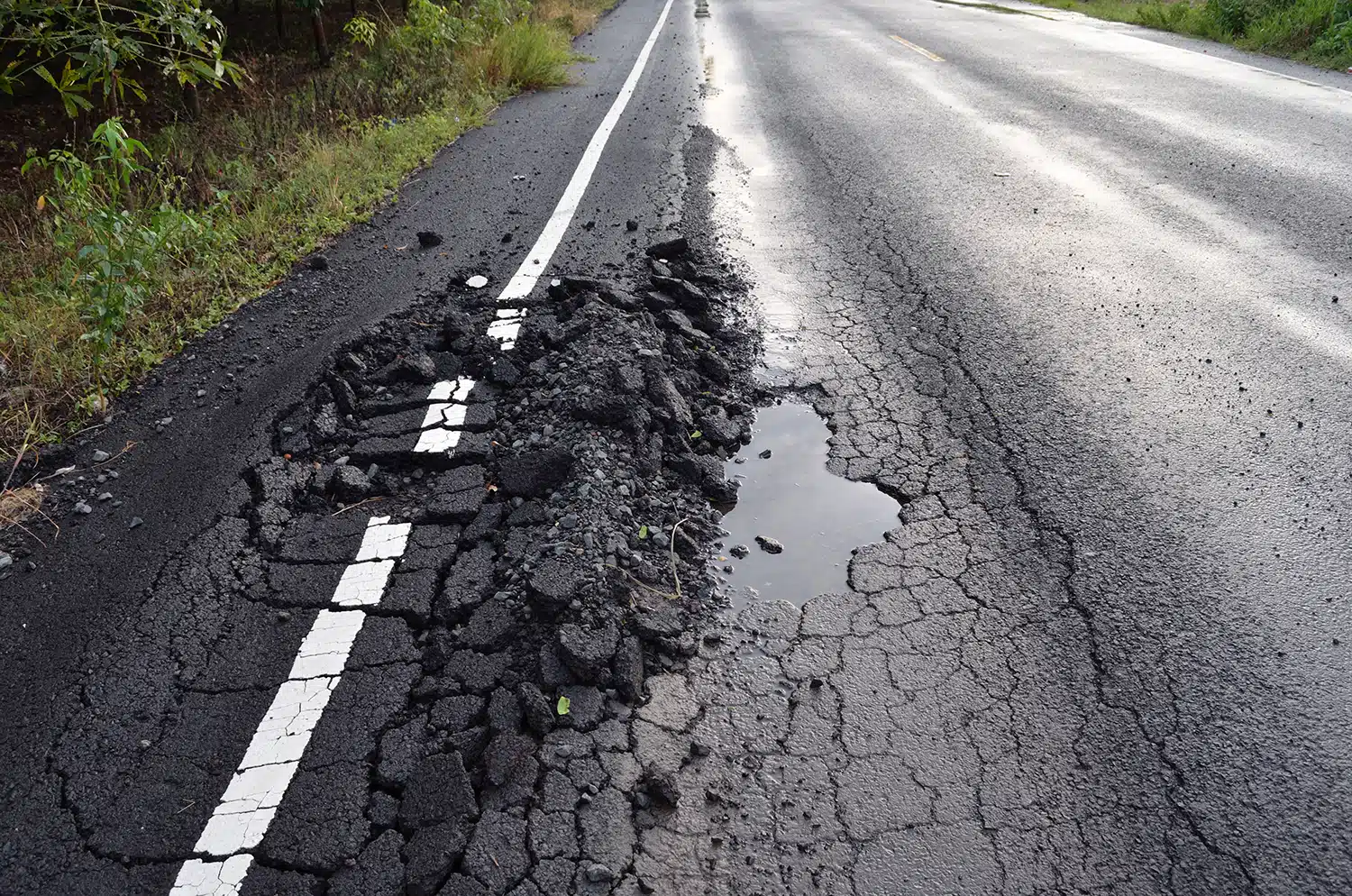
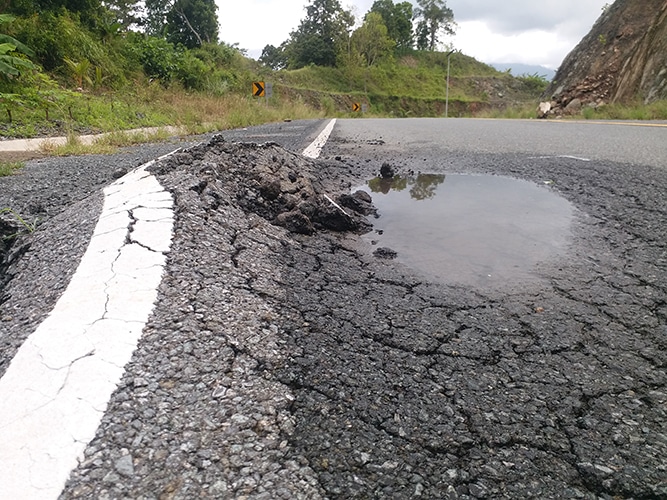
    Cracked asphalt and rutting along a road edge with standing water
    Edge rutting and cracking caused by inadequate base support and trapped moisture.

    Preventing Asphalt Rutting

    Site Preparation & Subgrade Treatment

    1. Soil testing & stabilization: Verify bearing capacity and moisture. Stabilize weak soils with lime/cement or geosynthetics.
    2. Uniform compaction: Compact subgrade to spec; undercut and replace soft spots.
    3. Adequate base thickness: Size the aggregate base for traffic and soil conditions; compact each lift.

    Material Selection

    1. Performance-graded/polymer-modified binders: Select PG grades for climate; consider polymer-modified or highly-modified binders for heavy loads/heat.
    2. Rut-resistant mixes: Superpave or SMA with angular aggregates and stone-on-stone contact.
    3. Balanced Mix Design: Approve mixes with lab rutting/cracking tests; optimize RAP/polymer/plastics content.
    4. Rubber-polymer options: Rubber-polymer blends can offer rut resistance with sustainability benefits.

    Construction Practices

    1. Compaction: Achieve density targets with correct rolling trains and temperatures.
    2. Lift thickness & temperature: Place uniform lifts; manage haul times and paving temperatures.
    3. Joints & smoothness: Build tight, well-compacted joints; maintain screed for uniform thickness.

    Maintenance & Repair

    1. Sealcoating & crack sealing: Limit water/oxygen ingress; schedule periodic sealcoats.
    2. Drainage upkeep: Keep inlets, gutters, and underdrains clear; preserve cross-slope.
    3. Timely intervention: Mill/overlay before ruts deepen; reconstruct where structural rutting is severe.

    Case Studies

    Polymer-modified overlay on a hot-weather corridor: A truck route prone to summer rutting received an SBS-modified surface mix. Post-construction monitoring showed notable reductions in rut depth and longer resurfacing intervals compared to the previous conventional mix.

    Stabilized base for a delivery-intensive commercial lot: A distribution center addressed subgrade soft spots with undercut, geotextile, and a thicker base, then paved with an SMA surface. After multiple winters and heavy truck traffic, rutting remained minimal.

    Frequently Asked Questions

    What is asphalt rutting?

    Longitudinal depressions in wheel paths are caused by permanent deformation of asphalt layers and/or supporting soils under repeated traffic.

    What causes rutting in driveways and parking lots?

    • Heavy loads and high pavement temperatures
    • Weak or saturated subgrade
    • Insufficient base thickness
    • Poor/unstable mix design
    • Inadequate compaction
    • Poor surface/subsurface drainage

    How can I prevent rutting on my driveway or parking lot?

    • Prepare and compact the subgrade; use geotextiles on weak soils
    • Install adequate base thickness for expected loads
    • Specify rut-resistant mixes (Superpave/SMA) and, where appropriate, polymer-modified binders
    • Ensure proper compaction at the correct temperatures
    • Maintain drainage and seal cracks regularly

    Do recycled plastics or rubber help?

    They can increase stiffness and rut resistance. Balanced Mix Design and performance testing are essential to ensure that crack resistance and overall durability are maintained.

    Can rutting be fixed once it starts?

    Yes. Shallow ruts may be addressed with thin overlays after leveling. Moderate ruts are typically milled and overlaid. Severe, structural rutting may require full-depth reclamation or reconstruction.

  • The History and Pronunciation of the Word “Asphalt”

    The History and Pronunciation of the Word “Asphalt”

    The word “asphalt” is instantly recognizable to anyone who’s driven a car, walked down a city street, or had a driveway paved. Its roots stretch back thousands of years—and even its pronunciation varies by region. This article explores the origins of the name, how its meaning evolved, and why people say it differently around the world.

    Ancient Origins of the Word “Asphalt”

    The term traces to ancient Greek, where ἄσφαλτος (ásphaltos) meant “secure” or “immovable” (Oxford English Dictionary). Greeks used the word for a naturally occurring, tar‑like substance that waterproofed and bonded materials. Archaeological evidence shows intensive use across Mesopotamia more than 5,000 years ago to seal boats, construct ziggurats, and even in Egyptian mummification. Through trade and translation, the term entered Latin as asphaltus, then Old French as asphalte, and eventually Middle and Modern English, carrying forward its association with a durable, binding material.

    The Evolution of Its Meaning

    In antiquity, “asphalt” referred to natural deposits—petroleum‑based bitumen seeping from the earth (the famous La Brea “Tar” Pits are actually asphalt seeps). During the 19th‑century Industrial Revolution, the meaning broadened to include refined products from crude oil. Engineers discovered that blending asphalt binder with mineral aggregate produced a strong, durable surface—what we now call asphalt concrete—and it became foundational to modern road building. This shift mirrors humanity’s move from found materials to engineered, performance‑optimized construction products.

    Regional Differences in Pronunciation

    Pronunciation varies widely across English‑speaking regions. In the United States, the most common form is AS‑falt, simplifying the “ph” sound. In the United Kingdom, ASH‑falt is common, retaining a softer middle consonant. Other local variants—such as az‑FALT or as‑PHALT—reflect regional phonetics and the path by which the word entered local usage. These differences underscore the word’s long linguistic journey.

    Misconceptions and Clarifications

    Asphalt is often confused with tar, but the two are chemically distinct: asphalt is petroleum‑derived, while tar is typically coal‑derived (Asphalt Institute). In the U.S., “blacktop” is a casual synonym for asphalt pavement, though it can refer to certain mix types. In the UK, “asphalt” may also mean mastic asphalt, a dense, waterproof surfacing that differs from the flexible asphalt concrete common in the U.S. Understanding these naming differences helps avoid confusion in international contexts.

    Historical Name Variations of Asphalt

    Language / Region Historical Term Approximate Period Notes on Usage
    Ancient Greek ἄσφαλτος (ásphaltos) ~5th century BCE “Secure; immovable”; used for natural bitumen.
    Latin Asphaltus Roman Empire Appears in engineering and waterproofing texts.
    Old French Asphalte Middle Ages Entered via Latin through trade and scholarship.
    Medieval English Asphalte / Aspalt 13th–15th c. Used in early English trade and building records.
    Modern English Asphalt 17th c.–present Global use; regional pronunciation differences.

    Fun Facts About the Name “Asphalt”

    Classical sources reference asphalt in early construction and seafaring; the Dead Sea was once called the “Lake of Asphalt” for its floating chunks of bitumen. Modern scientific sites like the La Brea pits—despite the name—are asphalt, not tar, and have preserved prehistoric fauna for millennia. These examples highlight how the material (and the word) spans culture, science, and time.

    Final Thoughts

    From the ancient Greek ásphaltos to today’s engineered pavements, the word “asphalt” reflects a durable idea: strong, reliable, and built to last. However you pronounce it—AS‑falt, ASH‑falt, or otherwise—the history behind the name mirrors the resilience of the material itself.

    Ready to speak with seasoned asphalt experts? Contact Maisano Bros. Inc. for professional paving, sealcoating, and repair.

    Glossary Keyword: Binder — the asphalt component that binds aggregate to form asphalt concrete.

  • How Long Is The Curing Time for Freshly Laid Asphalt?

    How Long Is The Curing Time for Freshly Laid Asphalt?

    Key Takeaways
    • Initial Set Time: Fresh asphalt can typically support light foot traffic within 24–48 hours after paving.
    • Curing Period: Full curing can take 3 to 6 months, depending on weather, thickness, and asphalt mix type.
    • Factors That Affect Curing Time:
      • Weather: Hot, dry conditions speed up curing; cold, damp weather slows it down.
      • Traffic Load: Heavier vehicles require a longer wait before use.
      • Thickness of the Pavement: Thicker layers cure more slowly.
      • Asphalt Mix Design: Different mixes have varying cure profiles.
    • What You Can Do During Curing:
      • Avoid parking in the same spot repeatedly.
      • Limit turning the steering wheel when the vehicle is not in motion.
      • Refrain from placing heavy items (e.g., dumpsters) on the surface.
    • Why Curing Matters: Proper curing ensures the asphalt reaches full strength, resists rutting and surface damage, and increases long-term durability.

    When laying fresh asphalt, curing time is crucial for achieving a durable and long-lasting pavement. Here’s an in-depth look at the curing process, including answers to frequently asked questions.

    What is Asphalt Curing?

    Curing refers to the period required for freshly laid asphalt to harden and reach its full structural integrity. This process involves the evaporation of moisture and the bonding of asphalt binders with aggregates.

    How Long Does Asphalt Take to Cure?

    While asphalt can support foot traffic within 24 hours and vehicle traffic within 48 to 72 hours, it typically takes 6 to 12 months to fully cure. During this time, the asphalt will continue to harden and become more resilient.

    Frequently Asked Questions

    1. How Long After Paving Can You Walk on It?

    You can generally walk on freshly laid asphalt within 24 hours of installation. During this initial period, the asphalt begins to set and harden, making it safe for light foot traffic. However, it’s crucial to avoid heavy or sharp objects that could damage the surface. Allowing this brief curing time ensures the asphalt maintains its integrity and provides a durable walking surface.

    2. Can I Drive on Fresh Asphalt Right Away?

    It’s recommended to wait at least 24 to 48 hours before driving on fresh asphalt to allow it to set properly. Premature driving can cause indentations and damage.

    3. How Can Weather Affect Curing Time?

    Warm weather speeds up curing, while cold or wet conditions can slow it down. Ideal temperatures for laying and curing asphalt are between 50°F and 90°F.

    4. What Are the Signs that Asphalt is Fully Cured?

    Fully cured asphalt appears harder and less oily. It no longer feels soft to the touch and is resistant to indentations from heavy objects or vehicles.

    5. Can Sealing Help the Curing Process?

    Sealcoating can protect asphalt and extend its lifespan, but it should be applied only after the asphalt is fully cured, usually after 6 to 12 months.

    6. How Can I Maintain Asphalt During the Curing Period?

    Avoid parking in the same spot repeatedly, do not use sharp objects that can gouge the surface, and keep heavy trucks off the pavement until it’s fully cured.

    7. What If It Rains After Laying Asphalt?

    Light rain won’t significantly affect the curing process, but heavy rain can disrupt it, especially in the first few hours. Proper drainage and protective measures are essential during this time.

    8. Are There Any Precautions for High-Traffic Areas?

    For high-traffic areas, consider keeping the area closed off for a longer period to ensure proper curing. Applying a temporary surface covering can also help protect the asphalt during the initial curing phase.

    Detailed Steps in the Asphalt Curing Process

    Initial Setting Period

    Within the first 24 hours, the asphalt sets and begins to harden. This period is critical as the surface is most vulnerable to damage from foot or vehicle traffic. It’s important to keep all traffic off the asphalt during this time.

    Early Curing Phase

    Over the next few days, the asphalt continues to harden. During this phase, light foot traffic may be allowed after 24 hours, but vehicle traffic should wait at least 48 to 72 hours. Avoid parking heavy vehicles or machinery on the asphalt.

    Ongoing Curing

    For the first few months, the asphalt will continue to cure and harden. During this time, it’s essential to avoid practices that could damage the surface, such as turning vehicle wheels sharply when stationary or placing heavy objects on the driveway.

    Full Curing

    Asphalt reaches its full strength and hardness after about 6 to 12 months. Once fully cured, the asphalt is less susceptible to damage and can support regular use without significant issues.

    Maintenance Tips During the Curing Period

    Regular Cleaning: Keep the surface free from debris, dirt, and leaves to prevent staining and damage. Use a soft broom or blower for cleaning.

    Avoid Chemical Spills: Substances like oil, gasoline, or antifreeze can damage the asphalt. Clean spills immediately using appropriate cleaning methods.

    Limit Heavy Loads: Try to avoid parking heavy vehicles on the asphalt until it has fully cured. If necessary, distribute the weight by using boards or plywood under the tires.

    Mind the Edges: The edges of the asphalt are more prone to damage. Avoid driving over the edges and consider installing curbs or landscaping to protect them.

    Conclusion

    Understanding and respecting the curing time for freshly laid asphalt is essential for ensuring a durable and long-lasting pavement. Proper care and maintenance during the curing period can prevent premature damage and extend the life of your asphalt surface. Always consult with professional paving contractors to get specific advice tailored to your project and local conditions. By following these guidelines, you can enjoy a smooth, strong, and resilient asphalt surface for many years.

  • Asphalt vs. Concrete Paving: Pros, Cons, and Which Option Is Right for You

    Asphalt vs. Concrete Paving: Pros, Cons, and Which Option Is Right for You

    When it comes to choosing between asphalt and concrete for your driveway or parking lot, the decision goes beyond surface appearance. Both materials have distinct advantages and disadvantages that can impact your project’s cost, durability, installation time, and long-term maintenance needs. Whether you’re a homeowner replacing a driveway or a property manager planning a large commercial lot, understanding the difference between these two popular paving options is essential.

    Let’s break down the key differences between asphalt paving and concrete paving to help you make an informed choice.

    Key Differences at a Glance

    Feature Asphalt Paving Concrete Paving
    Cost Lower upfront cost Higher initial cost
    Installation Time Quick (1–2 days + curing) Slower (up to a week curing)
    Durability Flexible and weather-resistant Hard, rigid surface
    Maintenance Requires sealcoating every few years Prone to cracks, harder to repair
    Aesthetics Traditional black finish Variety of color and finish options
    Winter Performance Retains heat, melts snow faster Can become slick and freeze faster
    Best Use Roads, driveways, commercial lots Decorative patios, walkways, lighter-use areas

    Cost Comparison: Asphalt Is More Affordable Upfront

    If budget is your top concern, asphalt is typically the more affordable paving solution. On average, asphalt installation ranges from $3 to $5 per square foot, while concrete often costs between $5 and $10 per square foot, depending on finishes and reinforcements.

    Asphalt’s lower price point makes it ideal for larger projects like parking lots, roadways, or multi-family driveways, where keeping costs down is important. Concrete can become more expensive when decorative finishes, color additives, or custom scoring are added.

    Installation Time: Asphalt Wins for Speed

    Asphalt can usually be installed and ready for light traffic within 48–72 hours, while concrete requires up to 7 days to cure and gain strength. For commercial projects, this reduced downtime means fewer operational disruptions and faster returns to normal business.

    Durability and Performance: It Depends on the Environment

    • Asphalt is flexible and better suited for areas with heavy freeze-thaw cycles. Its ability to expand and contract helps prevent cracking during extreme weather.
    • Concrete, while more rigid, can last longer in stable climates but is more likely to crack in colder regions.

    In general, asphalt is better at handling heavy vehicle traffic due to its ability to flex under pressure, while concrete works well for areas that prioritize visual appeal over load tolerance.

    Maintenance Requirements

    Both materials require maintenance, but the type and frequency differ:

    Asphalt Maintenance:

    • Needs sealcoating every 2–4 years to protect against UV rays, moisture, and oil spills.
    • Crack filling and patching are relatively easy and inexpensive.

    Concrete Maintenance:

    • Less frequent upkeep, but more costly to repair when cracks appear.
    • Repairs are often visible and may require full slab replacement to match aesthetics.

    Cold Weather Performance

    Asphalt’s dark color helps it absorb heat and melt snow and ice faster in the winter months. It also resists damage from road salt better than concrete.

    Concrete, on the other hand, can become brittle in cold temperatures and may suffer from salt damage and surface flaking, especially if not properly sealed.

    Aesthetics and Customization

    Concrete offers more flexibility for decorative applications. Stamped patterns, custom colors, and exposed aggregate finishes are all options with concrete, but they come at a price.

    Asphalt is limited in terms of aesthetics (generally just a sleek, black finish), though it can be enhanced with decorative stamped asphalt or special coatings.

    The Final Verdict: Which Is Better?

    There’s no one-size-fits-all answer. The right choice depends on your budget, climate, maintenance expectations, and how the surface will be used.

    Choose Asphalt if you:

    • Need a cost-effective solution
    • Want faster installation
    • Live in a cold or wet climate
    • Expect heavy traffic

    Choose Concrete if you:

    • Prefer a decorative finish
    • Don’t mind a longer installation process
    • Live in a mild climate
    • Have lighter foot or vehicle traffic

    Need Help Deciding?

    At Maisano Bros. Inc., we’ve been paving Connecticut and beyond for over 60 years. Whether you’re considering asphalt or concrete, our team can assess your needs and recommend the best option for long-term performance and value.

    Contact us today for a free site assessment or to learn more about our full-service paving solutions.

  • The 5 Best Asphalt Paving Boots for 2025: Built for Heat, Grip, and Tough Jobs

    The 5 Best Asphalt Paving Boots for 2025: Built for Heat, Grip, and Tough Jobs

    Working with asphalt means dealing with extreme temperatures, rugged terrain, and the constant threat of burns and blisters. That’s why choosing the right boots isn’t just about comfort—it’s about safety and performance. We’ve compared five of the top-rated asphalt paving boots on the market today so you can find a pair that holds up to the demands of the jobsite.

    What to Look for in Asphalt Paving Boots

    Before diving into the top picks, here are the key features to look for in boots designed for asphalt work:

    • Heat-resistant soles
    • Flat wedge soles
    • Slip and oil resistance
    • Steel or composite toe protection
    • Comfort and breathability

    Top 5 Asphalt Paving Boots Compared

    Brand & Model Sole Type Heat Resistance Safety Toe Weight Price Range
    Timberland PRO 6" Wedge Wedge Up to 248°F Soft Toe Light $120–$140
    Thorogood American Heritage 804-4200 MAXWear Wedge Up to 300°F Steel Toe Medium $220–$250
    Red Wing 10875 Classic Moc Traction Tred Wedge High No Safety Toe Medium $310–$340
    KEEN Utility Cincinnati 6" Air-infused Wedge 572°F (heat-tested) Carbon-Fiber Toe Medium $190–$210
    Iron Age Ground Breaker IA5016 Heat-Resistant Rubber 500°F Steel Toe Heavy $110–$130

    1. Timberland PRO 6" Wedge Sole Boot

    Best for: Lightweight comfort on moderately hot jobsites

    • Pros: Great break-in time, slip-resistant, affordable
    • Cons: Not ideal for sustained exposure to very high asphalt temps
    • Notable Feature: Anti-fatigue footbed for all-day wear

    Verdict: A budget-friendly option with comfort prioritized over extreme heat performance

    2. Thorogood American Heritage 804-4200

    Best for: Professional crews working on hot surfaces

    • Pros: Goodyear welt construction, steel toe, high heat resistance
    • Cons: Slightly heavier than some competitors
    • Notable Feature: MAXWear Wedge sole designed specifically for roofers and pavers

    Verdict: A union favorite for a reason—durable, reliable, and made in the USA

    3. Red Wing 10875 Classic Moc Toe

    Best for: Long-term investment in style + function

    • Pros: Premium leather, resoleable, comfortable fit over time
    • Cons: No safety toe, premium pricing
    • Notable Feature: Iconic moc toe design with top-tier heat resistance

    Verdict: Best if you want a resoleable boot that balances heat resistance with timeless style

    4. KEEN Utility Cincinnati 6” Carbon-Fiber Toe

    Best for: Maximum protection with modern materials

    • Pros: Lightweight carbon-fiber toe, very high heat resistance
    • Cons: Newer product with evolving reputation
    • Notable Feature: Heat-tested to 572°F; ideal for summer paving

    Verdict: A high-performance boot that blends new technology with jobsite durability

    5. Iron Age Ground Breaker IA5016

    Best for: Budget-conscious crews needing rugged protection

    • Pros: Very affordable, steel toe, slip-resistant
    • Cons: Bulkier, heavier build
    • Notable Feature: Tested against high heat and oil exposure

    Verdict: Great entry-level boot for paving apprentices or part-time use

    Final Verdict: Which Boot Should You Choose?

    • Best Overall: Thorogood American Heritage 804-4200
    • Best Budget Option: Iron Age Ground Breaker
    • Most Comfortable: Timberland PRO Wedge
    • Best for High Heat Jobs: KEEN Cincinnati
    • Best Long-Term Investment: Red Wing Classic Moc

    Bonus Tip: Don’t Forget the Insole

    Consider adding a heat-reflective or gel-cushioned insole to reduce fatigue and protect from radiant heat during peak paving season.

    Need Help Choosing? We’re Here to Help

    Contact Maisano Bros. Inc. for equipment recommendations or to learn more about our commercial asphalt services.

  • Stamped Asphalt Paving: Durable Design Meets Decorative Appeal

    Stamped Asphalt Paving: Durable Design Meets Decorative Appeal

    Stamped asphalt paving offers a unique way to combine the strength of traditional asphalt with the visual appeal of decorative surfaces. Whether used for residential driveways, crosswalks, or commercial entryways, this technique provides a cost-effective and long-lasting alternative to stone, brick, or paver installations, without sacrificing curb appeal.

    What Is Stamped Asphalt?

    Stamped asphalt is a process in which hot mix asphalt (HMA) is imprinted with a pattern using a template or grid while the surface is still malleable. Once the pattern is set, a colored coating or asphalt-based sealer is often applied to enhance appearance and protect the pavement from oxidation, UV damage, and chemical spills.

    Unlike traditional decorative paving materials, stamped asphalt does not shift, heave, or require weed control between joints, making it especially popular for high-traffic areas.

    How Is Stamped Asphalt Installed?

    Stamped asphalt installation is a multi-step process that relies on both thermal plasticity and proper compaction during the application of hot mix asphalt. Here’s a breakdown:

    1. Surface Preparation
      A new layer of HMA is installed or reheated using an infrared heater if stamping is being done over an existing surface. The surface temperature must be high enough to allow for imprinting without cracking.
    2. Stamping
      Steel or polyurethane templates (often in patterns like bricks, slate, or herringbone) are pressed into the softened surface using a plate compactor or roller.
    3. Coloring and Sealing
      Once the pattern is imprinted, a durable polymer-modified coating is applied. This surface treatment not only adds color but also increases the pavement’s resistance to abrasion, water penetration, and aging.

    Common Applications for Stamped Asphalt

    Stamped asphalt is suitable for both residential and commercial use:
    – Driveways and walkways
    – Crosswalks and traffic-calming areas
    – Parks and plazas
    – Commercial entryways
    – Decorative borders and medians

    Benefits of Stamped Asphalt Paving

    • Aesthetic Versatility
      Stamped asphalt can mimic the look of brick, cobblestone, slate, and more. It enhances curb appeal while maintaining the seamless structure of asphalt.
    • Durability
      Because it’s still asphalt at its core, the surface maintains excellent rutting resistance, structural integrity, and flexibility under traffic loads.
    • Low Maintenance
      Unlike pavers or bricks, stamped asphalt does not have joints that allow water infiltration or weed growth. Routine sealcoating helps preserve its appearance.
    • Cost-Effective
      Stamped asphalt typically costs less than installing decorative pavers or stamped concrete, both in material and labor.
    • Quick Installation
      Depending on the size of the project, stamped asphalt can often be completed in a matter of days, minimizing disruptions to property owners or businesses.
    Decorative stamped asphalt in a herringbone pattern with soft shadows
    A close-up view of stamped asphalt designed to mimic cobblestone with a herringbone layout

    Glossary Term Spotlight: Thermoplastic Coating

    A thermoplastic coating used in stamped asphalt is a type of material that becomes pliable when heated and solidifies upon cooling. These coatings are often mixed with pigments, aggregate, and binders to improve visibility, skid resistance, and long-term durability.

    Stamped Asphalt vs. Stamped Concrete

    FeatureStamped AsphaltStamped Concrete
    Installation SpeedFaster (1–3 days)Slower (3–7 days)
    FlexibilityHigh – resists crackingRigid – prone to cracking
    MaintenanceLower – easier to seal and repairHigher – crack and joint issues
    CostGenerally lowerHigher due to materials/labor
    LookFaux brick, stone, slateFaux stone, tile, and custom styles

    How Long Does Stamped Asphalt Last?

    When properly installed and maintained with periodic resealing, stamped asphalt can last 15–20 years or more. Its lifespan is comparable to traditional asphalt pavement, especially when not subjected to heavy commercial traffic.

    Maintenance Tips for Stamped Asphalt

    – Reseal every 3–5 years to maintain color and surface protection
    – Avoid using harsh de-icing chemicals
    – Promptly repair cracks to prevent water infiltration
    – Sweep or rinse periodically to remove debris and staining

    Is Stamped Asphalt Right for You?

    If you’re looking for a decorative, affordable, and durable surface option for your driveway, walkway, or commercial space, stamped asphalt offers the perfect balance. It delivers the rich appearance of stone with the strength and flexibility of asphalt, without the high price tag.

    Maisano Bros. Inc. specializes in stamped asphalt and custom pavement finishes that elevate the look of your property while maintaining structural performance.

    Final Thoughts

    Stamped asphalt paving is more than just a pretty surface—it’s a smart, sustainable, and long-lasting solution for customers who want both form and function. With proper installation and the right surface treatment, stamped asphalt is a winning choice for both homeowners and municipalities alike.

    Need help deciding if stamped asphalt is right for your project?

    Contact Maisano Bros. Inc. today to request a free consultation or browse our asphalt paving services for more information.